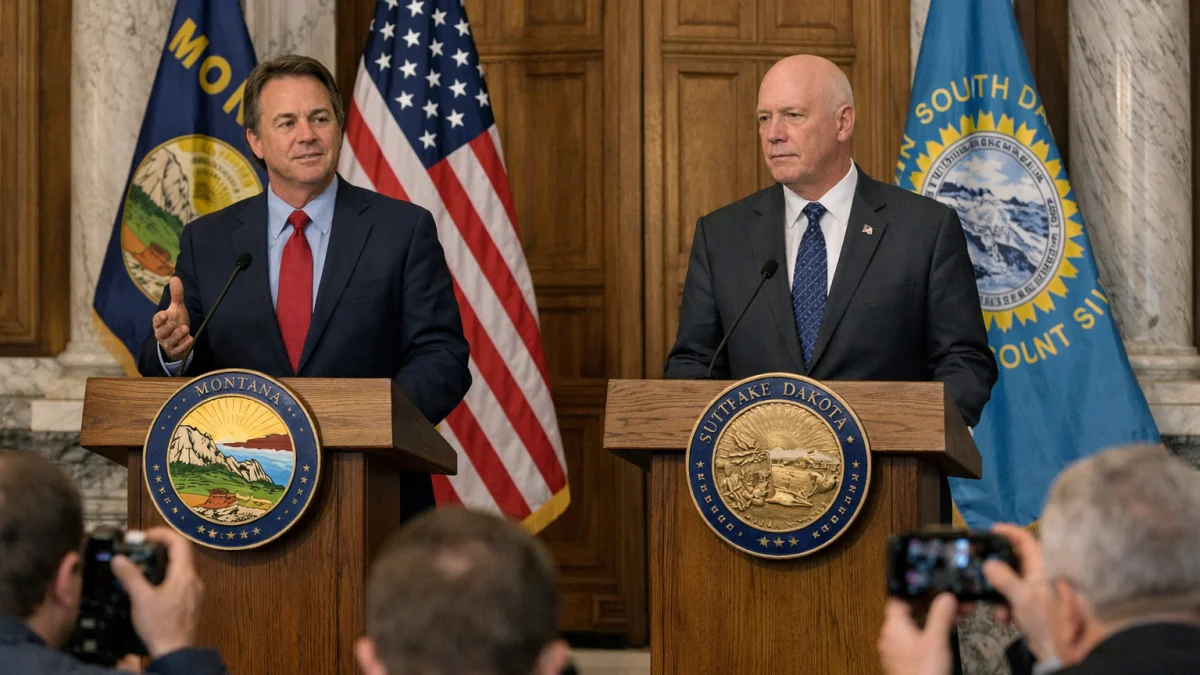


HELENA, Mont./PIERRE, S.D. — New state laws requiring disclosures on certain AI-generated “deepfake” political content are now in effect in Montana and South Dakota, adding to a growing patchwork of U.S. state regulations aimed at addressing the use of synthetic media in elections.
Montana’s law, enacted in 2025, requires disclosures for certain AI-generated election communications that depict candidates or political parties and could mislead voters. The measure applies within 60 days of the start of voting in an election and allows candidates or political parties to seek legal remedies against undisclosed deepfakes, according to state law and election guidance. Violations can lead to civil penalties and, in some cases, criminal consequences for repeat offenses.


South Dakota’s law, which took effect after passage during the 2025 legislative session, prohibits the dissemination of certain deepfakes intended to injure a candidate within 90 days of an election unless the content includes a required disclosure. A violation is classified as a misdemeanor under state law.
The South Dakota statute specifies that the disclosure must state: “This (image/video/audio) has been manipulated or generated by artificial intelligence.” For video or images, the notice must be clearly readable and superimposed on the content, while audio recordings must include an audible disclosure at both the beginning and end.
Both states include exemptions for satire, parody and certain news-related uses. South Dakota’s law exempts bona fide news coverage and some media organizations under specified conditions, according to legislative records.
The measures reflect broader efforts by state lawmakers across the United States to address concerns that increasingly realistic AI-generated images, audio and video could be used to mislead voters or damage political candidates. The National Conference of State Legislatures reported that multiple states have adopted laws requiring disclosures or imposing restrictions on election-related deepfakes.
The issue has already prompted legal challenges. In Montana, a federal lawsuit filed this year questioned the constitutionality of the state’s deepfake restrictions after complaints were filed over digitally altered campaign mailers. Opponents of the law argued it infringes on free speech protections, while supporters said the measure is intended to prevent voter deception.
As of Thursday, both Montana and South Dakota were enforcing their disclosure requirements, while broader debates over election integrity, artificial intelligence and free speech continue in legislatures and courts across the country.