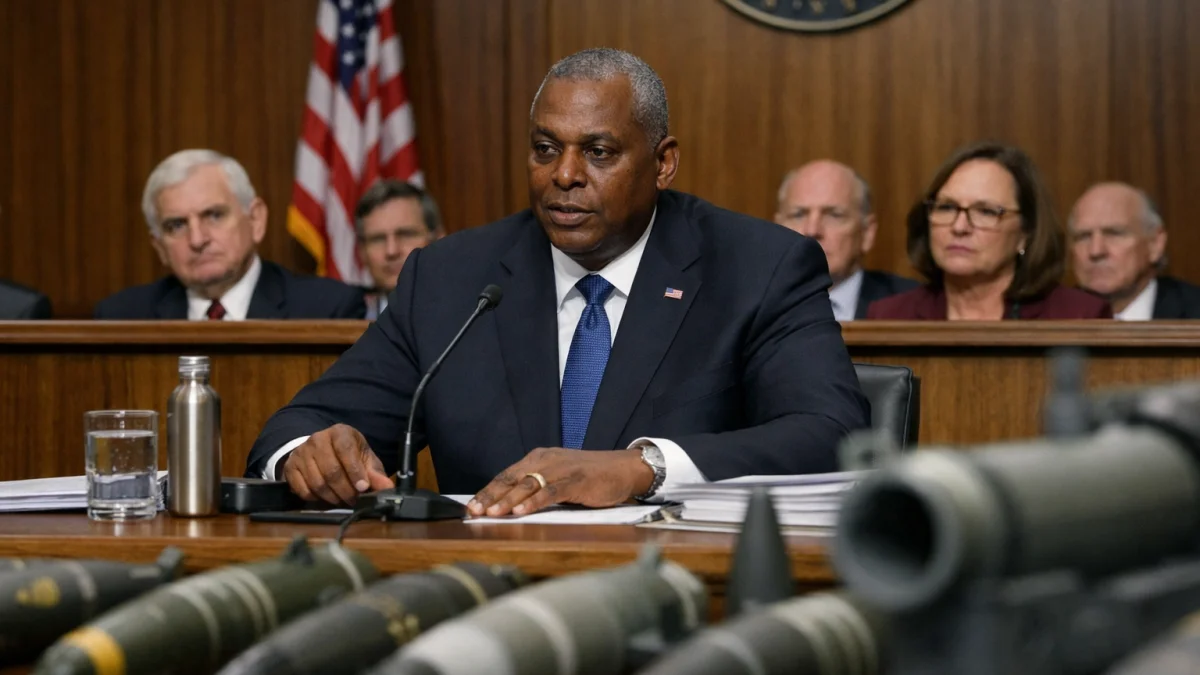


WASHINGTON — Defense Secretary Pete Hegseth addressed congressional concerns about U.S. munitions stockpiles during a Senate hearing on Monday as lawmakers examined the Pentagon's fiscal year 2027 budget request.
Hegseth testified before the Senate Armed Services Committee amid ongoing questions over the impact of U.S. military operations against Iran on American weapons inventories. Lawmakers from both parties have raised issues about the rate at which precision munitions and missile interceptors have been expended.


The hearing focused in part on replenishment timelines for systems used during the conflict. Hegseth previously told congressional panels that replacing certain munitions could take "months and years," while emphasizing efforts to accelerate production.
"First of all, the munitions issue has been foolishly and unhelpfully overstated," Hegseth said in earlier testimony before a House subcommittee. "We know exactly what we have. We have plenty of what we need."
Democratic senators, including Sen. Mark Kelly of Arizona, have pressed for more details on stockpile levels and potential risks to other global commitments, such as deterrence in the Indo-Pacific. Kelly has described the situation as involving a significant drawdown after extensive use of advanced systems like Tomahawks, ATACMS and Patriot interceptors.
Republican lawmakers, including Sen. Tom Cotton, have acknowledged long-standing challenges in munitions production but pushed back against characterizations of immediate depletion.
The Pentagon has requested substantial funding increases in the fiscal 2027 budget to expand production capacity for critical munitions. Officials have cited plans to double or triple output in some areas through contracts with U.S. defense manufacturers.
Details on exact current inventory levels remain classified for operational security reasons, according to Defense Department statements. Public assessments vary, with some independent analyses indicating that replenishing certain advanced weapons systems could take at least three years.
The discussion occurs months after U.S. and Israeli operations against Iran began in late February 2026. The Pentagon has reported striking thousands of targets using precision-guided munitions while intercepting Iranian ballistic missiles and drones.
Hegseth and Joint Chiefs Chairman Gen. Dan Caine have testified that the U.S. maintains sufficient capabilities for ongoing requirements while prioritizing industrial base expansion. The administration has paused some foreign military sales, including to Taiwan, to ensure domestic needs are met.
As of Monday, no new supplemental funding request specifically tied to munitions replenishment had been detailed in open session. The Senate hearing formed part of broader congressional oversight of the proposed $1.5 trillion defense budget.
Lawmakers continued to seek clarity on timelines and priorities as the committee reviewed the budget proposal. Hegseth reiterated the Defense Department's commitment to addressing production bottlenecks. Details on specific outcomes from Monday's session were not immediately available.