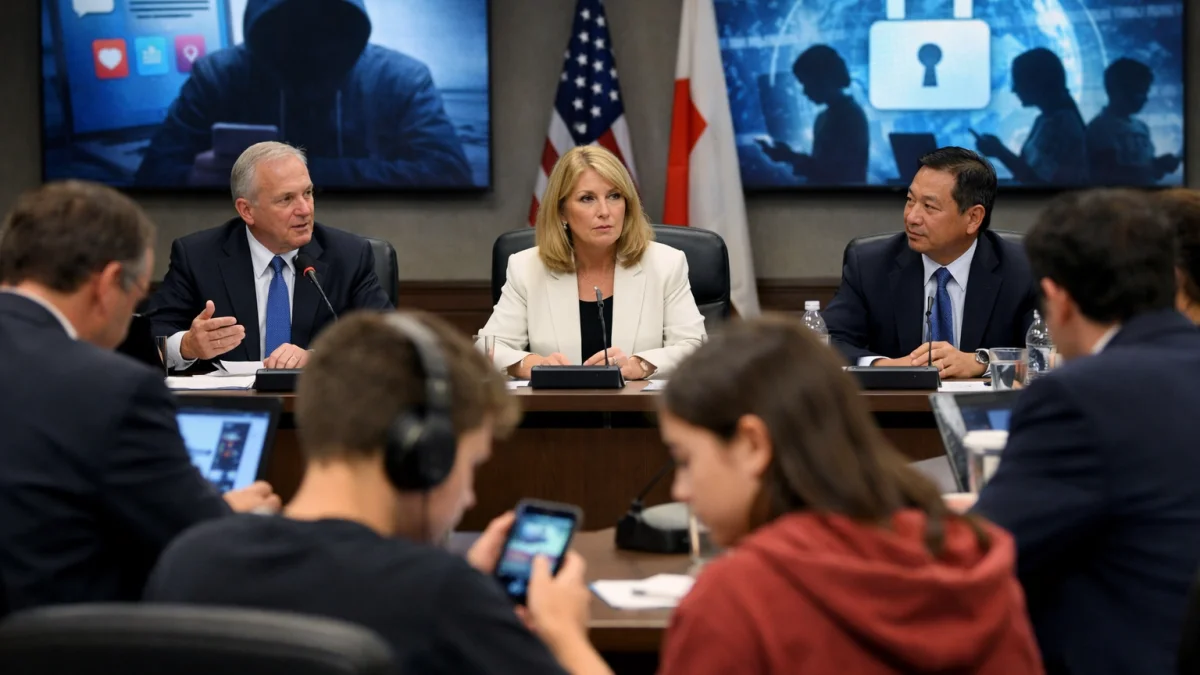


LONDON — Governments across Europe, North America and the Asia-Pacific region are advancing new laws and regulations aimed at protecting children online, as policymakers respond to concerns about social media use, harmful content, cyberbullying and age-inappropriate digital services.
The latest measures were announced on Monday in the United Kingdom, where the government said it plans to prohibit social media platforms from offering services to children under 16 and introduce additional restrictions on online features considered high risk for minors. The proposals, expected to be presented to Parliament later this year, would require stronger age-verification systems and limit functions such as livestreaming and contact from strangers on certain services.


British Prime Minister Keir Starmer said the government was acting to strengthen protections for young users. “No platform gets a free pass,” the government said in a statement outlining its plans for online safety reforms. Officials said the measures are expected to take effect in spring 2027 if approved by Parliament.
The British initiative follows similar action in other countries. According to a Reuters review published on Monday, Australia became the first country to implement a nationwide social media ban for children under 16, while several European governments have proposed or are considering comparable restrictions. France, Denmark and other countries have supported tighter controls on minors' access to digital platforms, while Germany and Italy already require parental consent for younger users in certain circumstances.
In Canada, the federal government introduced legislation last week that would require social media platforms and AI chatbot services to incorporate child-safety protections into their design and operations. Canadian officials said the proposed Safe Social Media Act would create new obligations for technology companies and establish a regulatory body to oversee compliance.
Supporters of the new measures argue that governments must respond to growing concerns about children's exposure to harmful content, online exploitation and addictive platform features. Child welfare organizations in Britain welcomed the proposed restrictions, according to government statements and media reports.
Technology companies and some digital rights advocates have raised concerns about implementation. Several platforms have questioned whether broad social media bans are the most effective approach, while privacy groups have warned that age-verification requirements could create new data-protection challenges.
Officials in multiple countries said discussions with regulators, technology companies and civil society groups are continuing. While several proposals remain subject to legislative approval, governments have indicated that youth online safety will remain a priority area for policy development in the coming months.