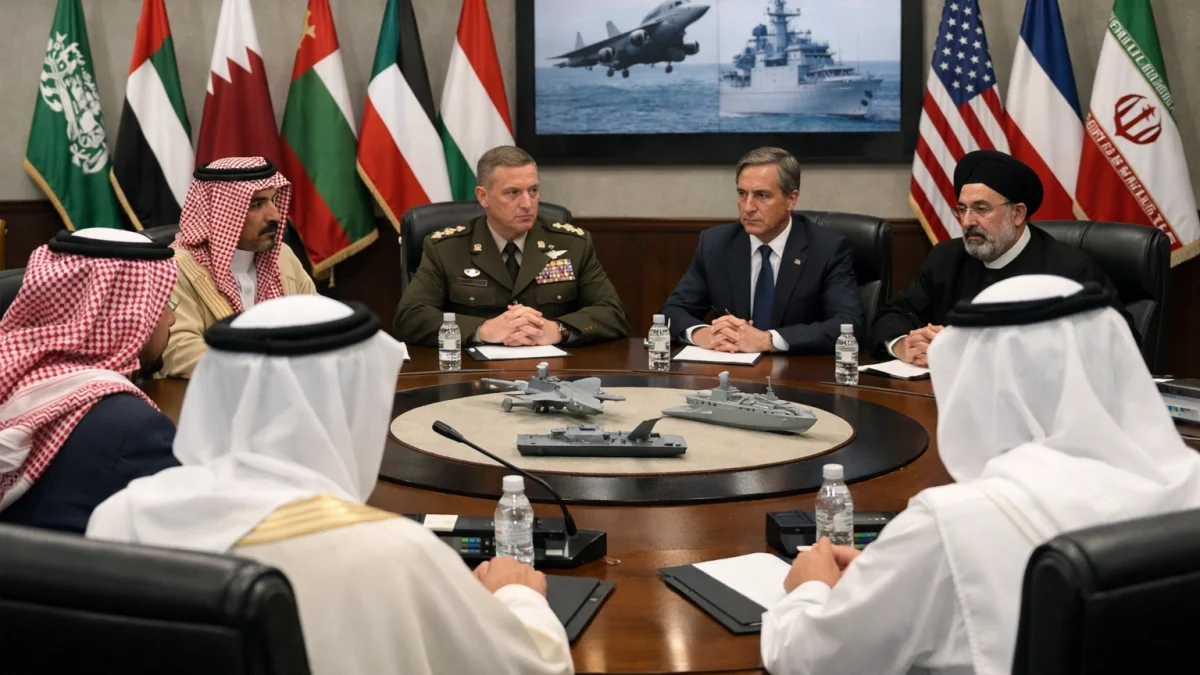


DUBAI — Gulf Arab states are reassessing aspects of their security planning following a newly announced agreement between the United States and Iran aimed at ending months of conflict and reopening the Strait of Hormuz, according to regional officials, diplomats and analysts.
The agreement, announced by U.S. and Iranian officials on Sunday and welcomed by several governments, includes a ceasefire framework and provisions intended to restore commercial shipping through the strategic waterway. The deal leaves broader issues, including Iran’s nuclear program, to future negotiations, according to statements from both sides.


Officials in Gulf Cooperation Council member states have not publicly announced major changes to defense arrangements. However, diplomats and regional sources told Reuters that the conflict and its aftermath have prompted renewed discussions about regional security priorities, contingency planning and relations with both Washington and Tehran.
The conflict disrupted shipping and energy markets across the Gulf region and raised concerns among states that rely on secure maritime routes. The Strait of Hormuz, through which a significant share of global oil exports passes, was affected by military activity during the crisis before the latest agreement outlined steps toward reopening the passage to commercial traffic.
Regional governments broadly welcomed efforts to reduce tensions. International reactions included support from the United Nations and several allied governments, which described the agreement as an opportunity to lower the risk of further escalation and stabilize trade flows.
“The agreement represents a major step,” U.N. High Commissioner for Human Rights Volker Turk said, while urging restraint and implementation in good faith, according to remarks released on Monday.
Diplomats familiar with Gulf discussions said governments in the region are continuing efforts that began in recent years to expand diplomatic engagement with Iran while maintaining security partnerships with the United States and other allies. Details of any specific policy reviews remain unclear, and officials in several Gulf capitals have not publicly commented on internal deliberations.
The United States has long maintained military partnerships and defense cooperation agreements with Gulf states. During the recent conflict, regional governments sought to protect energy infrastructure, shipping routes and civilian facilities while calling for de-escalation through diplomatic channels, according to official statements issued during the crisis.
As of Monday, governments across the Gulf were monitoring implementation of the U.S.-Iran agreement and developments related to the reopening of the Strait of Hormuz. Officials said negotiations on longer-term issues are expected to continue in the coming weeks, while details of a final settlement remain under discussion.