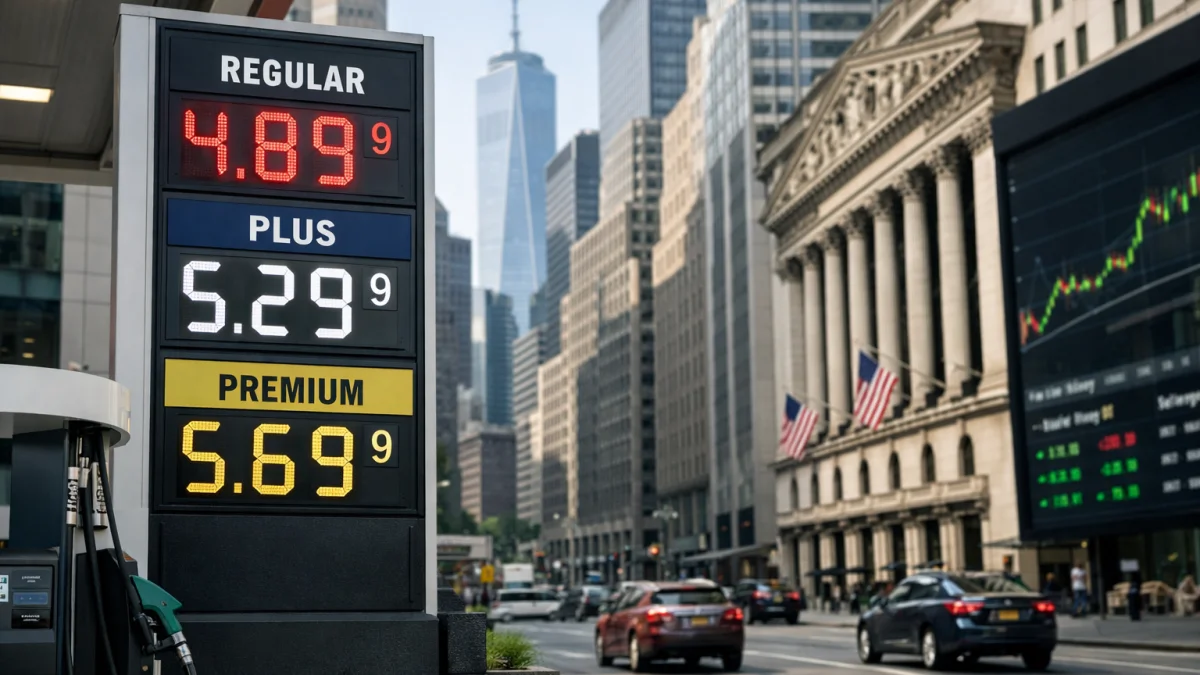


WASHINGTON — U.S. gasoline prices are expected to remain elevated in the coming months despite a preliminary agreement between the United States and Iran aimed at reopening the Strait of Hormuz and restoring disrupted oil flows, according to energy analysts, market data and government officials.
The diplomatic framework announced this week has eased some concerns about supply disruptions in the Middle East, helping drive crude oil prices lower. Brent crude fell below $80 a barrel after news of the agreement, while U.S. benchmark West Texas Intermediate also declined as traders anticipated a gradual return of oil exports from the region.


However, analysts said lower crude prices are unlikely to translate immediately into significantly cheaper gasoline for consumers. Supply chains, refinery operations, shipping constraints and existing inventory shortages continue to affect fuel markets even as geopolitical tensions ease. Details of the agreement's implementation remain unclear, and shipping activity through the Strait of Hormuz has not fully returned to pre-conflict levels.
The Strait of Hormuz is one of the world's most important energy corridors, carrying roughly one-fifth of global oil shipments under normal conditions. The conflict-related disruption earlier this year reduced exports from several producers and contributed to higher fuel prices across many countries. Although Iranian tankers have resumed some movements through the region, many commercial vessels remain cautious about operating in the area, according to shipping data reviewed by Reuters.
Industry experts have said normalization could take considerable time. Patrick De Haan, head of petroleum analysis at GasBuddy, told CBS News earlier this month that fuel markets would not quickly return to conditions seen before the conflict. “If and when that happens, it will be a very long, multi-month to multi-year process for things to fully normalize,” he said.
Government officials in several countries have also acknowledged that energy markets remain vulnerable to uncertainty. In Brazil, Finance Ministry Executive Secretary Rogério Ceron said on Tuesday that authorities were monitoring oil prices closely and would consider ending temporary fuel subsidies only if crude prices stabilized near current levels.
Meanwhile, oil markets continued to fluctuate as investors assessed the durability of the U.S.-Iran agreement. On Wednesday, crude prices rose modestly after President Donald Trump said the memorandum of understanding with Iran was not final and warned that military action could resume if negotiations faltered.
As of Wednesday, energy traders remained focused on the pace of shipping recovery through the Strait of Hormuz and the potential return of Iranian exports. While the agreement has reduced immediate supply concerns, fuel market participants said broader price normalization is expected to take time as inventories rebuild and transportation networks adjust.