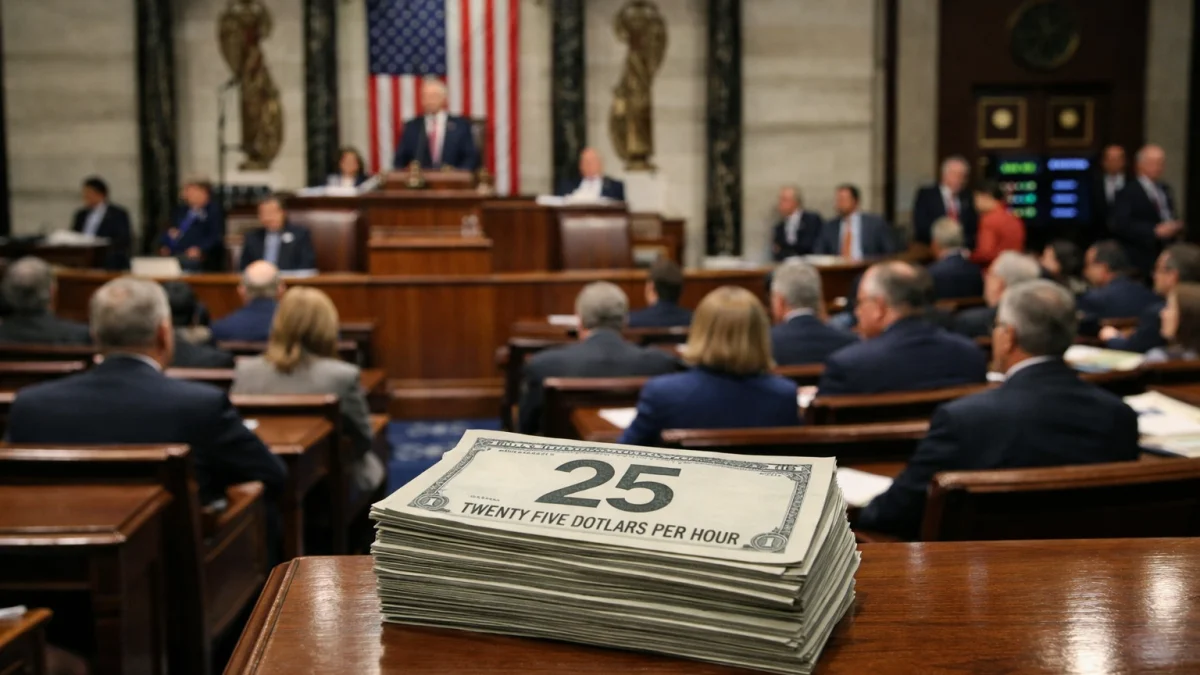
WASHINGTON — The U.S. House of Representatives on Friday passed legislation that would raise the federal minimum wage to $25 per hour, advancing one of the most ambitious wage proposals considered by Congress in years and sending the measure to the Senate, according to congressional proceedings and lawmakers involved.
The legislation, known as the Living Wage for All Act, would gradually increase the federal minimum wage from its current $7.25 per hour, which has remained unchanged since 2009. Under the proposal, larger employers would be required to reach the $25 hourly rate on a faster timetable than smaller businesses, which would receive additional years to comply. Supporters said the phased approach is intended to ease the transition for small employers while addressing rising living costs.
Backers of the measure argued that wages have failed to keep pace with increases in housing, healthcare and other household expenses. Representative Delia Ramirez, one of the bill's sponsors, said in a statement, "Growing up, I saw my immigrant parents and my neighbors working multiple minimum wage jobs just to survive," adding that the legislation seeks to establish what supporters describe as a living wage for workers.
The proposal also would phase out several categories of subminimum wages, including those affecting tipped workers and certain other groups, according to bill sponsors. If ultimately enacted, it would mark the first increase in the federal minimum wage since 2009.
Business organizations and other opponents have argued that a substantial increase in the federal wage floor could raise labor costs, particularly for smaller employers, potentially leading to higher consumer prices or reduced hiring. Supporters have disputed those concerns, saying higher wages would improve workers' purchasing power and better reflect current economic conditions.
The debate comes as many states and local governments already require minimum wages above the federal standard. According to supporters of the legislation, millions of workers currently earn less than $25 per hour, while analyses cited by advocates indicate that even a $25 hourly wage would not meet estimated living-wage thresholds in some higher-cost states.
Following House passage, the bill now moves to the Senate, where its prospects remain uncertain. Details regarding the timing of Senate consideration have not been announced, and no final action has yet been taken on the legislation.