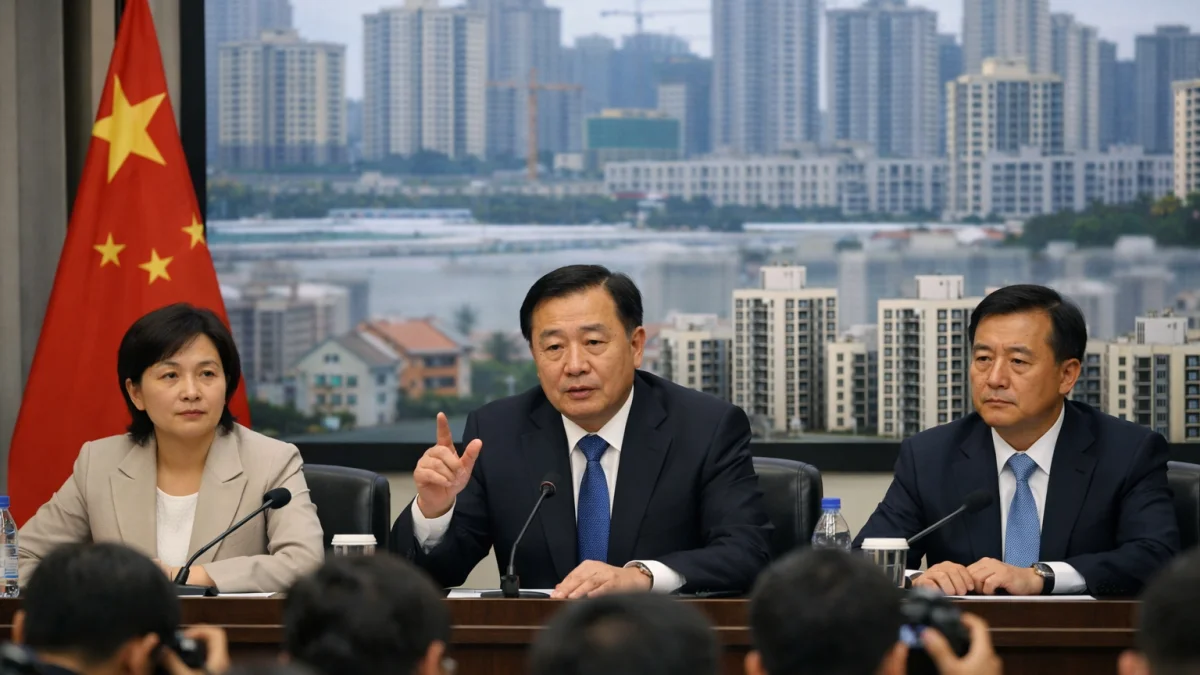
BEIJING — Chinese authorities have outlined a series of targeted policies for 2026 focused on stabilizing the real estate sector, emphasizing local measures to control new housing supply, reduce existing inventories, and advance urban renewal projects.
The initiatives, detailed in late 2025 following the Central Economic Work Conference and a national housing policy meeting, mark a continued shift toward addressing structural imbalances in the sector more than five years after the current downturn began. While earlier efforts provided some support, particularly in major cities, nationwide home prices continued to decline through mid-2026, with new-home prices across 70 cities falling 3.5% year-on-year in May, matching the pace in April.
This latest policy push matters because the property sector, once accounting for roughly a quarter of China's economic activity at its peak, remains a significant drag on growth, household wealth, local government finances, and developer balance sheets. Stabilization efforts, if effective, could help shore up broader economic confidence without returning to the debt-fueled expansion of previous years.
The measures build on incremental steps taken since 2024, including project "whitelists" for financing, extensions of loan maturities, and easing of purchase restrictions in select cities. For 2026, officials have stressed city-specific approaches to manage supply and digest inventories, alongside vigorous urban renewal and increased affordable housing provision.
"Controlling new supply, reducing existing housing inventory, and optimizing the supply structure" form the core of the strategy, according to statements from housing authorities.
This represents a departure from earlier reliance on demand-side stimulus alone. Previous rounds, such as mortgage rate cuts and lower down-payment requirements, delivered temporary lifts in transactions, particularly in tier-one cities like Beijing, Shanghai, and Shenzhen. Yet national sales and investment have continued to contract. Property investment fell sharply in the first five months of 2026, while sales volumes remained under pressure.
The current approach reflects lessons from the sector's imbalances. Rapid development in prior decades created a massive overhang of unfinished and unsold properties. Estimates of excess inventory have varied, but analysts have pointed to tens of millions of units nationally. By focusing on inventory reduction — including repurposing existing stock for affordable housing — and curbing new builds, Beijing aims to rebalance supply and demand more sustainably.
Economists note that the prolonged downturn has affected multiple layers of the economy. Local governments, which historically depended heavily on land sales, have faced fiscal strains. Households have seen wealth erosion from falling property values, contributing to subdued consumption. Developers continue to navigate high debt levels, though some financing support mechanisms, such as extensions on whitelisted project loans, have provided breathing room.
Data from the National Bureau of Statistics illustrate the uneven picture. While some core cities have shown tentative signs of stabilization or modest price gains in early 2026, broader declines persist. This polarization underscores the rationale for localized policies rather than uniform national mandates.
The 2026 framework aligns with the start of China's latest Five-Year Plan period. It prioritizes risk prevention alongside market stabilization, avoiding the kind of broad credit expansion that fueled the earlier boom and subsequent troubles. Officials have also signaled continued support for urban renewal, which could generate activity while improving living conditions in older areas.
Comparisons with prior stabilization attempts highlight differences. Measures announced in 2024, including monetary compensation for renovations and eased financing, produced "positive changes" in select markets but proved insufficient to reverse the national trend. The latest emphasis on supply-side adjustments aims to address root causes more directly.
Experts have offered cautious assessments. Wu Jing, director of Tsinghua University’s Real Estate Research Center, has pointed to supply-demand mismatches as a primary challenge, suggesting that better inventory management is a precondition for broader recovery.
Still, challenges remain. Homebuyer confidence stays fragile amid economic uncertainties and a preference in some segments for renting over buying. Forecasts from rating agencies and analysts project continued, albeit possibly moderating, pressure on sales and prices through 2026.
International implications also factor into the significance. As one of the world's largest economies, China's property sector performance influences global commodity demand, investor sentiment toward emerging markets, and trade dynamics.
The current situation reflects a sector in transition from high-growth, investment-driven development toward a more sustainable model. Whether the 2026 measures can meaningfully stabilize markets will depend on implementation at the local level, the pace of inventory absorption, and the broader macroeconomic environment.
What remains to be seen is the scale of actual inventory reduction achieved and whether price declines moderate further in the second half of the year. Authorities will continue to monitor local conditions closely, adjusting policies as needed while maintaining the overarching goal of risk containment and gradual rebalancing.