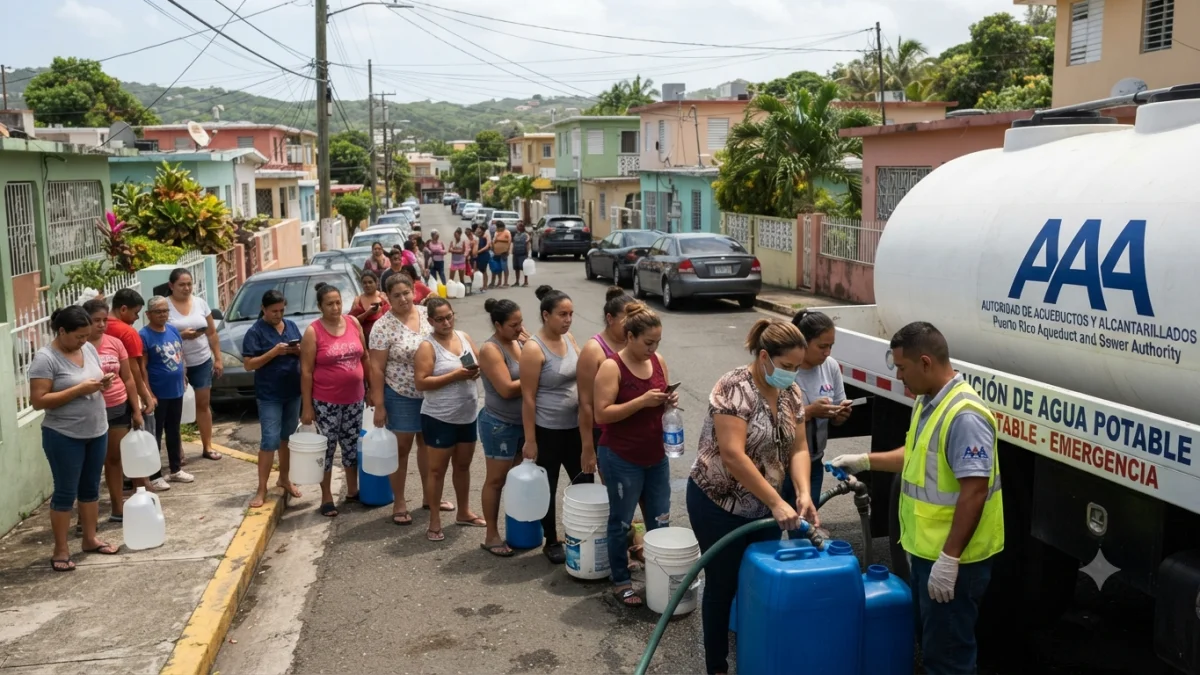


SAN JUAN — More than 180,000 customer accounts in Puerto Rico began facing rotating water outages on Friday as authorities imposed rationing across the capital and six other municipalities amid a severe drought and persistent problems with the island’s aging water system.
The Puerto Rico Aqueduct and Sewer Authority divided affected customers into two groups, with each group scheduled to go without water for at least 48 hours at a time, according to the authority and local officials. Authorities have warned that outages could eventually last as long as 72 hours if conditions deteriorate.


The rationing affects San Juan and parts of Carolina, Canóvanas, Loíza, Trujillo Alto, Juncos and Gurabo, areas that depend heavily on the Carraízo reservoir, whose declining levels have reduced available water supplies. Water trucks are being used to supply essential facilities, including hospitals and care centers.
The measures follow an exceptionally dry period across Puerto Rico. San Juan recorded its driest July in more than 120 years, while the U.S. Drought Monitor reported that roughly 36% of the territory was experiencing severe drought and another 32% moderate drought. Federal drought officials have also reported widespread rainfall deficits across the island.
The drought has compounded longstanding weaknesses in Puerto Rico's water infrastructure. The water authority has said a substantial share of treated water is lost before reaching customers because of leaks and other system deficiencies. Residents in parts of the San Juan metropolitan area had already experienced repeated service interruptions before the latest rationing began.
Governor Jenniffer González has acknowledged the water system's infrastructure problems while attributing the immediate pressure on supplies to worsening weather conditions. Officials have urged residents to conserve water and limit use to essential needs during periods when service is available.
The authority has not set a firm date for ending the rationing. A strengthening El Niño pattern is expected to suppress rainfall in the Caribbean, while drought conditions could persist into the coming months, according to weather and drought officials.
For now, authorities are maintaining the rotating schedule and prioritizing water deliveries to critical facilities as they monitor reservoir levels and rainfall.