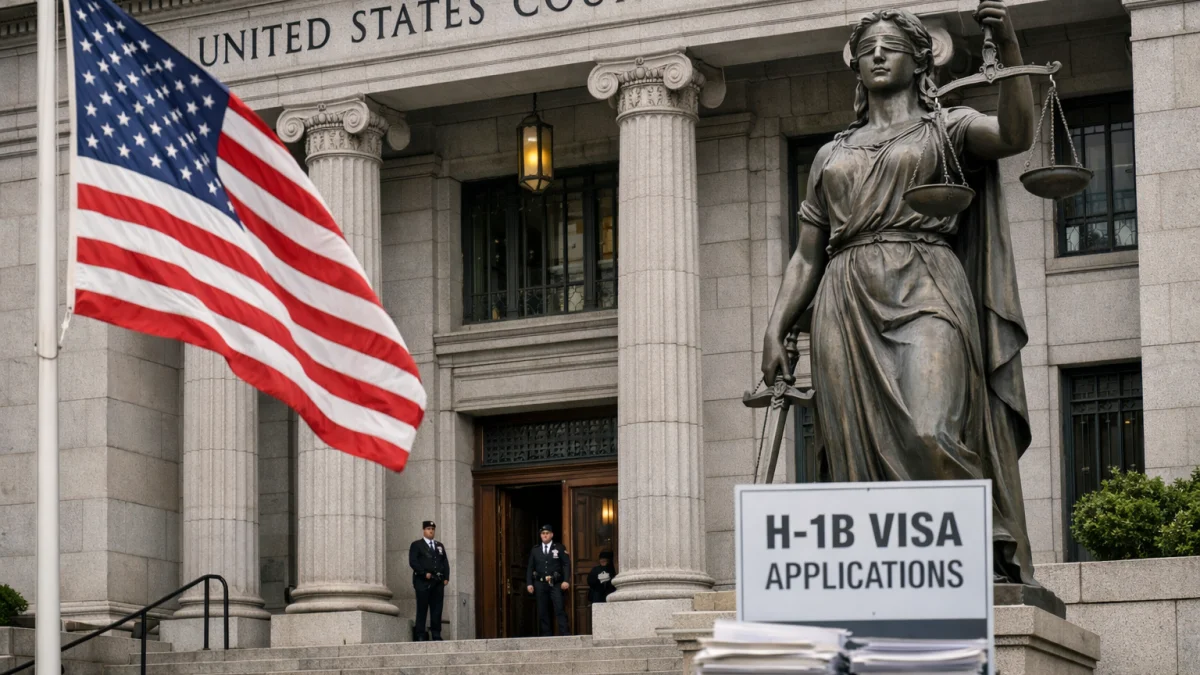
BOSTON — A U.S. federal judge has blocked a $100,000 supplemental fee requirement imposed by the Trump administration on new H-1B visa petitions for highly skilled foreign workers.
U.S. District Judge Leo T. Sorokin in the District of Massachusetts ruled on June 8, 2026, that the fee was unlawful, granting summary judgment in favor of a coalition of 20 states led by California. The court vacated the policy in its entirety.
The fee stemmed from a presidential proclamation signed by President Donald Trump on Sept. 19, 2025, which required employers to pay the $100,000 amount in addition to standard filing fees for new H-1B petitions submitted after Sept. 21, 2025. It applied primarily to petitions for workers outside the United States.
Plaintiff states argued that the fee amounted to a tax that only Congress has the authority to impose under the Constitution and that the administration lacked statutory power under the Immigration and Nationality Act to enact it. The court agreed, finding the measure violated the Administrative Procedure Act and separation of powers principles.
"Details remain unclear" on the precise impact for petitions already processed, but the ruling has nationwide effect for now.
H-1B visas allow U.S. employers to hire foreign workers in specialty occupations requiring at least a bachelor's degree. Prior to the proclamation, standard government filing fees for such petitions were generally under $5,000.
The Trump administration has defended the fee as a measure to protect American workers and reform the H-1B program. Officials indicated they plan to appeal the decision.
California Attorney General Rob Bonta, who led the lawsuit, welcomed the ruling. "This is a win for our ability to attract high-skilled foreign workers who power key sectors of our economy," Bonta said in a statement.
The administration has filed a notice of appeal and secured at least a temporary administrative stay in some accounts, though the core vacatur stands unless further stayed pending appeal.
The case, *State of California v. Noem* (or similar naming in filings), highlights ongoing tensions over executive authority in immigration policy. H-1B visas remain a critical pathway for technology, health care and other industries reliant on specialized talent.
As of June 19, 2026, the fee requirement is blocked by the court's order, though further legal proceedings are expected. USCIS has not issued final guidance on refunds or processing for affected petitions.