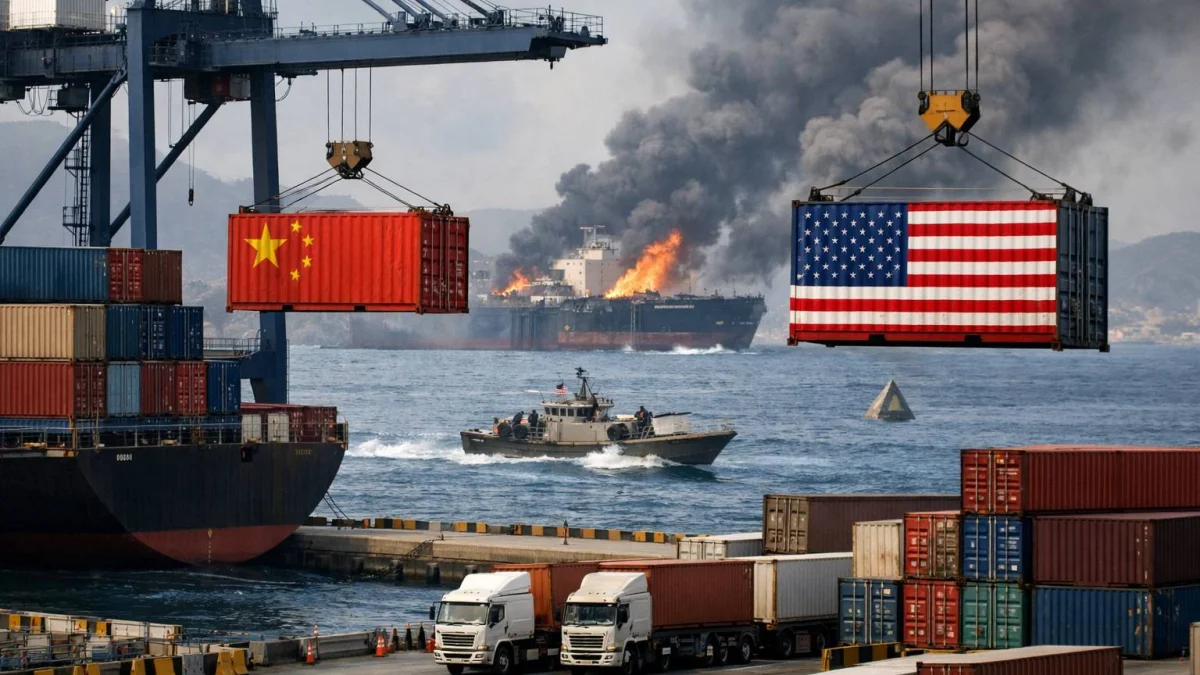
LONDON — Global trade flows continue to face significant disruptions from a combination of new U.S. tariffs and the lingering effects of the 2026 Iran conflict, which has strained key shipping routes and energy supplies, according to trade analysts and officials.
The Iran conflict, which escalated in late February with U.S. and Israeli military actions, led to the effective closure of the Strait of Hormuz for much of March and April, disrupting approximately 20% of global seaborne oil and substantial liquefied natural gas shipments. Although a fragile framework agreement has eased some immediate tensions, rerouting of vessels around the Cape of Good Hope has extended transit times and increased costs.
Simultaneously, U.S. tariff measures under Section 301 and Section 232 investigations have targeted imports from dozens of economies, citing issues including forced labor practices and overcapacity. These policies, building on earlier actions, have affected steel, aluminum, copper, and a wide range of goods from countries including China, the European Union, Canada, Mexico, and others in the Global South.
The dual pressures have compounded challenges for supply chains already adjusting to higher energy prices and freight surcharges. Shipping companies imposed conflict-related fees and rerouted services, while tariff-related cost increases have prompted shifts in sourcing and inventory strategies.
“The combination of geopolitical shocks and trade policy uncertainty is testing the resilience of global commerce,” a World Trade Organization economist noted in a recent assessment of 2026 trade growth forecasts.
Fertilizer, sulfur, and other commodities linked to Gulf production have seen price volatility, with ripple effects on agriculture and industrial sectors, including copper processing. Oil prices, which surged following the initial disruptions, remain elevated compared to pre-conflict levels.
Major shipping lines including MSC, Maersk, and CMA CGM suspended or altered Middle East services in the early months of the conflict, contributing to higher freight rates on multiple routes. Trade data indicate substantial drops in traffic through affected chokepoints.
U.S. officials have defended the tariff policies as necessary to address unfair practices, while trading partners have raised concerns over retaliatory risks and impacts on consumers and businesses. Details on the full extent of ongoing negotiations remain limited.
As of mid-June 2026, shipping activity through the Strait of Hormuz has partially recovered but has not returned to pre-conflict volumes. Governments and companies continue to monitor developments, with many adjusting supply chains for greater diversification. The WTO has projected slower global merchandise trade growth for the year amid these headwinds.
Further updates are expected from upcoming G7 and bilateral discussions on trade and energy security.