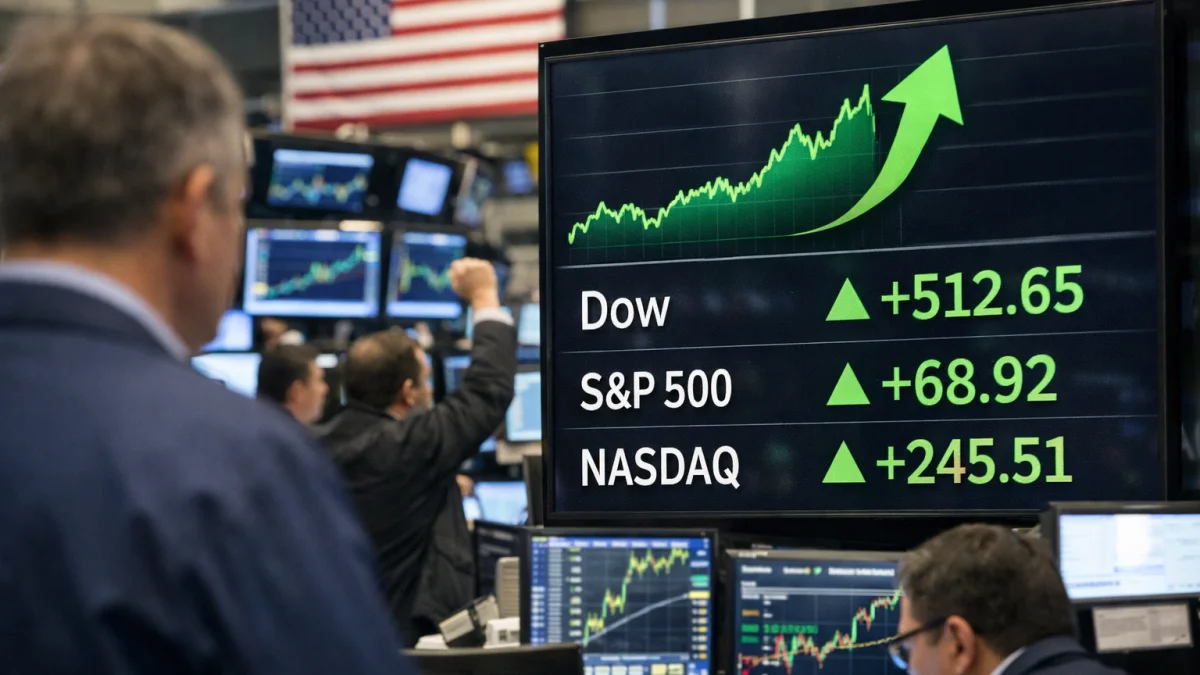


NEW YORK — U.S. stocks rose on Thursday as investors reacted to signs of a possible end to the conflict involving Iran, with lower oil prices helping lift major indexes despite continued concerns about U.S. monetary policy, market data and company statements showed.
The gains followed announcements this week that U.S. and Iranian officials had reached a preliminary agreement aimed at ending hostilities and extending a ceasefire, according to statements from both governments and reports from multiple news organizations. Investors responded by buying equities and selling oil futures, reflecting expectations that energy supplies could stabilize if the agreement holds.


The Dow Jones Industrial Average, the S&P 500 and the Nasdaq Composite all advanced during trading on June 18, with technology shares among the strongest performers, according to market data. Semiconductor companies led gains after separate industry developments, while falling crude prices supported broader market sentiment.
Oil prices declined sharply after news of the agreement, with traders anticipating fewer disruptions to global energy flows and the eventual reopening of the Strait of Hormuz, a key shipping route. Reuters reported that crude prices fell as optimism over the diplomatic breakthrough offset concerns about inflation and interest rates.
“The market is responding to the peace deal,” Peter Cardillo, chief market economist at Spartan Capital Securities, told Reuters on Monday. “It is welcoming to know the Strait of Hormuz will be opening up.”
The market reaction came despite a cautious outlook from the Federal Reserve. Earlier this week, Fed officials signaled that inflation risks remained a concern, leading investors to reassess the likelihood of future interest-rate increases. Analysts said the decline in oil prices helped ease some of those worries.
The conflict had previously contributed to volatility in global markets as investors weighed the risk of supply disruptions and higher energy costs. In recent months, periods of escalation were often accompanied by rising oil prices and increased demand for safe-haven assets, while reports of diplomatic progress generally supported equities.
Details of the latest agreement remain limited. Officials have said further negotiations are expected to address unresolved issues, including Iran’s nuclear program and other regional security matters. As of Friday, market participants continued to monitor developments closely while awaiting additional information from U.S. and Iranian authorities on implementation of the accord.