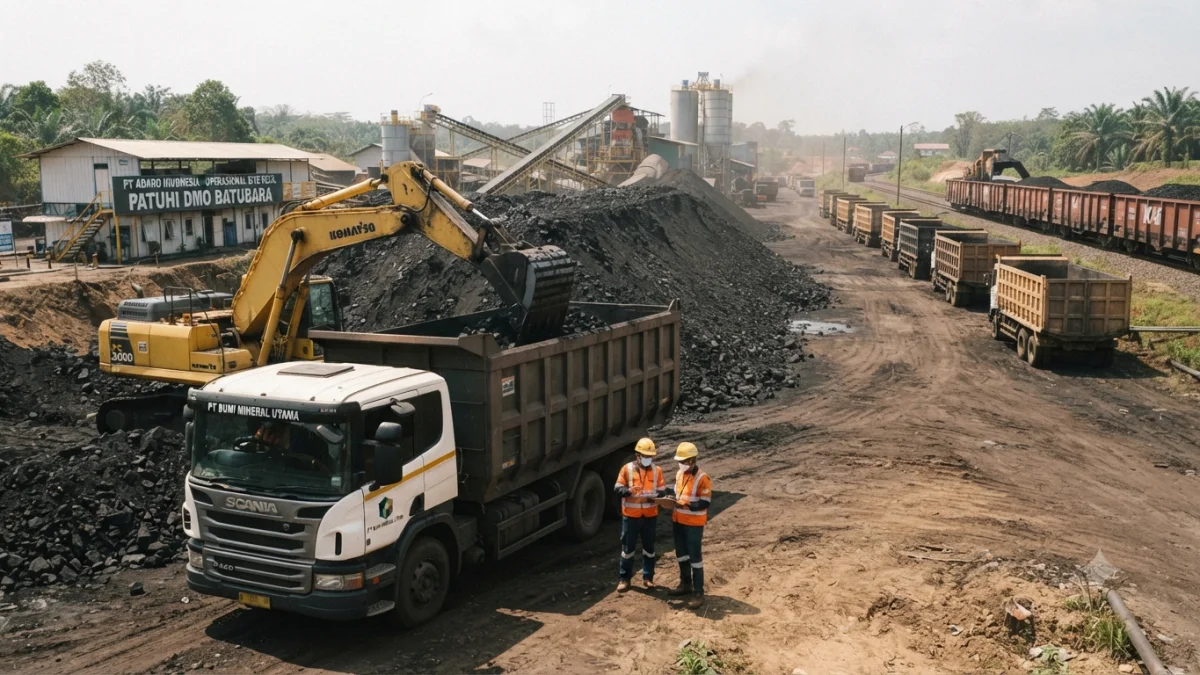


JAKARTA — Indonesian coal producers are facing mounting pressure from domestic price controls and production restrictions, as rising mining costs and a widening gap between regulated domestic prices and international coal prices squeeze margins and complicate efforts to secure supplies for power plants.
Indonesia requires coal miners to meet domestic market obligations (DMO), with electricity suppliers including state utility PT PLN subject to a regulated price of $70 per metric ton. The government has maintained the ceiling since 2018 as part of efforts to keep electricity generation costs affordable.


The policy has become more challenging for producers as operating costs have risen. Industry representatives have said higher fuel, logistics, labor and stripping costs are putting pressure on the economics of supplying domestic buyers at the regulated price.
Energy and Mineral Resources Minister Bahlil Lahadalia said in June that the government was considering a revision of the PLN coal price to balance the interests of the utility and producers.
“We're calculating the pluses and minuses, so that PLN is not disadvantaged, but the businesses are also not disadvantaged,” Bahlil told reporters on June 18, according to Antara.
The pressure comes alongside tighter production controls. The government initially set a 2026 coal production target of about 600 million metric tons, down from 790 million tons produced in 2025, in an effort to support prices after a period of weaker international demand.
Bahlil later said in June that the government would allow measured increases in production if coal prices strengthened. The benchmark coal price, known as HBA, reached $121.83 per ton in the first half of June, highlighting the difference between market-linked prices and the regulated DMO price for power generation.
At the same time, the government has tightened monitoring of domestic supply commitments. The Energy and Mineral Resources Ministry said in July that it had assigned miners with approved work plans a combined 212 million tons of coal for domestic supply in 2026, including 154 million tons earmarked for PLN. By May, PLN and independent power producers had contracted about 144 million tons, with deliveries expected to reach 130.5 million tons by year-end.
The competing pressures have also raised concerns about coal availability for power generation. Recent reports have linked supply constraints and production disruptions to power shortages in parts of Indonesia, although PLN has cited technical problems at individual plants rather than a nationwide coal shortage.
The government has not announced a final change to the $70-per-ton electricity coal price. For now, authorities are continuing to enforce domestic supply obligations while assessing production quotas and the pricing framework for PLN.