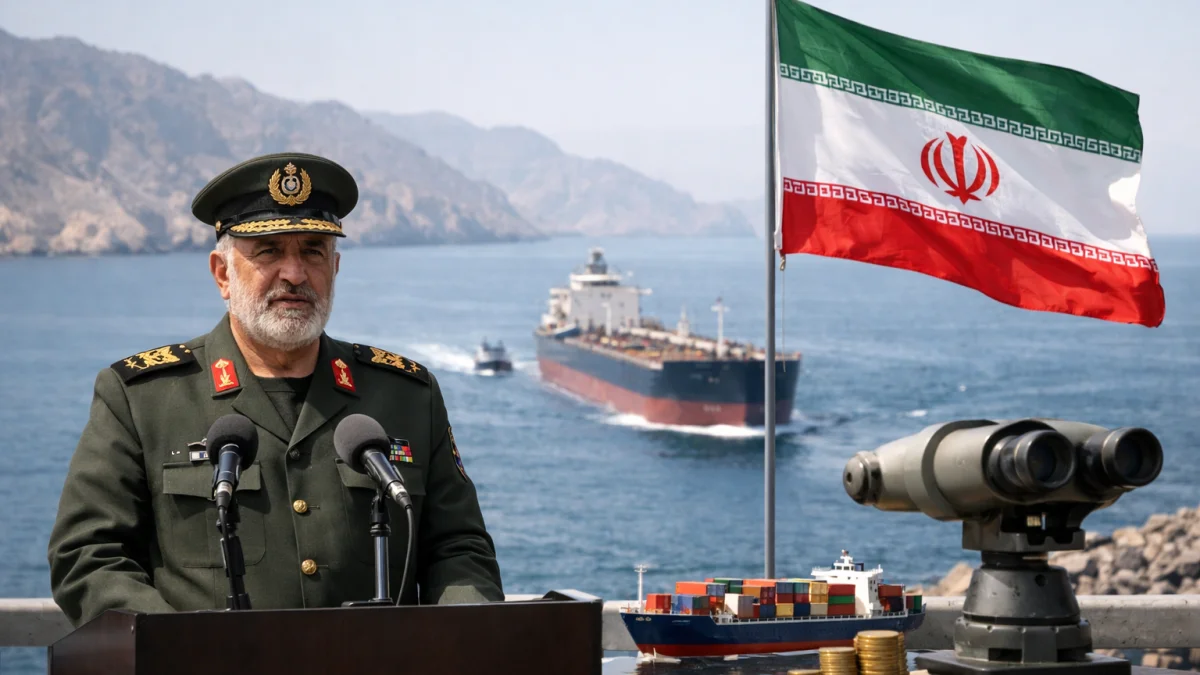


TEHRAN — Iran has announced plans to introduce maritime fees for commercial vessels transiting the Strait of Hormuz after a 60-day negotiation period, according to Iranian officials and documents released this week, a move that has drawn attention from shipping companies, governments and energy markets.
Iranian authorities said the proposed charges would be linked to maritime services provided in and around the strategic waterway, including navigation assistance, safety measures and environmental protection. Officials said details of the fee structure remain under discussion and have not yet been finalized. Reuters reported on Friday that Iran has agreed to waive such fees during the current 60-day negotiation period.


The announcement follows a memorandum of understanding reached between Iran and the United States that has enabled a gradual resumption of commercial traffic through the Strait of Hormuz after months of severe disruption. Iranian officials have said vessels will continue to be required to coordinate transit plans in advance while navigational and security risks remain.
Iranian Foreign Ministry spokesperson Esmaeil Baghaei said earlier this month that Tehran was considering fees tied to services provided in the waterway rather than imposing transit tolls. “The services that are provided — navigational services in addition to the measures necessary to protect the environment” require the collection of certain fees, he said, according to state and international media reports.
Tehran has also established a body known as the Persian Gulf Strait Authority, which Iranian authorities say will oversee ship transits and related administrative procedures. Officials have said vessels seeking passage must provide information including routing and insurance details.
The Strait of Hormuz is one of the world's most important maritime chokepoints, carrying a significant share of global oil and liquefied natural gas shipments. Shipping traffic through the waterway was heavily disrupted during a regional conflict that escalated earlier this year, leaving vessels delayed and contributing to uncertainty in energy markets.
Some governments and shipping industry representatives have raised questions about how any future fee system would operate and whether it would be consistent with international maritime law. Iran has said any regulations adopted would be developed in line with applicable legal frameworks.
For now, Iranian authorities say commercial vessels may continue to transit the Strait of Hormuz without fees during the negotiation period, while discussions on the future administration of the waterway continue. Details on the timing and scope of any permanent charges remain unclear.