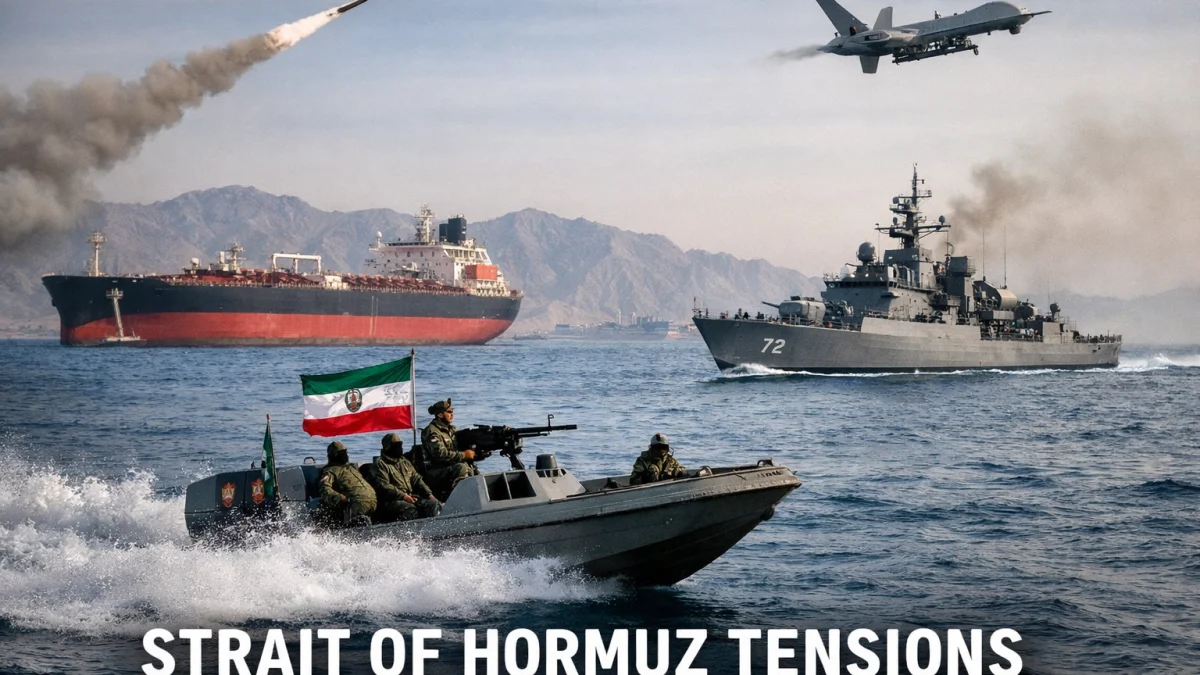


TEHRAN — Iran said it had closed the Strait of Hormuz again over the weekend, citing what officials described as violations of understandings linked to efforts to reduce regional tensions, while shipping authorities, foreign governments and industry groups continued to assess the practical impact on maritime traffic as the Israel-Lebanon conflict persisted.
Iran's Khatam al-Anbiya Central Headquarters announced on Saturday that the strategic waterway had been closed, accusing the United States and Israel of failing to uphold commitments connected to a recent memorandum aimed at easing hostilities. Iranian state media carried the announcement, and officials said the measure would remain in effect until further notice.


The closure announcement came as Israeli military operations in southern Lebanon continued despite diplomatic efforts to reduce violence. Iranian authorities said the renewed restrictions on Hormuz were linked to what they described as ongoing military activity in Lebanon and alleged breaches of prior understandings. Details of those allegations have not been independently verified.
The Strait of Hormuz is a key route for global energy shipments, and any disruption to traffic through the waterway is closely monitored by governments, shipping companies and energy markets. Iran's military command said in a statement that the closure was a response to regional insecurity and would apply to commercial and oil tanker traffic.
However, the extent of the disruption remained unclear on Monday. U.S. officials and some shipping observers disputed whether the waterway had been fully sealed. Vice President JD Vance said there was no evidence that all shipping traffic had stopped, while a senior U.S. defense official said there were no indications of military activity consistent with a complete blockade.
At the same time, shipping data and government reports indicated that some vessels had continued to move through or near the strait. South Korea's Ministry of Oceans and Fisheries said two South Korean-operated vessels had passed through the area after recent diplomatic agreements, although other ships remained delayed. Maritime monitoring reports also showed significant numbers of vessels waiting near Gulf ports for greater clarity on transit conditions.
Diplomatic efforts continued on Monday in Switzerland, where U.S. and Iranian representatives held talks mediated by regional partners. Mediators said discussions included mechanisms for safe commercial navigation through the Strait of Hormuz and measures aimed at reducing tensions in Lebanon. “Encouraging progress” had been made, according to statements issued after the talks, though negotiations remained ongoing.
As of Monday evening, Iran maintained that the Strait of Hormuz was closed, while foreign governments and shipping operators continued to monitor vessel movements. The full operational status of the waterway remained unclear, and negotiations aimed at securing commercial navigation were continuing.