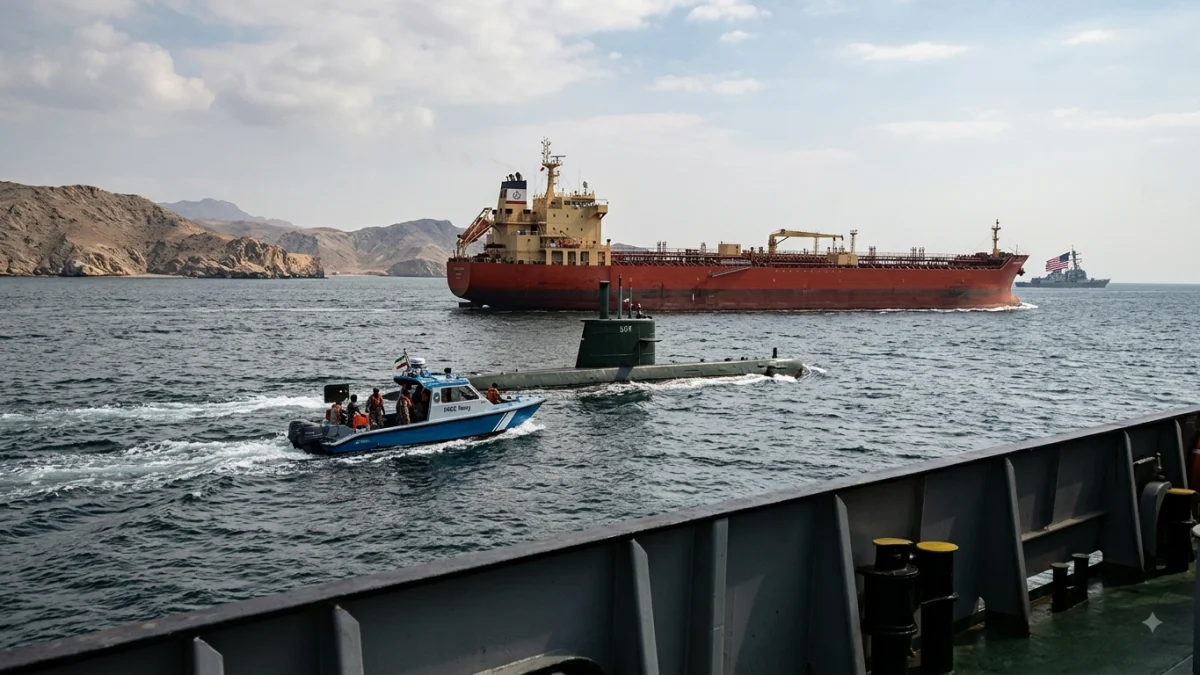


TEHRAN — Iran rejected U.S. President Donald Trump’s claim that Washington has “total control” of the Strait of Hormuz, as shipping through the strategic waterway remained sharply reduced amid escalating tensions between the two countries.
Iranian officials said the strait remained under Tehran’s control and that vessels required Iranian authorization to pass. Hossein Taeb, the newly appointed head of Iran’s Basij paramilitary force, said on Thursday that the waterway was under Iran’s “control and management,” directly contradicting Trump’s assertion.


The competing claims came as commercial traffic through Hormuz slowed to a near standstill. Nine commodity vessels passed through the strait on Thursday, according to ship-tracking firm Kpler, below an August daily average of 12. No visible crossings were recorded early on Friday, although some ships may have transited with their tracking systems switched off. Before the war began in February, more than 130 vessels a day passed through the waterway.
The dispute intensified after two vessels operated by Abu Dhabi National Oil Company were attacked while transiting Hormuz on Thursday evening, the United Arab Emirates said. The UAE blamed Iran for the attacks, while Tehran did not immediately comment on the accusation. No injuries were reported.
Washington has maintained a naval blockade of Iran and said it could sustain the operation indefinitely. U.S. Defense Secretary Pete Hegseth said the Navy could rotate ships in and out of the region to maintain the blockade. U.S. Treasury Secretary Scott Bessent separately said Washington would announce additional economic measures against Tehran.
Tehran has said it will not permit the waterway to fully reopen until its conditions are met, including the removal of economic sanctions and the release of frozen Iranian assets. Washington has previously said it would lift its blockade once Iran and Oman reach an agreement to restore commercial shipping.
The Strait of Hormuz is a crucial route for global energy supplies, with about one-fifth of the world’s oil and liquefied natural gas having passed through it before the war. The latest standoff has therefore raised concerns over further disruptions to international energy markets and maritime trade.