

TEHRAN — Iran said on Monday that the Strait of Hormuz would not be fully reopened to international shipping unless the United States met a series of demands, complicating efforts mediated by Oman to restore normal traffic through the strategic waterway.
Iranian Foreign Ministry spokesman Esmail Baghaei said talks with Oman were progressing and focused on arrangements for the safe passage of ships, but stressed that such an agreement would be separate from any decision to reopen the strait fully. Iranian state media reported his comments.


“The issue is separate from the discussion of reopening the Strait of Hormuz,” Baghaei said, according to reports of his news conference. He said reopening remained contingent on the removal of conditions imposed on Iran by the United States.
Iranian officials have demanded an end to the U.S. naval blockade around Iran, the lifting of sanctions, the withdrawal of U.S. forces from the region, the release of frozen Iranian assets and compensation for damage caused by the conflict. Tehran has also called for an end to U.S. military action and threats against Iran and its regional allies.
The demands were outlined publicly on Saturday by Mohammad Bagher Zolghadr, then secretary of Iran's Supreme National Security Council. Zolghadr was subsequently replaced in the post by former Revolutionary Guard commander Mohsen Rezaei, according to Iranian and international reports.
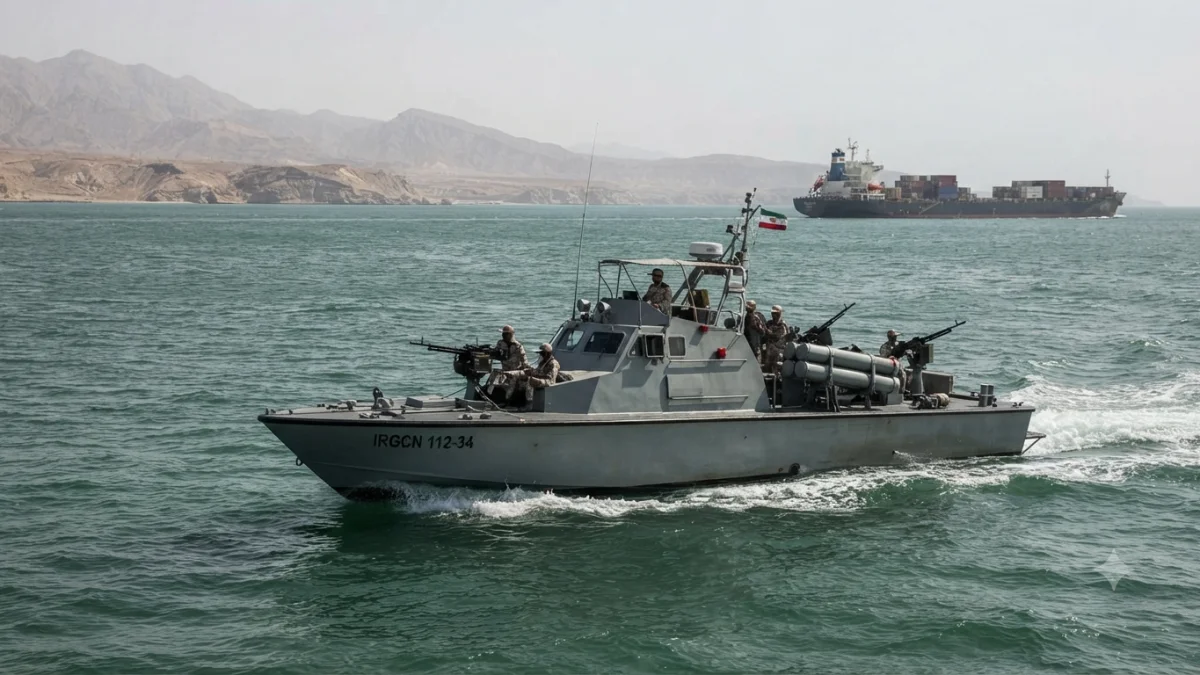
Iran and Oman have been negotiating arrangements for maritime traffic in the strait, which connects the Persian Gulf with the Gulf of Oman and is a major route for global energy shipments. Iranian officials have indicated that the talks could establish a route for safer passage without necessarily amounting to a full reopening of the waterway.
The United States has rejected Tehran's demand for compensation. President Donald Trump said on Monday that Iran should instead pay compensation for deaths attributed by Washington to Iranian forces and Iran-backed groups, further highlighting the gap between the two sides.
Oil prices rose sharply on Monday as hopes for a rapid reopening of the strait weakened. The waterway's prolonged disruption has raised concerns over global energy supplies and shipping costs.
As of Monday, Iran said discussions with Oman on a safe shipping route were continuing, but no agreement had been announced that would amount to a full reopening of the Strait of Hormuz.