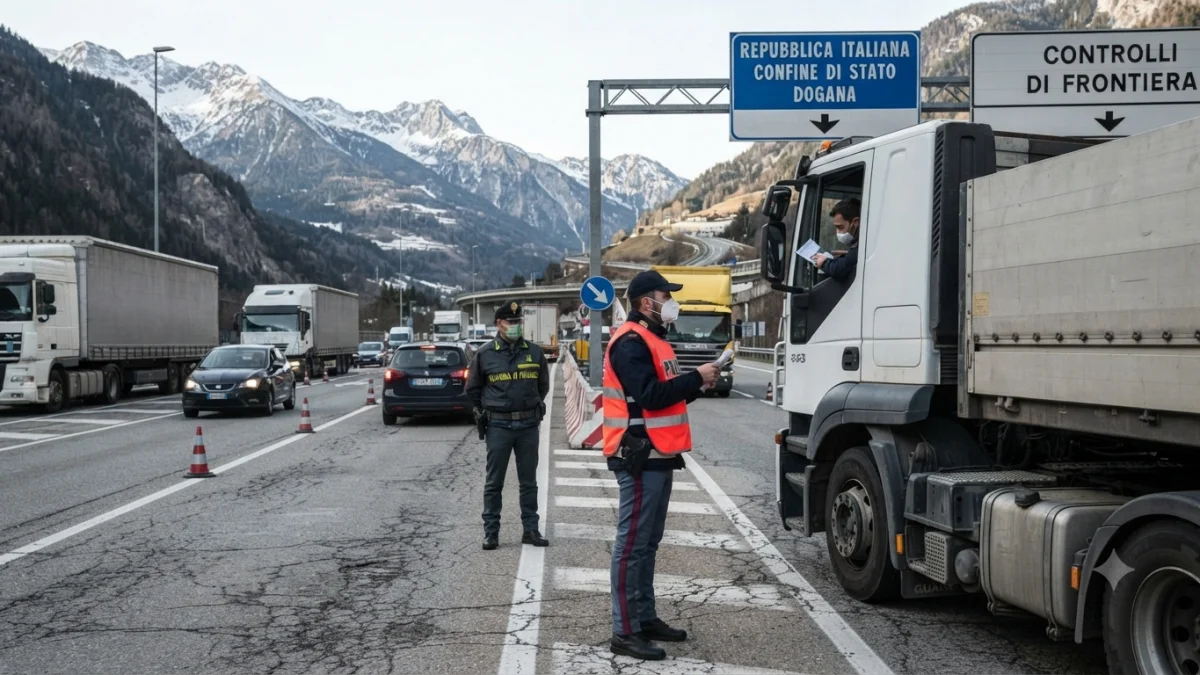


ROME — Italy said on Friday it would maintain temporary border controls on arrivals from Spain despite Madrid’s decision to introduce reciprocal checks on travellers from Italy, deepening a dispute between the two European Union members over migration and the Schengen free-travel area.
Italy said its controls on arrivals from Spain would remain in place at least until Aug. 15, rejecting a Spanish demand that Rome withdraw the measures by Sunday. The Italian government said it would reconsider the restrictions only after establishing that there was no new migration surge, security or terrorism risk, or movement of irregular migrants toward European territory.


The dispute followed a mass influx into Spain’s North African enclave of Ceuta on July 30, when about 72,000 people attempted to cross from Morocco, according to figures cited by Reuters. Most subsequently returned to Morocco, while hundreds of unaccompanied minors remained in Ceuta.
Italy introduced targeted checks on travellers arriving from Spain after the episode, temporarily suspending aspects of Schengen arrangements for non-EU nationals travelling from Spain. Rome said the measures were intended to address potential security and migration risks.
Spain has rejected Italy’s justification, saying the restrictions were unjustified and discriminatory. Madrid argued that migrants who entered Ceuta could not simply use the enclave to gain access to the Schengen area and said there was no evidence they were seeking to travel onward to Italy.
On Friday, Spain announced that it would impose its own border controls on travellers arriving from Italy by air and sea. The measures are due to begin at midnight on Saturday and remain in force until Sept. 7. Spanish authorities said checks would include travellers’ identity, nationality and, for third-country nationals, visas or residence permits.
The Italian government responded that it would not accept what it described as Spanish “ultimatums or impositions” concerning national security and border controls. It also cited Spanish warnings about the possibility of another attempted mass crossing into Ceuta on Aug. 15, while acknowledging that the scale of any such attempt was uncertain.
The confrontation places additional strain on cooperation between two EU members that normally participate in the Schengen area, where internal border checks are generally prohibited except under exceptional and temporary circumstances. The European Commission’s published records allow member states to reintroduce such controls when facing serious threats to public policy or internal security.
As of Friday, Italy had not indicated that it would lift its measures before Aug. 15, while Spain’s reciprocal controls were scheduled to take effect Saturday.