

HELENA, Montana — More than 900 bison managed by the conservation group American Prairie face removal from federal grazing lands in northeastern Montana after the U.S. Bureau of Land Management (BLM) revoked a series of grazing permits, a decision that has prompted legal appeals from conservation organizations and drawn support from state officials and ranching interests.
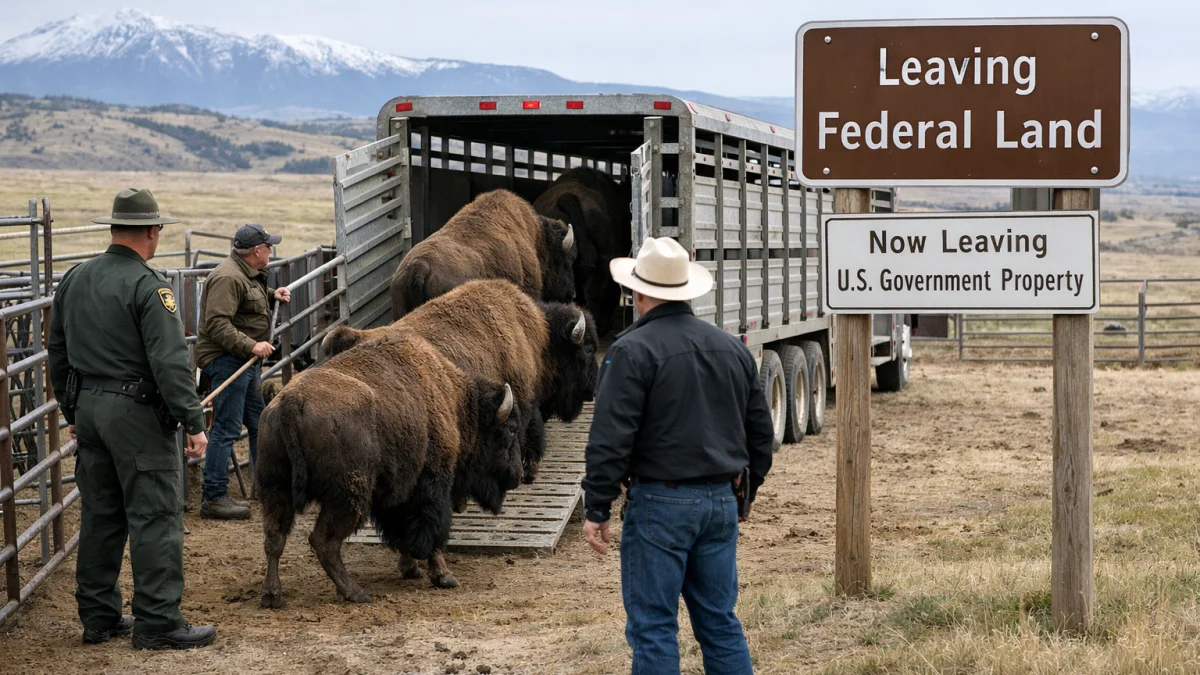
The BLM announced in May that it was rescinding grazing authorizations covering seven federal allotments in Phillips County, Montana, following a review ordered by the Department of the Interior. The agency said the permits would be canceled and that bison would have to be removed from the affected public lands by Sept. 30, 2026.


According to the BLM, federal grazing permits under the Taylor Grazing Act are intended for domestic livestock managed primarily for production-oriented purposes. After reviewing the permits and related records, the agency concluded that American Prairie manages its bison principally for conservation and ecological restoration rather than livestock production.
The decision affects approximately 63,000 acres of federal land and a herd of about 940 bison, according to reporting by E&E News. The agency said the action applies only to the affected allotments and does not alter broader federal support for bison conservation programs, tribal grazing authorizations or tribal bison herds.
American Prairie, a Montana-based nonprofit that manages extensive prairie habitat and bison herds, has challenged the decision. The organization filed an appeal with the Department of the Interior's Office of Hearings and Appeals earlier this month, arguing that the federal government reversed longstanding policy without sufficient legal justification. Conservation groups, including the Western Watersheds Project and Defenders of Wildlife, have filed separate appeals.
“This decision abandons decades of consistent federal policy,” American Prairie Chief Executive Alison Fox said in a statement cited by E&E News. The organization and its supporters contend that the ruling could affect conservation initiatives, tribal partnerships and public hunting programs linked to the herd.
Montana Governor Greg Gianforte welcomed the BLM action, calling it “a victory for the rule of law” and arguing that previous federal approvals conflicted with the intent of federal grazing statutes. State officials and ranching groups have long opposed the permits, citing concerns about land management and livestock operations.
As of Friday, the BLM decision remained in effect while appeals were pending. The removal deadline remains set for late September, though the outcome of the administrative challenges remains unclear.