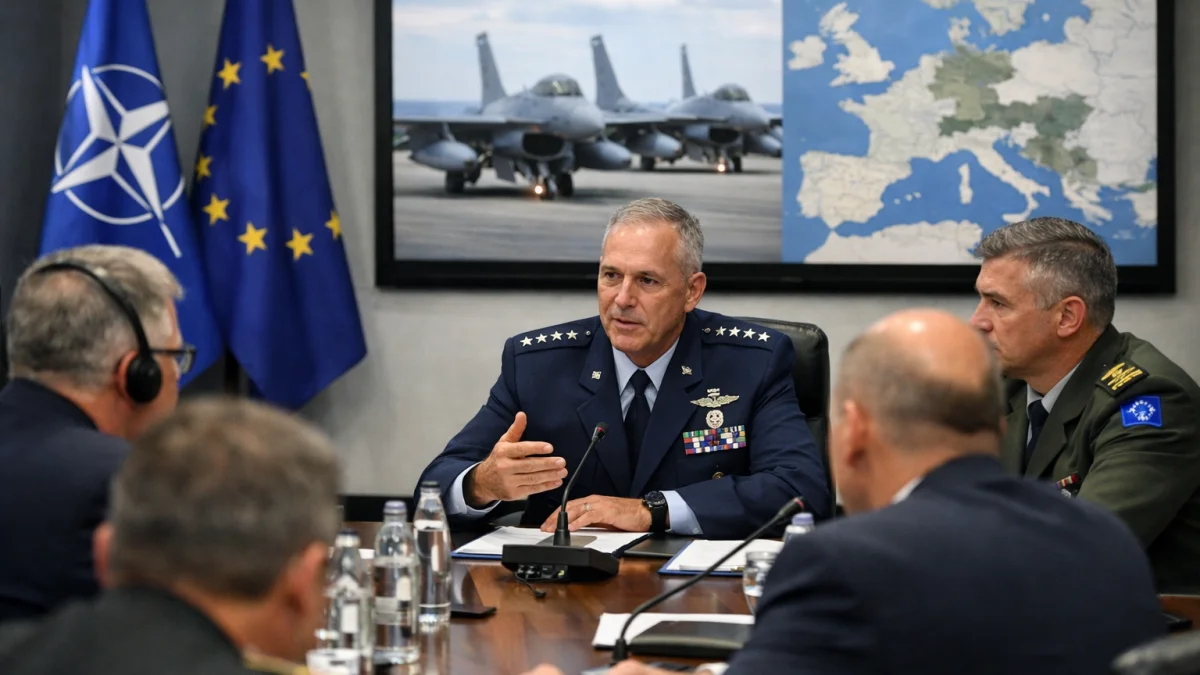


BRUSSELS — NATO allies are closely monitoring U.S. plans to significantly reduce the number of fighter jets and other air assets available for operations in Europe, according to European officials and reports published this week.
The United States intends to cut the number of F-16 and F-15E fighter jets allocated to NATO from roughly 150 to about 100, along with reductions in maritime reconnaissance aircraft and the removal of all aerial refueling tankers previously committed to the region, The New York Times reported on June 12, citing senior European officials and a document shared with allies.


The planned drawdown also includes reallocating an aircraft carrier, a missile-launching submarine, several warships and associated aircraft, officials said. The moves form part of broader efforts by the Trump administration to adjust U.S. military commitments and encourage European allies to increase their own defense spending and capabilities.
NATO Secretary General and other alliance officials have been briefed on the proposals in recent weeks. Some European diplomats expressed concerns about the potential impact on collective defense readiness, particularly amid ongoing security challenges on the eastern flank, according to multiple reports.
The Pentagon has described the adjustments as “rightsizing” contributions to push for greater burden-sharing within the alliance. A Pentagon statement referred to in reports emphasized coordination with allies but did not confirm specific numbers.
European leaders have responded by accelerating plans to bolster their own air and naval forces. Several countries have increased defense budgets in recent years, with some pledging further commitments at recent NATO meetings.
“These discussions are part of ongoing alliance adaptation to ensure NATO remains strong and capable,” a NATO official said, speaking on condition of anonymity to discuss sensitive matters.
The developments come after earlier announcements of U.S. troop adjustments in Europe, including the withdrawal of about 5,000 personnel from Germany. Details on the exact timeline for the air asset reductions remain unclear, with implementation expected to occur gradually.
As of Saturday, NATO allies continued consultations in Brussels on how to address potential gaps in air support and deterrence. No immediate operational changes have been reported, and U.S. officials have reiterated commitments to Article 5 collective defense obligations.