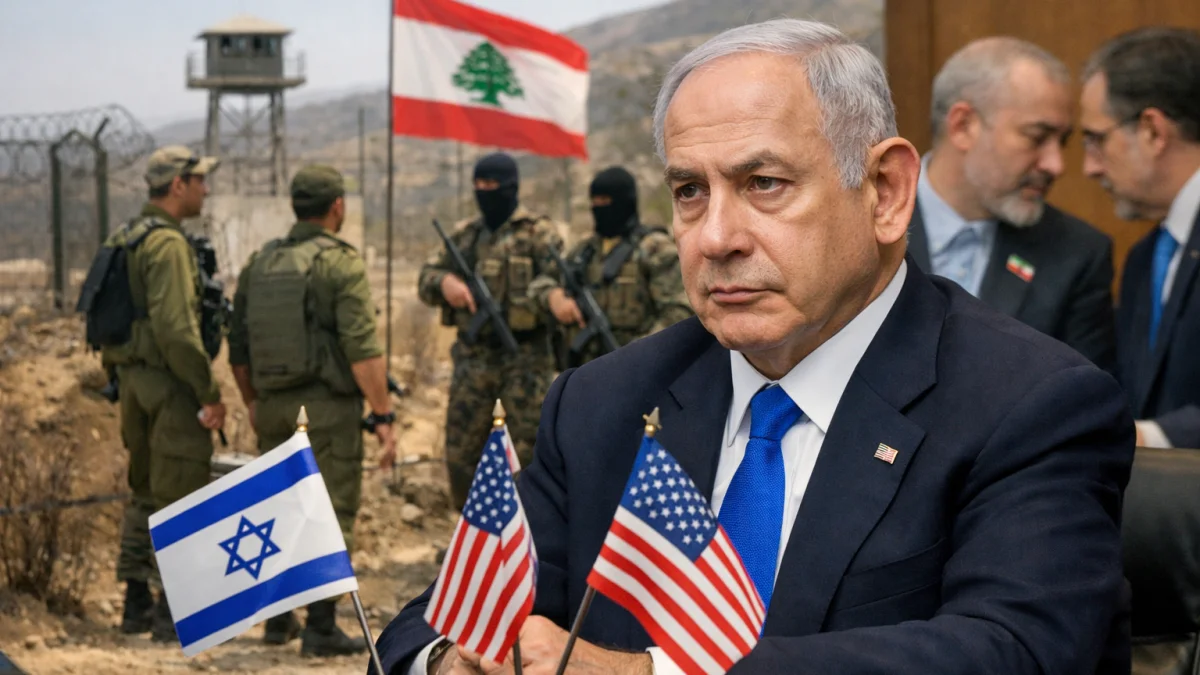


JERUSALEM — Israeli Prime Minister Benjamin Netanyahu has rejected demands that Israel withdraw its forces from southern Lebanon as part of a developing U.S.-Iran agreement, setting up a potential point of contention in efforts to finalize a broader diplomatic framework between Washington and Tehran, according to Israeli and Iranian officials.
The dispute emerged this week after Iran and its ally Hezbollah indicated that Israeli military withdrawals from areas of southern Lebanon occupied during recent fighting should be addressed in the next phase of negotiations linked to a U.S.-Iran memorandum of understanding announced earlier this month. Hezbollah said on Tuesday that it believed Iran would not sign a final nuclear agreement with Washington unless Israel withdrew from Lebanese territory.


Netanyahu and senior Israeli officials have publicly rejected such demands. Israeli leaders have said troops will remain in security zones in southern Lebanon for as long as necessary to address security threats posed by the Iran-backed Hezbollah movement. An Israeli political source previously told Reuters that Netanyahu had informed U.S. President Donald Trump that Israel would retain freedom of action against threats in Lebanon.
“We will remain in the security zones for as long as required to defend our country,” Netanyahu said earlier this week, according to statements reported by multiple media outlets. Israeli Defense Minister Israel Katz has also stated that Israel opposes a withdrawal from southern Lebanon despite international pressure.
Iranian Foreign Minister Abbas Araghchi said continued Israeli troop deployments in Lebanon would be viewed as inconsistent with efforts to secure a lasting peace arrangement. According to statements reported on Tuesday, Araghchi said that without an Israeli withdrawal, “the war has not fully come to an end.” Hezbollah said Tehran had pledged to pursue the issue during upcoming negotiations with Washington.
The disagreement comes after months of regional conflict involving Iran, Israel and Hezbollah. Fighting in Lebanon has eased since the U.S.-Iran memorandum of understanding was announced, according to Hezbollah and regional officials, although exchanges of fire and Israeli military operations have not completely ceased. Israel has maintained that its military presence is necessary to prevent renewed attacks from Hezbollah positions near the border.
The issue has also highlighted strains between Netanyahu and Trump. Speaking at the G7 summit in France on Tuesday, Trump publicly criticized some Israeli military actions in Lebanon and said he had urged Netanyahu to act “more responsibly,” according to Reuters.
As of Wednesday, negotiations connected to the broader U.S.-Iran framework remained ongoing. Officials from the parties involved had not announced any agreement on the future status of Israeli forces in southern Lebanon, and details of the next round of talks remained unclear.