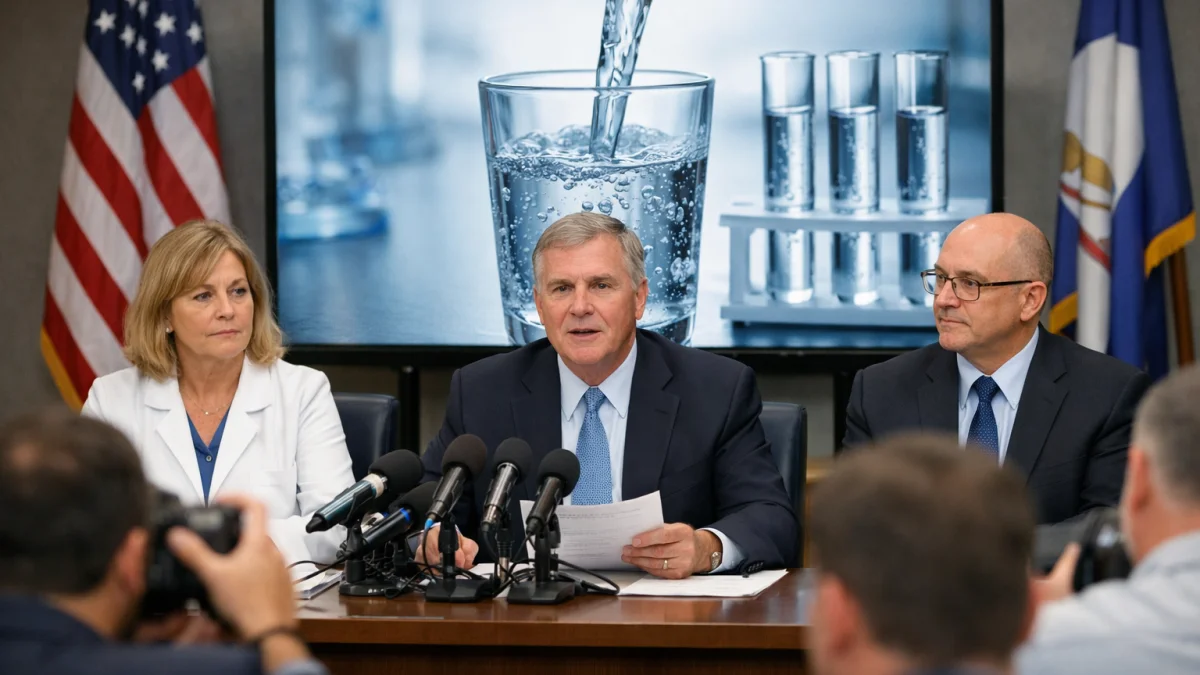


GENEVA — The World Health Organization released the third addendum to its Guidelines for drinking-water quality on Thursday, incorporating updates to support countries in strengthening public health protections through improved risk management and surveillance, WHO officials said.
The updated fourth edition, incorporating the first, second and third addenda, was published on June 17, 2026. It builds on more than 65 years of WHO guidance and supersedes previous versions, including the 2022 edition that included the first and second addenda.


The guidelines provide a framework for managing drinking-water risks from catchment to consumer, emphasizing health-based targets, water safety planning and independent surveillance. The new addendum includes strengthened guidance on proactive risk management, small water supplies, microbial risks and selected chemical hazards.
“Safe drinking-water is fundamental to health, development and human rights,” said Dr Rüdiger Krech, Director a.i., Department of Environment, Climate Change, One Health & Migration at the World Health Organization. “These updated Guidelines help countries focus resources where they matter most: preventing contamination, managing risks before they become health threats, and ensuring that all people can rely on drinking-water that is safe.”
Key updates focus on water safety plans, which remain central to risk management. The edition draws on additional implementation experience across different settings and clarifies the role of sanitary inspections, particularly for small water supplies. It also provides new or updated information on microbial pathogens, including fact sheets for emerging viruses, and revises guidance on certain pesticides used for vector control.
Despite global progress, approximately 2.1 billion people still lack safely managed drinking-water services, including 106 million who rely directly on surface water sources, according to WHO data.
The guidelines are intended to assist governments in developing national regulations and standards. They highlight the role of governments in supporting water suppliers through policies, regulations and capacity building.
WHO is now initiating a more comprehensive review for a fifth edition, which will include evidence reviews on contaminants such as per- and polyfluoroalkyl substances (PFAS) and disinfection by-products. Dissemination efforts for the current addendum will include technical briefings, webinars and country-specific materials.
The full document is available for download on the WHO website. Countries are encouraged to adapt the guidelines to local contexts while prioritizing the highest health risks. No immediate changes to existing national standards were mandated by the release.