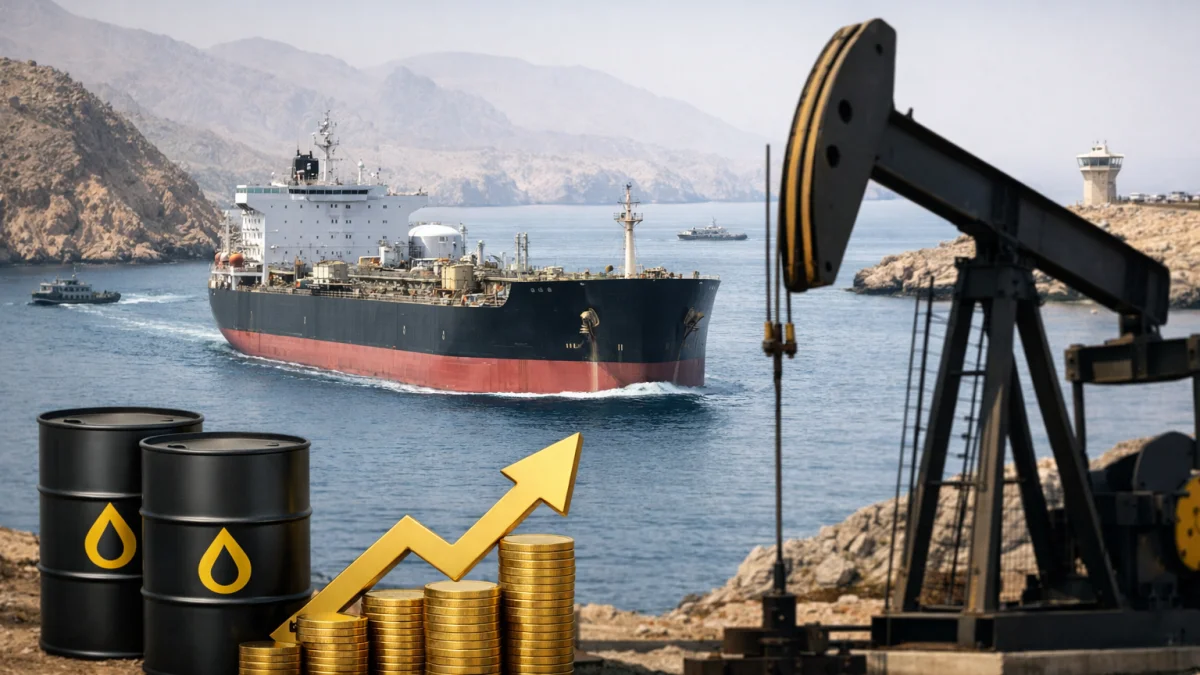


LONDON — Oil prices rose on Wednesday as renewed tensions between Iran and the United States heightened concerns over shipping through the Strait of Hormuz, a critical chokepoint for global energy supplies.
Brent crude futures climbed more than 2 percent in early trading to trade near $105 per barrel, while U.S. West Texas Intermediate crude rose similarly, according to market data. The gains followed reports of fresh incidents involving vessels in the waterway and statements from both sides that tested a fragile ceasefire in place since early April.


The Strait of Hormuz, which connects the Persian Gulf to the Arabian Sea, handles about one-fifth of global seaborne oil trade. Iran has repeatedly threatened to disrupt traffic there amid its broader conflict with the U.S. and Israel that began earlier in 2026. Shipping activity in the area has declined sharply since March, when Iranian forces declared the strait effectively closed and carried out attacks on vessels, according to maritime security reports and industry trackers.
U.S. officials said American forces engaged Iranian vessels attempting to interfere with commercial shipping on Monday, sinking several small boats. Iran described the U.S. actions as violations of the ceasefire and reported its own operations in response. Details of the latest exchanges remained limited, with both sides issuing competing accounts.
"These incidents underscore the volatility that persists in the region," a shipping industry source familiar with Gulf operations said, speaking on condition of anonymity due to the sensitivity of the matter.
The conflict, which escalated after U.S. and Israeli strikes in February, has already driven significant swings in energy markets. Oil prices have at times exceeded $120 per barrel this year before easing on hopes of de-escalation. Analysts have pointed to reduced Iranian oil exports, attacks on tankers and rerouting of vessels as factors supporting higher prices, though global inventories and alternative supplies have limited the upside so far.
Gulf producers, including Saudi Arabia and the United Arab Emirates, have sought to reassure markets of their ability to maintain exports through alternative means where possible. However, insurance costs for vessels transiting the area have risen, and several shipping companies have diverted traffic.
The White House has emphasized efforts to keep sea lanes open. President Donald Trump previously described the ceasefire as holding but under strain, while Iranian officials have conditioned any sustained opening of the strait on halting perceived hostile actions.
As of Wednesday, limited commercial traffic continued under heightened naval presence from multiple parties. No major new supply outages were confirmed in the past 24 hours, traders said, but uncertainty over the waterway kept risk premiums elevated.
The International Energy Agency and other forecasters have noted that prolonged disruptions could widen global oil deficits later in 2026, though current flows from other producers have helped mitigate immediate shortages.
Market participants will monitor developments in the coming days for signs of further escalation or diplomatic progress.