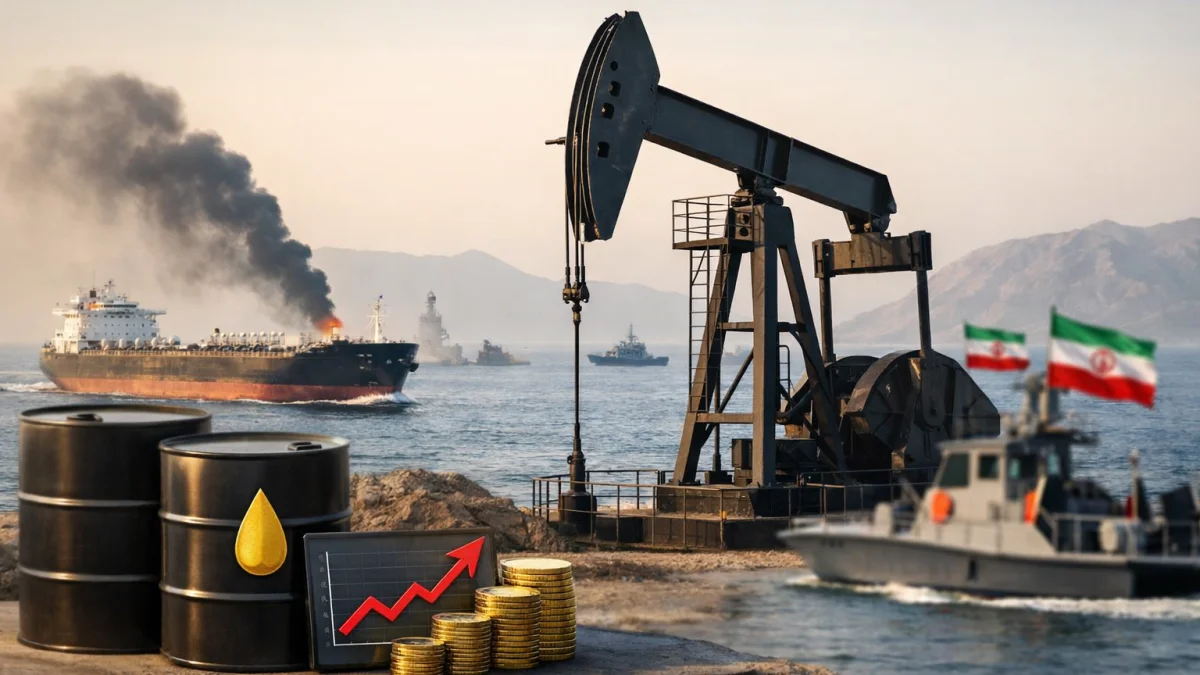


LONDON — Oil prices surged sharply on Monday after renewed tensions in the Strait of Hormuz between the United States and Iran disrupted shipping in the key waterway, traders and analysts said.
Brent crude futures rose more than 3 percent in early trading before easing, while West Texas Intermediate also gained ground amid concerns over potential further supply disruptions. The moves came as reports emerged of fresh exchanges involving vessels in the strait, which handles about one-fifth of global oil trade.


The latest flare-up follows a fragile ceasefire that took hold in April after months of conflict. U.S. officials said American forces responded to Iranian actions targeting commercial vessels, while Iranian state media accused Washington of violating the truce by striking ships and areas near the strait. Details of the specific incidents remained unclear early Monday.
“Safe transit through the Strait of Hormuz will be ensured with new procedures in place,” an Iranian Revolutionary Guard Corps navy statement said, according to reports. U.S. Central Command has described its actions as defensive measures to protect navigation.
The strait has been a focal point since the broader conflict escalated in late February 2026. Iran has at times declared the waterway effectively closed or restricted, leading to attacks on vessels, seizures and a sharp reduction in tanker traffic. Multiple rounds of U.S.-led efforts, including escort operations, have sought to restore flows with limited success.
Oil markets have been highly sensitive to developments in the region. Prices have fluctuated significantly this year, surging in response to supply risks and easing on signs of de-escalation. As of Friday’s close, Brent was trading around the $109 level before Monday’s gains, according to market reports.
Energy traders cited the latest incidents as renewing fears of prolonged disruptions. Shipping sources reported vessels turning back or facing delays, though full details on volumes affected were not immediately available.
Gulf producers and international buyers have monitored the situation closely. Saudi Arabia and the United Arab Emirates have previously reported impacts from related actions, while the International Energy Agency has described the overall disruption as among the largest in history.
U.S. President Donald Trump’s administration has pushed for reopening the strait while maintaining pressure on Iran. Ceasefire talks have stalled at times over issues including the waterway and broader nuclear concerns.
As of Monday afternoon in London, markets remained volatile with traders watching for any official statements from Washington or Tehran. No immediate casualties from the latest reported exchanges were confirmed in available reports.
The price surge added to broader energy market pressures, with ripple effects on fuel costs globally, though governments have tapped reserves and alternative supplies in response to earlier shortfalls.