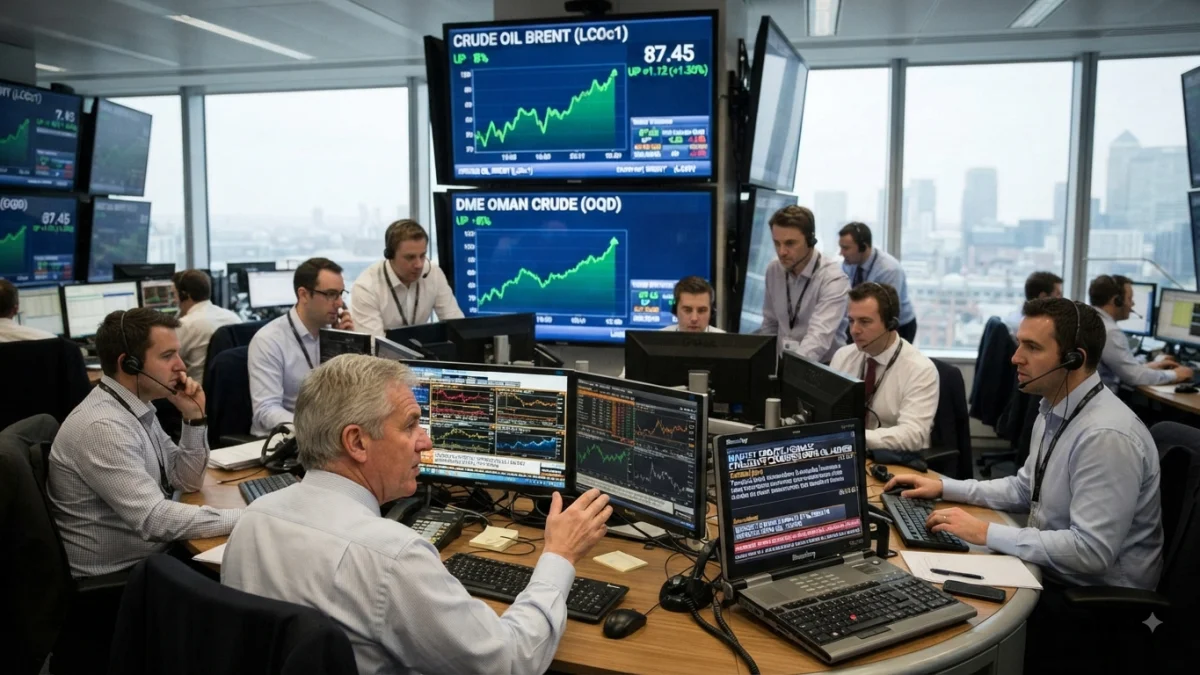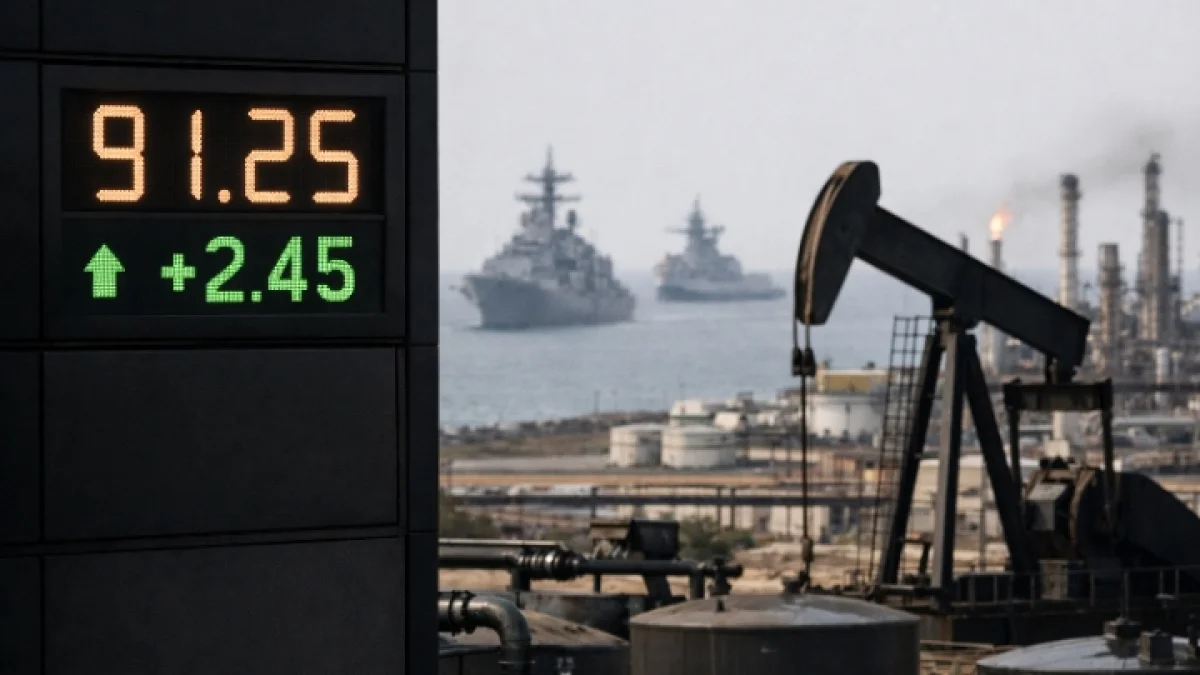


NEW YORK—Oil prices climbed above $91 a barrel on Tuesday, with Brent crude settling at its highest level in more than five weeks, as escalating military conflict between the United States and Iran heightened concerns over potential disruptions to global energy supplies and key shipping routes in the Middle East.
Brent crude futures settled up $1.79, or about 2%, at $91.01 a barrel, while U.S. West Texas Intermediate crude gained $1.68, or roughly 2%, to close at $84.91, according to market data. The gains marked the highest settlement for Brent since June 10 and for WTI since June 11.


The latest rally followed another round of U.S. military strikes against Iranian targets and renewed concerns that hostilities could threaten oil exports from the Gulf. Market participants also monitored warnings from Yemen's Iran-aligned Houthi movement, which threatened attacks on Saudi oil shipping and raised the prospect of further disruption to maritime traffic in the Red Sea.
Analysts said the market's advance reflected increasing geopolitical risk rather than an immediate loss of oil supply.
"The rally is not necessarily about lost barrels today, but rather the market assigning a higher probability that logistics remain unstable through the week, especially if Saudi exports to Asia or Red Sea transit face additional disruption," energy consultancy Gelber & Associates said in a market note.
Traders have focused on the Strait of Hormuz and the Bab el-Mandeb, two of the world's most important maritime chokepoints for oil shipments. Reports that some tankers altered their routes amid security concerns added to worries over transport costs and supply reliability, although no broad interruption to global crude flows had been officially confirmed.
The rise in crude prices also came as investors awaited official U.S. government inventory data after industry figures pointed to higher crude and distillate stockpiles alongside lower gasoline inventories. Those data could provide additional signals on fuel demand and supply conditions in the world's largest oil consumer.
Higher oil prices reverberated across broader financial markets, contributing to mixed equity performance and renewed inflation concerns as investors assessed the economic implications of prolonged instability in the Middle East.
Markets remained focused on further developments in the U.S.-Iran conflict and any confirmed changes to energy infrastructure or shipping operations that could affect global oil supplies.