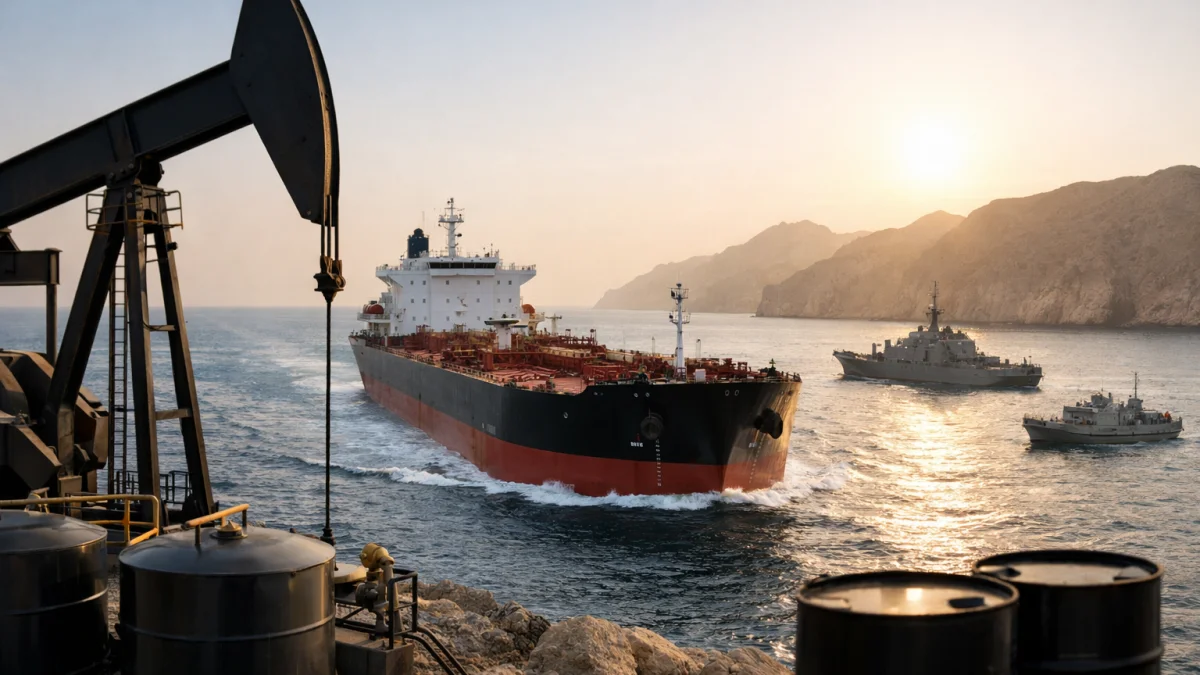


LONDON — Oil prices rose on Friday as disruptions to shipping through the Strait of Hormuz continued, limiting crude exports from major Middle East producers.
Benchmark Brent crude futures climbed about 2 percent to around $93 per barrel in early trading, while U.S. West Texas Intermediate crude rose similarly, according to market data. The gains came amid ongoing restrictions on tanker traffic in the strategic waterway, which normally carries about one-fifth of global oil and liquefied natural gas shipments.


The disruptions stem from conflict-related tensions in the region that began in late February, when shipping through the strait was effectively curtailed. Attacks on vessels and restrictions on tanker movements have sharply reduced flows, leading to significant supply shortfalls. Global oil supply fell by more than 10 million barrels per day in March, according to World Bank estimates, with further impacts in subsequent months.
The International Energy Agency and U.S. Energy Information Administration have reported that Middle East production has been curtailed by millions of barrels daily due to storage constraints and blocked export routes. Persian Gulf producers have cut output by roughly 6 percent in some cases, with broader supply losses estimated at around 10-14 million barrels per day at peaks.
"Details remain unclear on the exact timeline for any resumption of full flows," a shipping industry source said, speaking on condition of anonymity due to the sensitivity of operations in the area.
Efforts to restore normal traffic, including diplomatic initiatives and naval operations, have seen limited success. Some vessels have transited under escort or in limited numbers, but overall commercial flows remain well below pre-conflict levels. Independent trackers have reported only a fraction of normal tanker activity.
The situation has drawn down global inventories, with reports of hundreds of millions of barrels pulled from stocks. Analysts from firms including Goldman Sachs and Capital Economics have noted the risk of further tightening if the disruptions persist.
Oil markets have been volatile since the conflict escalated. Prices surged sharply in the initial weeks, at times exceeding $110-$130 per barrel in projections for prolonged closure, before partially easing amid some alternative supply and demand adjustments. As of early June, Brent has traded near $90-$100, still elevated compared to earlier 2026 levels.
Major consumers in Asia and Europe have faced higher energy costs, prompting some rationing and fuel hoarding in affected markets. Non-OPEC+ producers, particularly the United States, have provided limited offsets, with U.S. output expected to rise modestly.
U.S. officials and market participants continue to monitor developments closely. The U.S. Energy Information Administration has projected Brent averaging around $106 per barrel for May and June under current assumptions, before potential declines later in the year if supplies recover.
As of Friday, shipping activity in the strait remained constrained, with no immediate signs of full normalization, according to maritime authorities and energy analysts. Further updates are expected in coming days as diplomatic and operational efforts proceed.