

SINGAPORE — Oil tankers that spent months stranded inside the Persian Gulf during disruptions to shipping through the Strait of Hormuz are facing operational challenges as they prepare to resume voyages, with maritime experts and industry officials reporting that some vessels require hull inspections and cleaning after prolonged periods at anchor.
The issue has emerged as shipping traffic gradually resumes following agreements aimed at easing restrictions on movement through the strategic waterway. According to ship-tracking data and maritime industry reports, hundreds of vessels, including oil tankers, bulk carriers and cargo ships, remained delayed in Gulf waters after months of conflict-related disruptions.


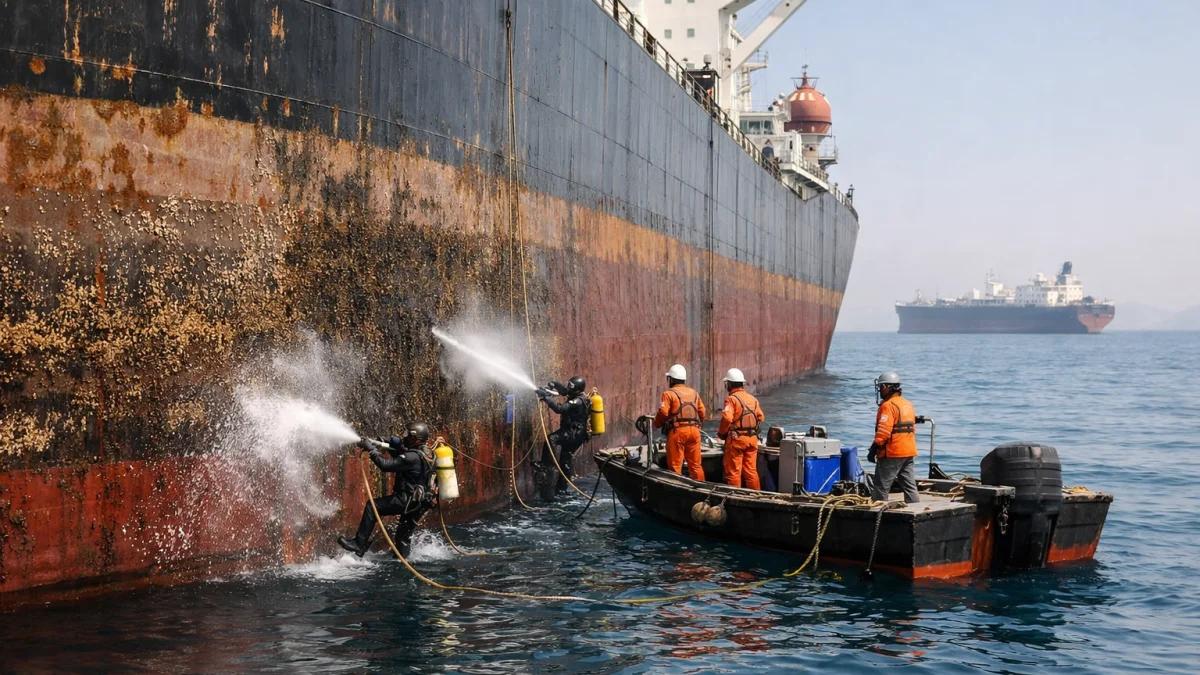
Maritime specialists said vessels that remained idle for extended periods in the warm waters of the Gulf can experience marine growth on hulls and propellers, a condition known as biofouling. The buildup can reduce fuel efficiency, affect vessel performance and, in some cases, require underwater cleaning or inspection before long-distance voyages resume.
“After long periods of inactivity, operators generally assess underwater conditions to determine whether cleaning is needed before normal trading resumes,” a maritime industry executive familiar with tanker operations said. Industry guidance on individual vessels, however, varies by operator and classification requirements.
The operational concerns come as shipping companies work through a backlog created by the partial closure and restricted use of the Strait of Hormuz. Allianz Research said on Tuesday that about 1,150 cargo vessels carrying freight valued at roughly $125 billion were awaiting safe passage through Gulf routes, although not all were oil tankers.
Recent data indicate that vessel movements have increased. Reuters reported that several stranded crude tankers and liquefied natural gas carriers have successfully transited the strait in recent days as maritime authorities implemented coordinated passage procedures.
The International Maritime Organization said ships are departing under a coordinated evacuation and traffic-management scheme designed to reduce congestion and improve navigational safety. Officials have emphasized that vessels must follow assigned routes and departure schedules while traffic gradually returns to normal levels.
Before the disruption, the Strait of Hormuz handled roughly one-fifth of global oil and gas shipments, according to industry estimates. Analysts have said a full recovery in shipping flows could take weeks or months because of vessel backlogs, operational checks and ongoing security measures.
As of Wednesday, more tankers were exiting the Gulf and oil supplies were beginning to reach international markets. Maritime authorities and shipping companies continued to monitor vessel readiness, including maintenance requirements, as traffic through the strait steadily increased.