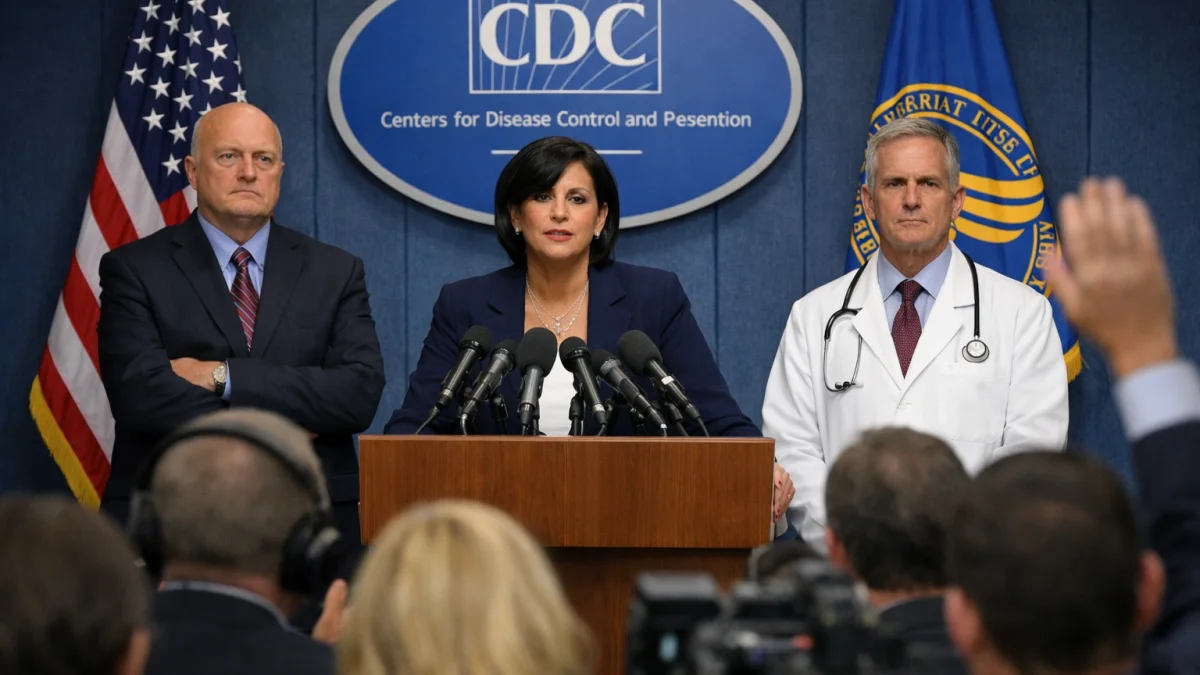


WASHINGTON — Only about half of U.S. adults say they trust public health recommendations from the Centers for Disease Control and Prevention (CDC), according to a national survey released this week, marking a sharp decline from levels reported a year earlier. The findings were published on Tuesday by the Harvard T.H. Chan School of Public Health and the de Beaumont Foundation’s Public Health Listening Lab.
The survey found that 50% of adults trust CDC health recommendations, down from 77% in a comparable poll conducted in 2025. Researchers said trust in state and local public health agencies also declined, though those institutions continued to receive higher levels of confidence than the CDC. The poll was conducted from March 19 to April 1 among a nationally representative sample of more than 2,200 U.S. adults.


“Trust in CDC health recommendations remained relatively stable in the wake of the COVID-19 pandemic but has fallen precipitously in the last year,” the poll report said. Researchers found that only a small share of respondents reported trusting CDC recommendations “a great deal,” while a larger group said they trusted them “somewhat.”
According to the survey, the decline was accompanied by substantial political differences. Trust among Democrats and independents fell markedly compared with the previous year, while trust among Republicans increased slightly, the report said. Researchers also reported declines across several demographic groups, including women, Black and Hispanic adults, urban residents and college graduates.
The findings add to a broader pattern identified in other recent surveys. Polling conducted earlier this year by the Annenberg Public Policy Center found that Americans expressed greater confidence in their own doctors and in professional medical organizations than in federal health agencies. Another survey cited by public health groups found fewer than half of adults trusted the CDC for vaccine-related information.
Federal health agencies have undergone significant leadership, policy and organizational changes over the past year. Public debate has intensified over vaccine policy, public health communications and the role of federal agencies in issuing health guidance. The CDC did not immediately respond to requests for comment reported by several outlets covering the survey results.
Researchers said support for some public health measures remained relatively strong despite declining confidence in agencies. The survey found continued backing for several childhood vaccine requirements and other health initiatives, although views varied across political groups.
As of Saturday, public health officials had not announced any policy changes in response to the survey. The CDC continued to publish health guidance and recommendations while the findings circulated among policymakers, researchers and public health organizations.