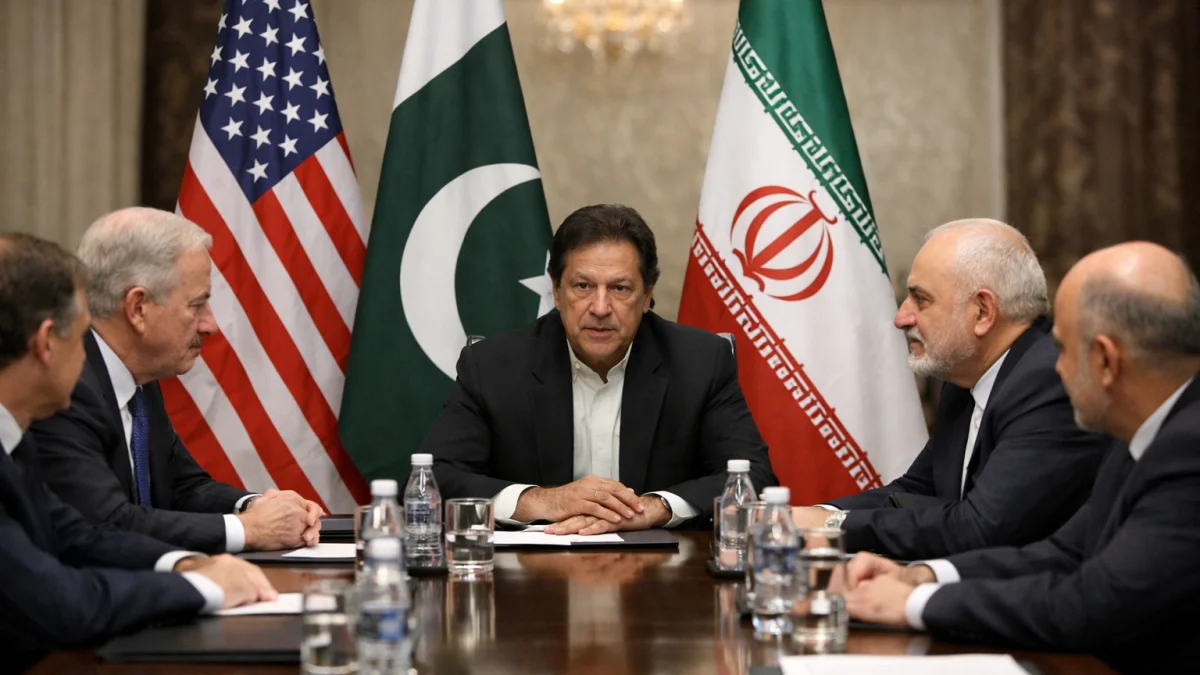


ISLAMABAD — Pakistan has played a central mediating role in a preliminary agreement between the United States and Iran aimed at ending months of hostilities, according to statements from Pakistani, U.S. and Iranian officials, with a formal signing ceremony expected later this week in Switzerland. Pakistani Prime Minister Shehbaz Sharif announced on Sunday that the two sides had agreed to an immediate halt to military operations and had reached a framework for further negotiations on unresolved issues.
The agreement follows weeks of diplomacy in which Pakistan served as a key intermediary between Washington and Tehran. Sharif said Pakistan had worked closely with both governments to advance negotiations and help bridge differences on major issues. Earlier this month, he said the parties had reached a “final, agreed upon text” and that mediators were coordinating the next steps toward implementation.


According to Reuters, the preliminary deal includes provisions to end military operations, reopen the Strait of Hormuz to international shipping and begin a process for addressing broader disputes between the two countries. Officials said a ceasefire period would provide time for additional talks on sanctions, nuclear issues and other outstanding matters.
The future of Iran’s nuclear program remains one of the most significant unresolved issues. Reuters reported that negotiations during the ceasefire period are expected to focus on Iran’s enriched uranium stockpile and possible arrangements involving sanctions relief. Details of those discussions remain unclear.
Pakistan’s role in the process has been acknowledged by multiple parties involved in the negotiations. Earlier rounds of talks were held in Islamabad, where Pakistani officials facilitated contacts between U.S. and Iranian representatives. Officials familiar with those discussions said dialogue continued despite periods of tension and disagreement.
Sharif described the latest breakthrough as evidence that diplomacy remained viable despite setbacks. “Peace has never been this close as it is now,” he said in a public statement.
The agreement has been welcomed by several governments and international organizations, according to reports, although officials have cautioned that major issues still require negotiation before a final settlement can be reached. A formal signing ceremony is scheduled for Friday in Switzerland, while technical and political discussions are expected to continue in the coming days.