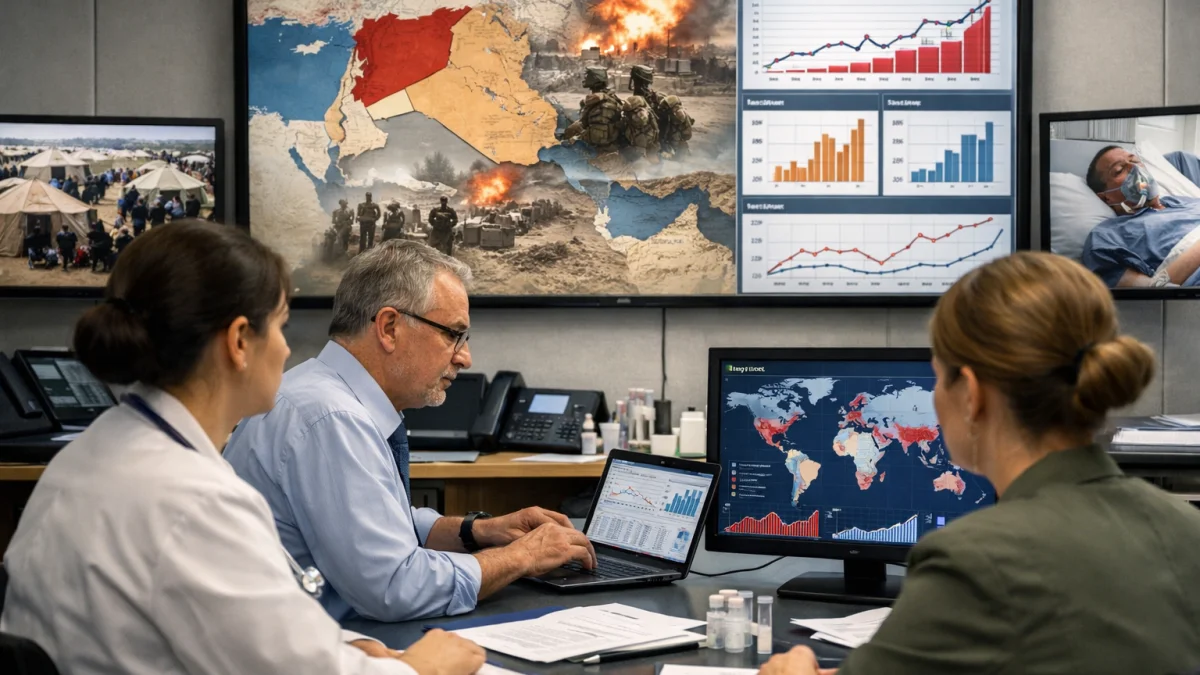


GENEVA — Public health officials are closely monitoring potential wider health impacts from ongoing regional conflicts, particularly in the Middle East, the World Health Organization said on Tuesday.
The WHO and national health authorities continue to track risks including disease outbreaks, strained health systems and environmental hazards linked to the escalation of conflict that began in late February 2026, officials said.


Health systems across the region have faced increased pressure from casualties, displacement and damage to infrastructure, according to WHO reports from March and April. National authorities in Iran reported more than 1,300 deaths and 9,000 injuries in the initial period of intensified fighting, while Lebanon reported at least 570 deaths and more than 1,400 injuries, the organization said.
WHO has verified multiple attacks on health care facilities, including 18 in Iran resulting in eight health worker deaths, the agency stated. Similar incidents have been documented in Lebanon.
"Public health risks are rising," WHO Regional Director Hanan Balkhy was cited in earlier statements as saying amid the escalation. "Displacement is increasing the threat of outbreaks."
Officials have highlighted concerns over crowded shelters with limited access to safe water, sanitation and hygiene, which could elevate risks of respiratory infections, diarrhoeal diseases and other communicable illnesses, particularly among women and children. Environmental hazards, such as smoke from damaged petroleum infrastructure in Iran, have also raised worries about air quality and potential contamination of water and food sources.
The monitoring extends beyond immediate conflict zones. Disruptions to supply routes and health services have affected access to care for chronic conditions, maternal health and routine vaccinations, WHO situation reports indicated. Broader regional instability has prompted assessments of potential spillover effects on neighboring countries.
As of mid-June, WHO continues to issue updates on the situation while coordinating with partners on humanitarian responses. Details on the current scale of displacement and exact health impacts remain fluid, officials said, with figures subject to verification.
The organization has called for the protection of civilians and health facilities. In statements earlier this year, it emphasized that health care must be treated as a safe haven amid hostilities.
Public health experts are also watching other conflict-affected areas globally, including parts of Africa and Eastern Europe, where similar risks of disrupted services and disease transmission have been noted in annual assessments. However, the Middle East escalation has drawn particular attention due to the scale of recent displacements, with estimates exceeding hundreds of thousands in affected countries.
WHO and partner agencies said they are maintaining operational support where access permits, focusing on emergency medical supplies and disease surveillance. No major new outbreaks have been confirmed in the latest available updates, but vigilance remains high, officials added.
The situation is being reviewed regularly as part of broader global health security efforts.