

In the Spanish enclave of Ceuta, the crowds that poured across the border in one of the largest migration surges the territory has experienced have largely dispersed. Many of those who crossed from neighboring Morocco have already returned home. Those who remain are living with uncertainty in a city whose reception system has been stretched well beyond its limits.
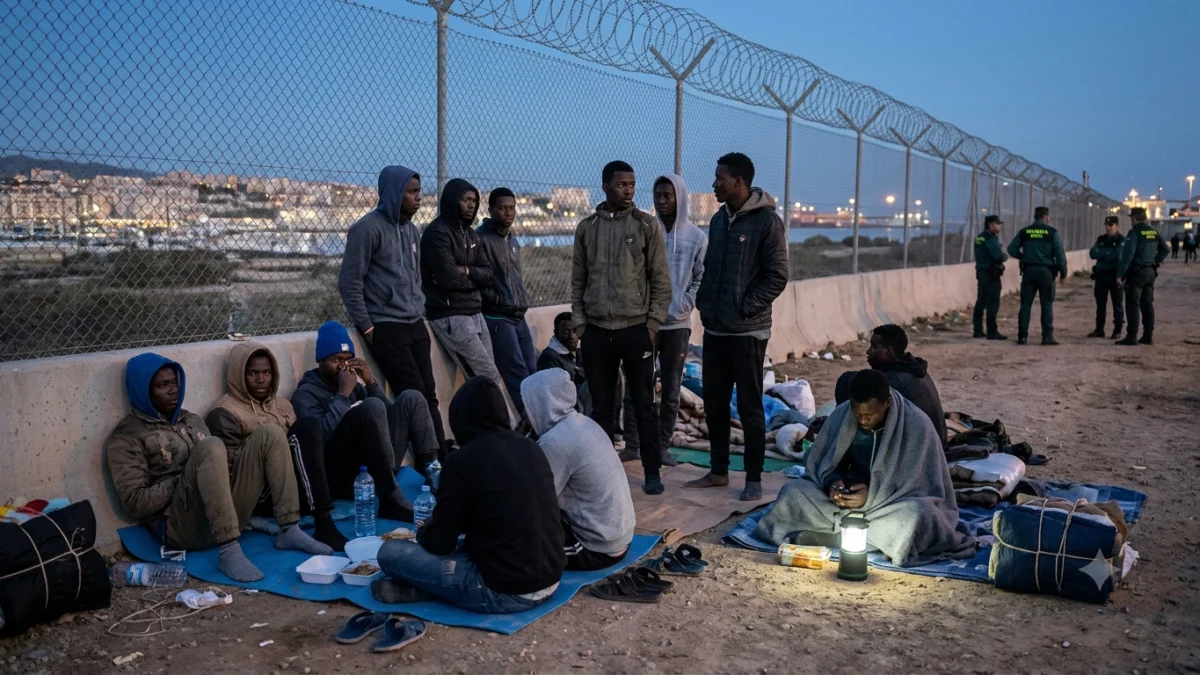
Outside the Temporary Immigrant Reception Center (CETI), people wait for information that often arrives slowly. Others sleep in improvised locations after reception facilities filled beyond capacity. Local authorities have described the humanitarian infrastructure as overwhelmed, particularly by the number of unaccompanied children who cannot legally be returned under the same procedures used for many adults.


The situation illustrates how a dramatic border crossing can evolve into a quieter, more complicated challenge. While the initial images focused on thousands entering the Spanish territory over land and by sea, the days that followed shifted attention toward those left behind: children awaiting protection decisions, migrants seeking asylum, humanitarian workers coping with limited resources, and residents confronting an unprecedented strain on a city of fewer than 90,000 people.
Spanish authorities estimate that roughly 69,500 migrants returned to Morocco after the surge, many doing so voluntarily once they found little shelter, food, or opportunity inside Ceuta. Yet between 3,000 and 5,000 people remained in the enclave as authorities worked to identify those eligible for asylum procedures or special protections, including more than 860 unaccompanied minors.
Those legal distinctions have become central to the city's response.
Adults who entered without qualifying for protection have generally faced rapid return or have chosen to leave. Children traveling alone, however, fall under Spain's child-protection system, creating additional responsibilities for local authorities already managing facilities operating beyond their intended capacity. Officials in Ceuta have repeatedly warned that the enclave lacks the resources to care for such large numbers over an extended period.
The migration surge has also intensified debate over what drove so many people to risk dangerous crossings.
Reporting by Reuters and the Associated Press indicates that economic hardship, combined with rapidly spreading online rumors that the border had effectively opened, encouraged tens of thousands of mostly Moroccan migrants to head toward Ceuta. Spanish and Moroccan officials have also pointed to misinformation circulating on social media, while many migrants interviewed by journalists described acting independently rather than under the direction of smuggling networks.
For humanitarian organizations working in Ceuta, the challenge extends beyond immediate shelter.
Reception centers designed for far smaller populations have struggled to provide accommodation, healthcare, food distribution and legal assistance. Local organizations have called for stronger long-term planning, noting that seasonal increases in arrivals are not new even if the scale of this episode proved exceptional. Previous periods of overcrowding had already highlighted structural limits within the enclave's reception system before the latest influx dramatically increased demand.
The crisis has also reverberated across Europe.
Emergency discussions among European Union interior ministers focused on how member states should respond collectively to sudden migration movements and whether additional processing arrangements outside EU territory should play a larger role in future policy. Italy proposed expanding EU-funded migrant processing and return centers in third countries, while several governments called for stronger external border controls and faster procedures. European Commissioner Magnus Brunner said the events offered lessons for implementing the bloc's new migration rules.
Relations between Spain and Morocco have come under renewed scrutiny as well.
Ceuta and Melilla, Spain's two North African enclaves, have long occupied a sensitive position in relations between Madrid and Rabat. Spanish officials have questioned why the movement grew so rapidly, while Moroccan authorities have rejected suggestions that they deliberately facilitated the crossings. Intelligence assessments cited by Reuters suggested Moroccan authorities may have allowed the initial surge without actively organizing it, although investigations into the circumstances continue.
The human cost has remained visible even after the largest crowds disappeared.
Authorities have reported dozens of deaths associated with the crossing, with many victims believed to have drowned or been crushed during attempts to navigate the crowded coastal barriers. Those losses have underscored the risks that accompany irregular migration across one of Europe's most politically sensitive frontiers.
For those still in Ceuta, however, daily life is defined less by geopolitics than by waiting.
Some hope to secure international protection. Others expect eventual return to Morocco. Children remain dependent on protection services while authorities assess their circumstances. Local officials continue seeking assistance from Spain's central government and European partners as they try to balance humanitarian obligations with the practical limits of a small territory managing an extraordinary event.
As emergency meetings continue and political leaders debate future migration policy, the immediate reality in Ceuta is measured not by the tens of thousands who crossed the border, but by the thousands who remain—caught between legal processes, limited resources, and an uncertain future in a city still absorbing the consequences of an unprecedented week.