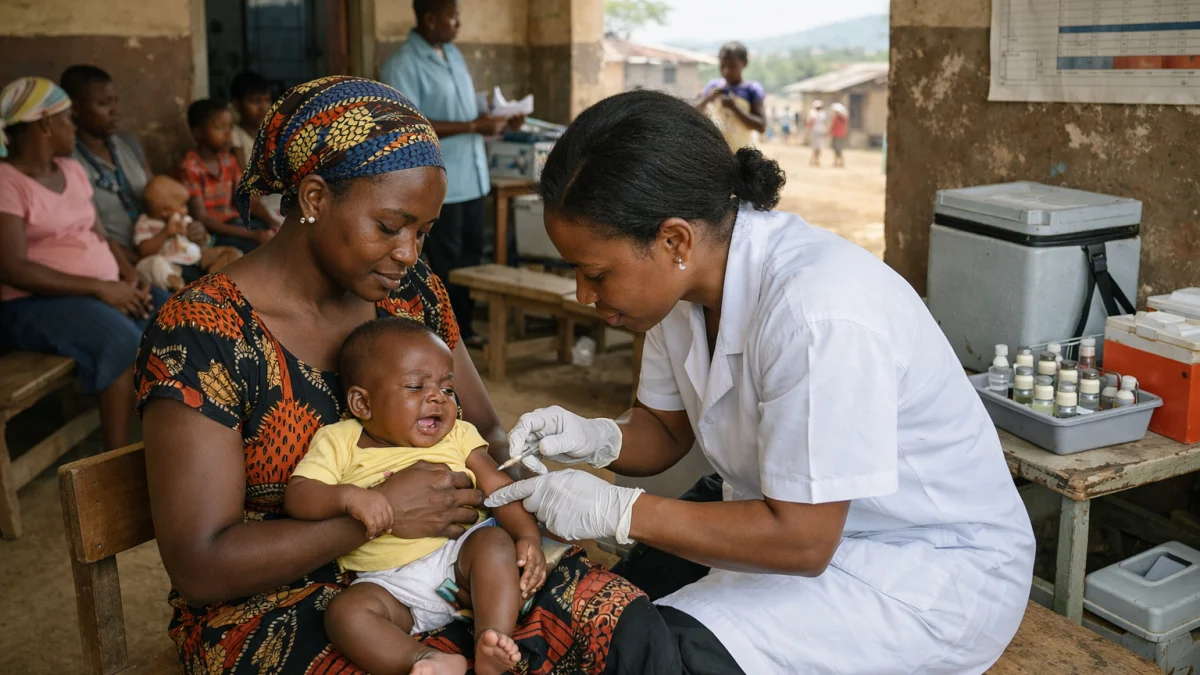


BRAZZAVILLE — Access to routine childhood immunization in sub-Saharan Africa continues to face significant challenges despite recent gains in vaccination coverage, according to the World Health Organization (WHO), UNICEF, Gavi and African public health agencies, which have warned that millions of children remain under-vaccinated or unvaccinated.
Health officials said this week that routine immunization systems across the region are still struggling to reach many children living in remote, conflict-affected and underserved communities, even as large-scale recovery efforts launched after the COVID-19 pandemic have helped narrow some coverage gaps.


The concerns come amid renewed attention to vaccination programs following the conclusion of “The Big Catch-Up,” a global initiative led by WHO, UNICEF and Gavi. The organizations announced in April that the program had delivered more than 100 million vaccine doses across participating countries and reached millions of previously missed children. However, the agencies said routine immunization remains the most effective and sustainable means of protecting children from preventable diseases.
“Many infants still miss out on lifesaving vaccines through routine immunization every year,” WHO, UNICEF and Gavi said in a joint statement released during World Immunization Week.
According to WHO’s Regional Office for Africa, vaccination programs have produced substantial health gains over the past two decades. The agency reported in April that nearly 20 million measles-related deaths had been averted in Africa since 2000 and that more than 500 million children had been protected through routine immunization during that period.
Despite that progress, officials say coverage levels in many countries remain below international targets. WHO’s African office said routine immunization coverage across the region remains under the 90% level considered necessary to prevent outbreaks of vaccine-preventable diseases such as measles, polio, yellow fever and diphtheria.
Health agencies have attributed continuing gaps to a combination of factors, including limited access to health services, fragile health systems, supply disruptions, conflict and instability, funding pressures and vaccine misinformation. WHO and UNICEF said these barriers continue to leave millions of children without full protection against preventable illnesses.
Researchers have also highlighted persistent inequalities across sub-Saharan Africa, noting that large numbers of so-called “zero-dose” children—those who have not received any routine vaccines—remain concentrated in hard-to-reach communities. A review published this year in the journal Vaccine said data limitations and operational challenges continue to hinder efforts to identify and reach vulnerable populations.
African health authorities are seeking to address those obstacles through new regional immunization strategies and increased domestic financing. The Africa Centres for Disease Control and Prevention said earlier this year that stronger investment in routine vaccination and primary health care systems would be necessary to sustain progress and expand access across the continent.
As of June, health agencies said immunization campaigns and routine vaccination programs remain ongoing across the region, while efforts continue to reach children who have missed scheduled vaccinations.