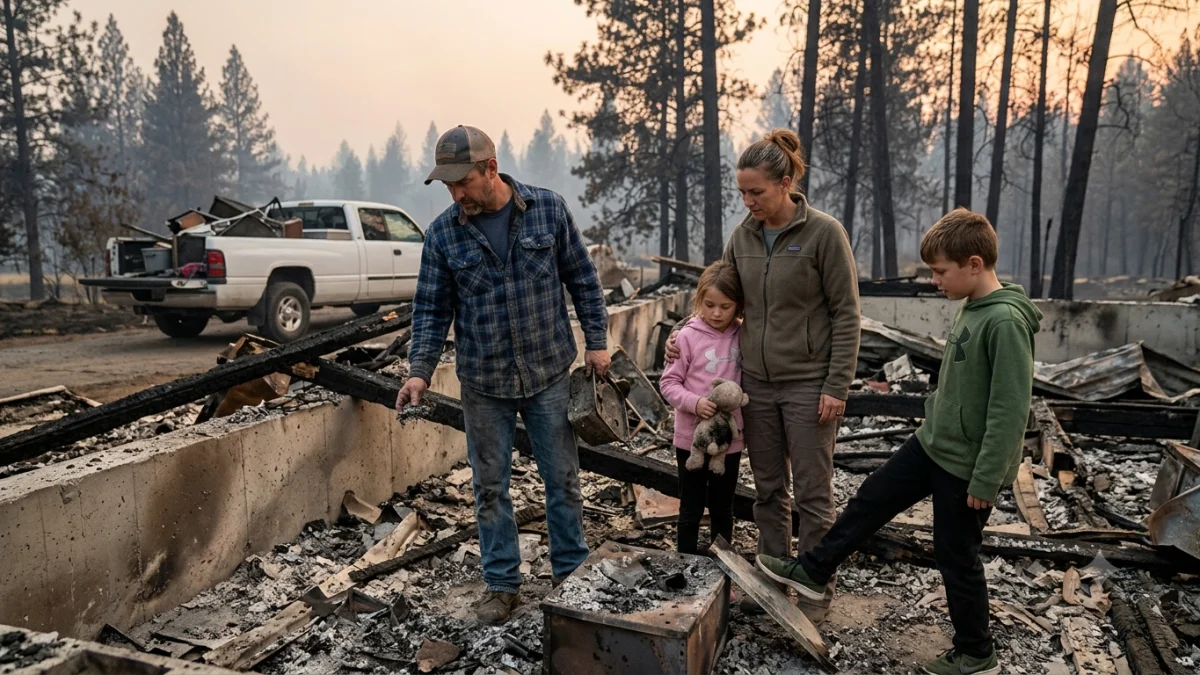


The first residents allowed back into parts of Spokane’s fire zone walked streets that no longer looked familiar. Some homes were still standing, coated in ash and streaked with red fire retardant. Others had been reduced to chimneys, twisted metal and scattered foundations, leaving families to search through debris for anything that had survived.
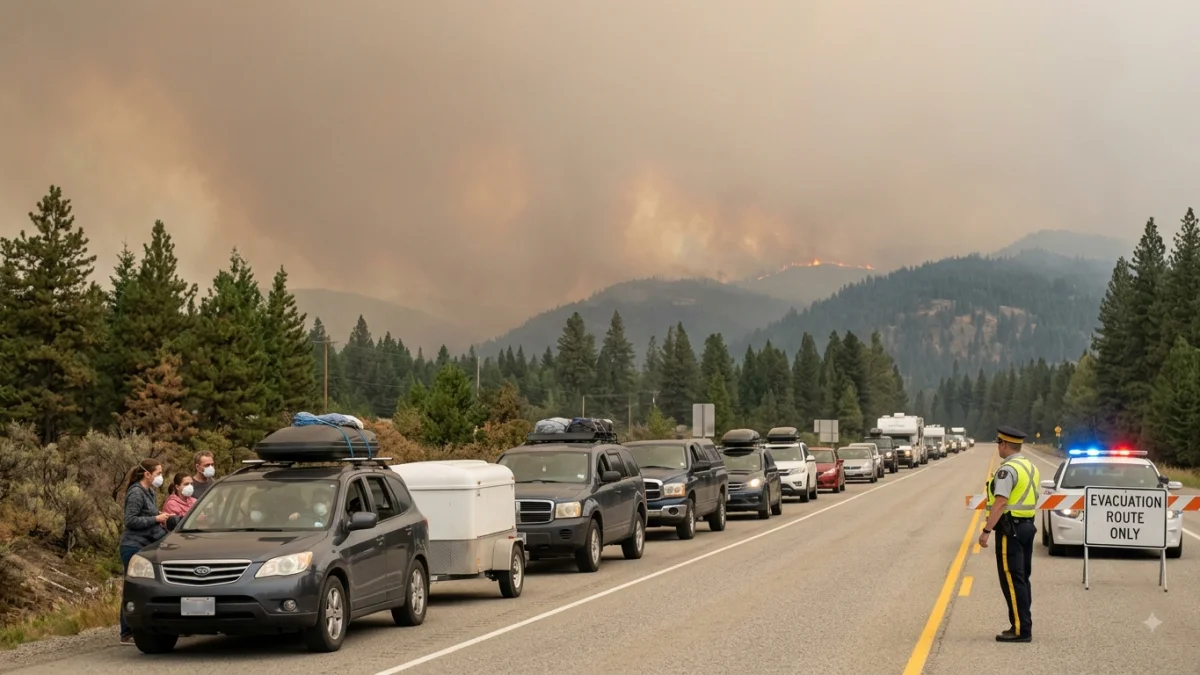
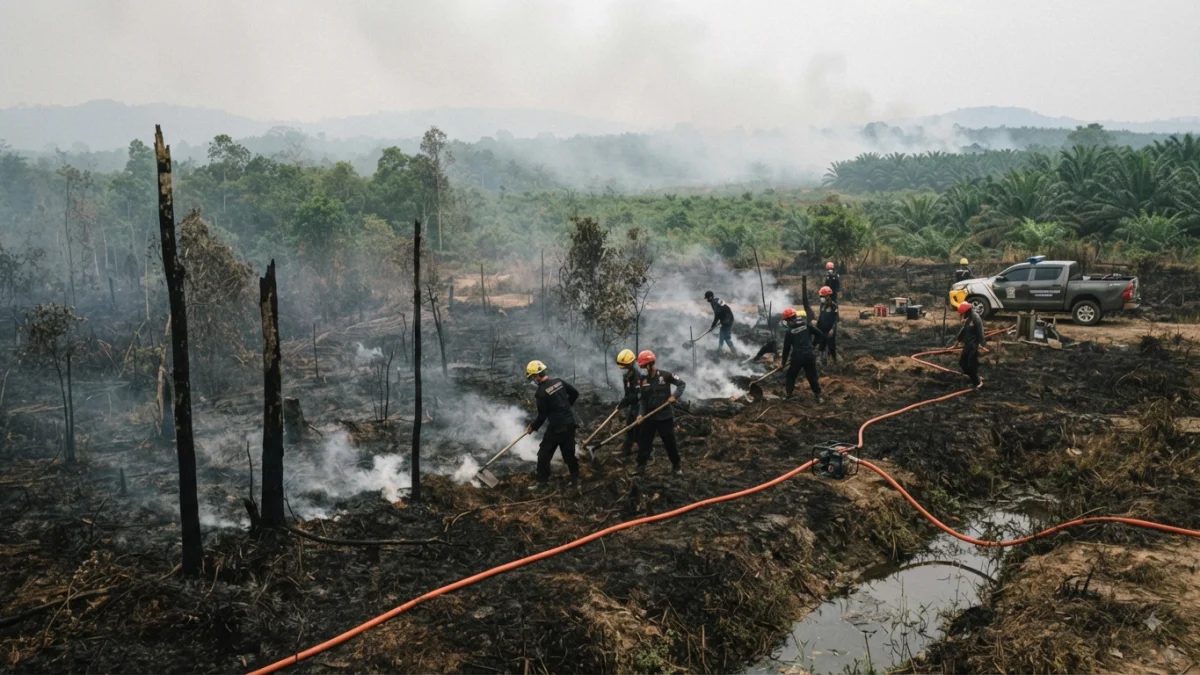
The returns began as firefighters continued battling three major blazes that swept through the Spokane area, forcing one of the largest evacuations in the region’s history. Officials said roughly 60,000 people had been ordered to leave as the Old Trails, Fairview and Meadowview fires burned through neighborhoods on the city’s outskirts, destroying about 600 buildings, including homes and businesses. The fires remained uncontained as authorities assessed the damage.


For many families, the journey home offered answers they had dreaded for days. Some found their houses untouched despite scorched landscapes nearby. Others arrived to discover little remained beyond concrete slabs and fragments of personal belongings.
The contrast reflected the unpredictable nature of wind-driven wildfires, where neighboring properties can face dramatically different outcomes within the same street. It also underscored the uncertainty that thousands of evacuees endured while waiting for permission to return.
Spokane Mayor Lisa Brown described the fires as the worst natural disaster the region had experienced. Washington Governor Bob Ferguson declared a state of emergency as firefighters from multiple agencies worked to slow fires fueled by hot, dry conditions and strong winds. About 10,000 utility customers remained without power while crews assessed damaged infrastructure.
Emergency shelters became temporary gathering places for families with little information about whether their homes had survived. The Spokane Convention Center housed hundreds of displaced residents, while community organizations and the American Red Cross provided meals, charging stations and access to recovery resources.
The emotional toll of waiting has become a defining feature of the disaster. On community forums, residents described sleepless nights in hotel rooms and evacuation shelters, refreshing official updates while wondering whether they still had homes to return to. Others posted requests for photographs from neighborhoods that remained closed to the public, hoping for any sign of what awaited them once restrictions were lifted. Those accounts, while personal and unverified individually, echoed the uncertainty reflected in official evacuation orders that kept many neighborhoods inaccessible while firefighters continued their work.
As access expanded, stories of both loss and survival emerged.
Some families found entire blocks damaged while their own houses remained standing. Others discovered the opposite: isolated homes destroyed even as neighboring structures escaped with minor damage. Fire officials cautioned that structural safety inspections and ongoing fire activity would continue to limit access in some areas.
The destruction has revived memories of earlier Spokane-area fires that tested communities in eastern Washington. Local officials have spent years promoting wildfire preparedness and updating mitigation plans as residential development has expanded into areas where forests and neighborhoods meet. Recent county guidance also outlines tax relief, rebuilding assistance and permitting support for homeowners whose properties are destroyed in natural disasters.
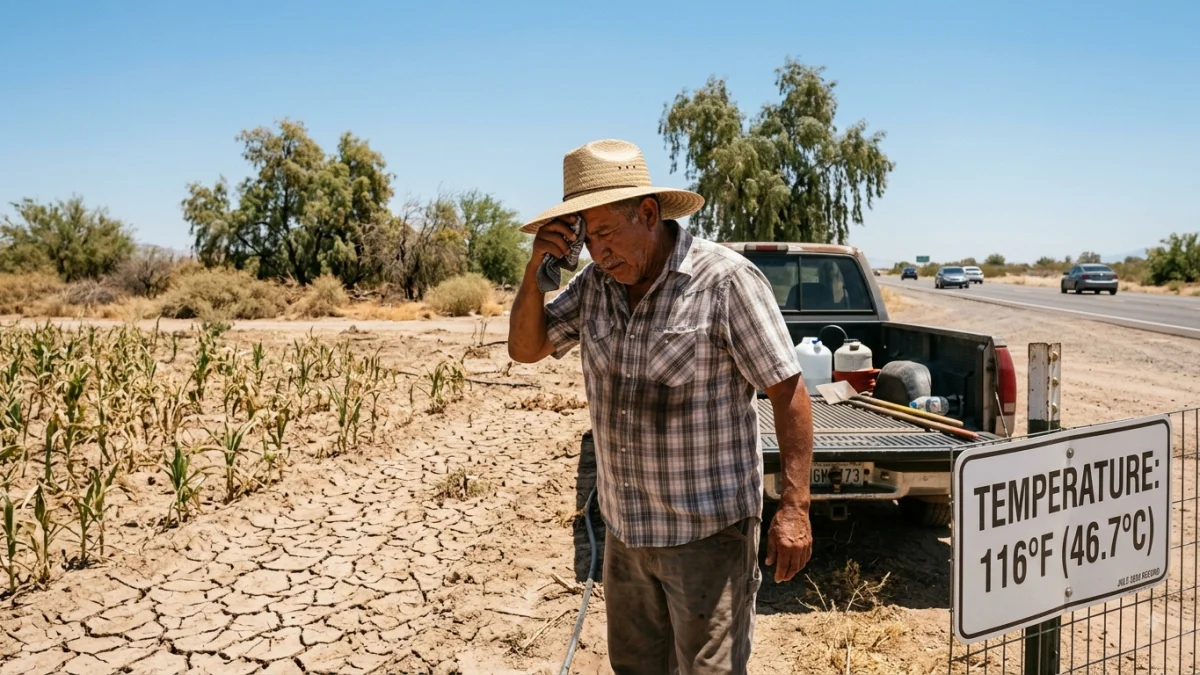
Scientists have long warned that communities across the American West face increasing wildfire exposure as hotter temperatures, prolonged drought and extreme fire weather create conditions that allow fires to spread more rapidly. By early August, the National Interagency Fire Center reported that the 2026 U.S. wildfire season had already exceeded the 10-year average for both the number of large active fires and the acreage burned, with Washington among the states experiencing significant fire activity.
Even as the broader climate and fire-management challenges shape policy discussions, the immediate reality for Spokane residents remains intensely personal.
Insurance claims, debris removal and rebuilding decisions now lie ahead for hundreds of households. Officials continue to investigate what caused the fires while firefighters work to contain remaining hotspots and protect communities still under threat.
Across Spokane, neighbors have also begun helping one another. Volunteers have donated supplies to evacuees and firefighters, while community organizations continue collecting food, clothing and emergency necessities. Online messages from residents whose homes survived frequently express gratitude alongside concern for those who lost everything, reflecting a community experiencing relief and grief at the same time.
For families returning to damaged neighborhoods, the first walk back through familiar streets marks only the beginning of recovery. Some unlocked front doors to homes that can still be cleaned and repaired. Others stood where houses once stood, trying to identify belongings among the ashes. As firefighters remain on the fire lines and evacuation orders continue in some areas, Spokane's recovery is unfolding one household, one street and one return at a time.