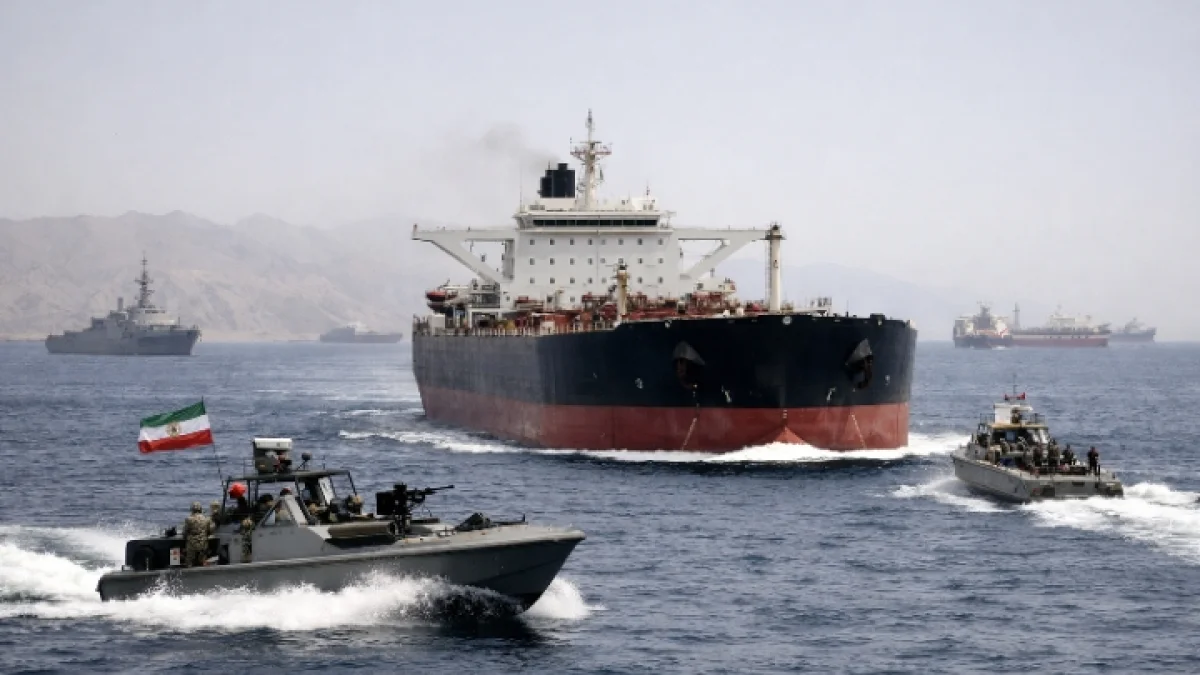


Renewed disruption to shipping through the Strait of Hormuz has again become a central risk to the global energy market, reversing much of the optimism that followed a temporary easing of tensions earlier this year. The collapse of a ceasefire between the United States and Iran, renewed military exchanges, and heightened security concerns for commercial shipping have slowed tanker traffic through one of the world's most important energy corridors, prompting governments, producers and traders to reassess the resilience of global oil supplies.
The latest developments matter because the Strait of Hormuz remains the principal export route for much of the Gulf's crude oil and liquefied natural gas. Even when the waterway is not fully closed, disruptions to navigation, higher insurance costs, military activity and delays to tanker movements can reduce effective supply to international markets. Analysts note that uncertainty itself can sustain higher prices by increasing the geopolitical risk premium embedded in oil futures.


According to the International Energy Agency (IEA), oil flows through the strait recovered during June after a temporary easing in hostilities, helping global supply rebound and pushing benchmark crude prices lower. That recovery has now come under renewed pressure after hostilities resumed in early July. The agency warned that its outlook for improving supply depends heavily on a swift de-escalation, with renewed conflict threatening to reverse recent gains.
Military developments have reinforced those concerns. U.S. officials say recent strikes were intended in part to reduce Iran's ability to disrupt shipping through the strait, while Iran has rejected U.S. claims regarding the impact of those operations. At the same time, commercial shipping companies have reported heightened operational risks, and vessel-tracking data indicate tanker movements have slowed as operators reassess security conditions.
Energy markets have so far demonstrated greater resilience than many initially expected during the broader Middle East conflict. The International Monetary Fund has argued that emergency stock releases, weaker-than-anticipated global demand growth, increased production outside the Gulf and inventory drawdowns helped prevent a more severe price shock during earlier phases of the crisis. However, the IMF also cautioned that those buffers have diminished over time, leaving markets more vulnerable should disruptions persist or intensify.
The U.S. Energy Information Administration has similarly concluded that Hormuz disruptions have increased price volatility throughout 2026, while encouraging buyers to diversify supply and boosting exports from producers outside the Gulf. At the same time, reduced global oil demand has moderated some upward pressure on prices, illustrating how both supply and consumption trends have influenced market outcomes during the crisis.
The implications extend beyond crude oil prices. Many Asian economies—including China, India, Japan and South Korea—depend heavily on Gulf energy imports transported through Hormuz. Although some exporters possess alternative pipeline routes that bypass the strait, those systems cannot fully replace normal shipping volumes. Prolonged disruption would therefore increase competition for alternative supplies from producers in North America, West Africa and elsewhere, potentially reshaping trade flows and freight markets.
For producers, the situation presents competing pressures. Higher prices may increase revenues for exporters able to maintain shipments, but physical disruptions can reduce export volumes and constrain production. Earlier in the conflict, several Gulf producers curtailed output because crude could not be transported efficiently, highlighting that elevated prices do not necessarily offset lost sales when infrastructure or shipping routes are disrupted.
Financial markets are also watching inventory levels closely. The IEA reported that government stock releases and commercial inventories helped cushion earlier supply losses, but OECD inventories have continued to decline. That trend increases the importance of uninterrupted maritime trade should geopolitical tensions persist.
Historical experience suggests that markets respond not only to confirmed supply losses but also to expectations regarding future availability. Previous crises affecting the Strait of Hormuz have produced sharp price movements even when exports continued at reduced levels, reflecting the strategic importance of the waterway. Current market behaviour similarly reflects uncertainty over the duration of the latest disruptions rather than confirmed long-term shortages alone.
The immediate outlook therefore depends less on underlying production capacity than on maritime security and diplomatic developments. Official agencies continue to monitor tanker traffic, commercial shipping conditions, inventory levels and military activity in and around the Strait of Hormuz. While global oil supplies have not been entirely interrupted, renewed disruptions have increased uncertainty over future exports, leaving governments, energy companies and financial markets focused on whether safe navigation through the corridor can be maintained in the weeks ahead.