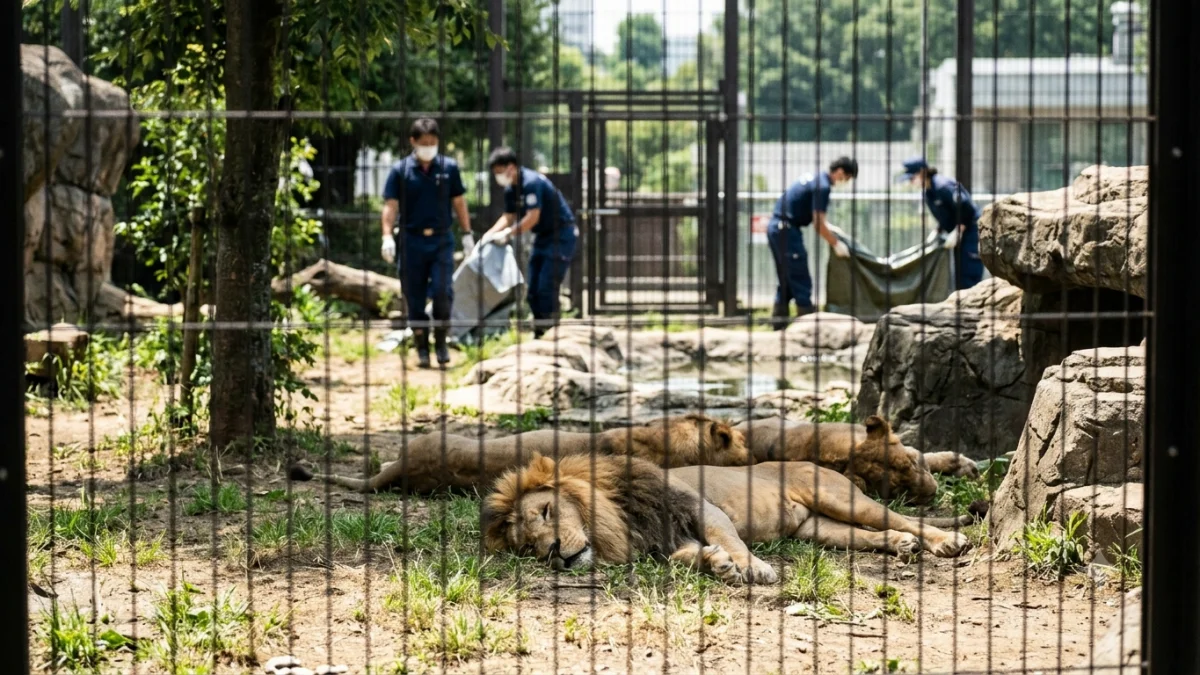


TOKYO—Three female lions at Tokyo's Tama Zoological Park have died from suspected heat stroke after Japan's prolonged spell of extreme summer heat, zoo officials said, as authorities across the country continued to warn of dangerous temperatures affecting both people and animals.
The zoo said the lions, aged 3, 11 and 15, died after showing symptoms including lethargy and loss of appetite during the intense heat that gripped Tokyo in mid-to-late July. Veterinarians found signs of severe dehydration and multiple organ failure, and officials said heat stroke is the suspected cause of death, although the exact cause remains under investigation.


According to the zoo, the three lions were among 16 housed at the facility. Around 10 animals began exhibiting heat-related symptoms as temperatures climbed, prompting keepers to intensify cooling measures, including spraying water, providing intravenous fluids and limiting exposure to outdoor conditions. Several lions recovered, while others continue to receive treatment.
The zoo suspended public viewing of the lion enclosure and its Lion Bus attraction on July 23 and said the closure will remain in effect until further notice while staff monitor the remaining animals and review protective measures. The suspension had already been announced as part of broader precautions for animal welfare during the summer heat.
A zoo spokesperson said veterinarians believe the combination of exceptionally high temperatures and humidity may have placed unusual stress on the animals. While lions are adapted to hot climates in Africa, officials noted that Japan's humid summer conditions differ significantly from the drier environments where the species typically lives.
The deaths occurred as Japan continued to experience an intense heat wave that has strained public health services. Authorities reported that more than 18,000 people nationwide were treated for heat-related illness in a recent week, while officials repeatedly urged residents to stay hydrated, avoid prolonged outdoor activity and use air conditioning where possible.
The incident has drawn renewed attention to the impact of increasingly severe summer temperatures on wildlife under human care. Zoo officials said they are continuing to monitor the remaining lions closely and will reassess exhibit operations once veterinarians determine it is safe to resume normal activities.