

By late July, the lion enclosure at Tokyo's Tama Zoological Park had fallen unusually quiet. Keepers who had spent weeks watching the animals cope with rising temperatures were instead moving quickly between veterinary treatments, cooling measures and close observation as one lion after another stopped eating, became lethargic or struggled to stand.
Despite emergency care, three female lions died over the course of several days, making them the first lions in the zoo's 62-year history to die from suspected heat-related illness. Post-mortem examinations found severe dehydration and multiple organ failure, and zoo officials said heatstroke was the suspected cause, although the exact cause of death remained under investigation.


The deaths have turned the daily work of the zoo's animal keepers into an illustration of a wider challenge confronting institutions across Japan: how to protect animals, staff and visitors as extreme summer heat becomes more frequent and more intense.
The loss also underscored that adapting to rising temperatures extends beyond human health. Zoos, whose collections include species from a wide range of climates, increasingly face difficult decisions about exhibit schedules, veterinary care and enclosure management as weather conditions change.
According to Tama Zoological Park, the youngest lion, three-year-old Mugi, first showed signs of illness on July 19 after losing her appetite. The following day she could no longer stand. Keepers introduced additional ventilation and water sprinklers while veterinarians administered fluids, vitamins and liver medication, but she died on July 28. Two older females, Ichigo, 11, and Luena, 15, died in the following days after developing similar symptoms.
The crisis extended beyond those three animals. The zoo said most of its 16 lions became lethargic and lost their appetite after temperatures in Tokyo climbed to nearly 39 degrees Celsius during the middle of July. Some animals recovered after treatment, while others deteriorated, prompting staff to suspend public viewing of the lions on July 23 and continue intensive monitoring and medical care.
"No other animals have shown any signs of illness, but the staff are managing the animals more carefully than before," a Tama Zoo official told Reuters.
The experience has challenged assumptions about species often associated with hot climates. Lions evolved in sub-Saharan Africa, but specialists note that the humid conditions common during Japanese summers create a different physiological burden from the dry heat many African lions experience naturally. High humidity limits the body's ability to cool itself through evaporation, making thermoregulation more difficult even for animals adapted to warm environments.
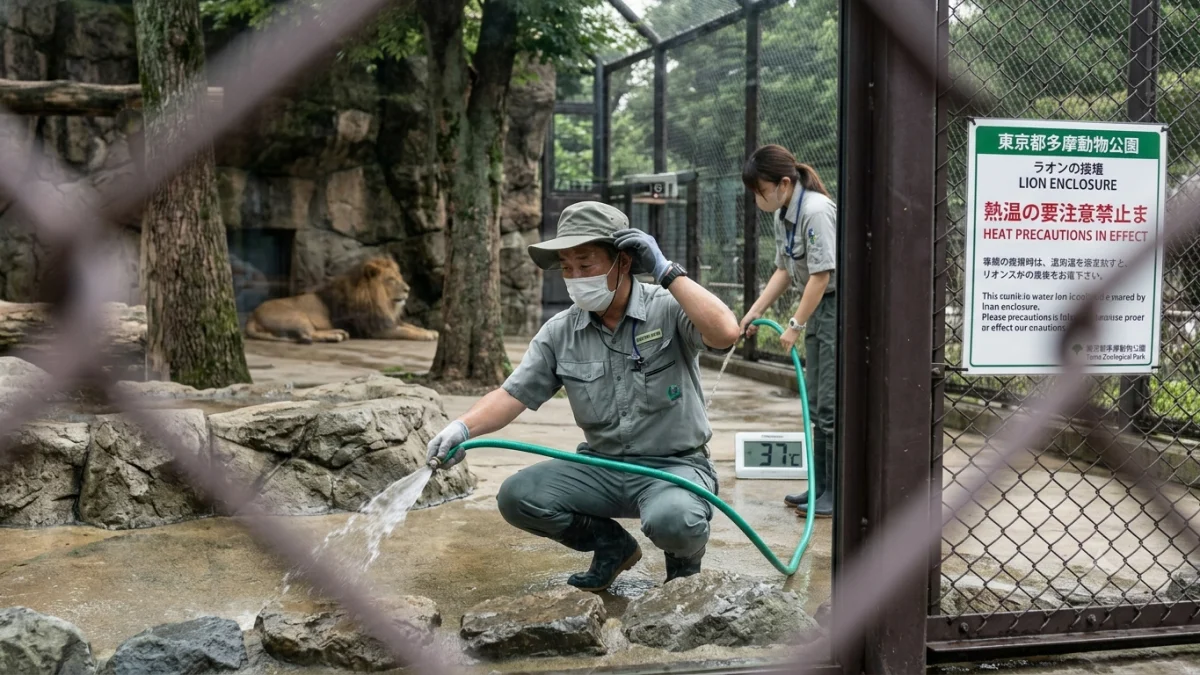
Long before the deaths, Tama Zoo had begun altering its operations because of the heat. Notices posted for visitors warned that animals might be moved indoors or between indoor and outdoor spaces depending on weather conditions. Outdoor programs were subject to cancellation during heatstroke warnings, while the lion exhibit and the popular Lion Bus attraction were suspended because of the extreme temperatures.
Those operational changes mirror a broader shift occurring across Japanese zoos, where summer management increasingly revolves around weather forecasts. Cooling systems, misting equipment, shade, altered feeding schedules and adjustments to public programming have become part of seasonal planning rather than emergency responses.
The pressure on zoo staff comes as Japan itself experiences one of its hottest summers on record. The country's disaster management agency reported that more than 18,000 people were transported to hospitals with heatstroke symptoms during one week in late July. Across Northeast Asia, governments have issued repeated warnings as record temperatures have affected public health, agriculture and wildlife alike.
The regional heat wave has produced scenes that extend far beyond zoo grounds. In South Korea, authorities declared the extreme heat a national disaster after thousands of heat-related illnesses and multiple deaths. Livestock losses mounted, while North Korea also issued heat advisories as temperatures climbed across the peninsula.
Against that backdrop, the deaths at Tama Zoo became one of the clearest examples of how prolonged heat is reshaping the responsibilities of people who care for animals in captivity.
For keepers, veterinary staff and managers, the response has required constant observation rather than a single intervention. Cooling animals involves monitoring behavior, adjusting environments, administering treatment when necessary and making difficult decisions about limiting public access to reduce stress. Many of those measures now begin before temperatures reach their daily peak.
The deaths have also prompted renewed attention to the vulnerability of captive animals whose natural habitats differ significantly from Japan's increasingly humid summers. While zoological parks have long adapted facilities for winter conditions or species-specific needs, sustained heat presents a challenge affecting multiple taxa simultaneously.
At Tama Zoo, however, the immediate focus remains practical rather than symbolic. Staff continue treating the remaining lions with water spraying, intravenous fluids where needed and careful observation while restricting public viewing until conditions improve.
As another hot season continues, the work behind the scenes has become less visible to visitors but more central to the zoo's mission. The keepers' daily routines now revolve around anticipating the next rise in temperature, seeking ways to protect animals that cannot escape the weather outside their enclosures, and confronting a reality that many institutions across Japan increasingly regard as the new normal.