

WASHINGTON — Trump's tariff policies have generated widespread uncertainty among small business owners across the United States, with many reporting higher costs, pricing pressures and delayed decisions, according to surveys and business groups.
Reports from organizations including the U.S. Chamber of Commerce and the Center for American Progress indicate that small businesses, which often rely on imported goods, have faced elevated tariff costs and supply chain disruptions since the implementation of broad tariffs in 2025. Polling has shown a significant portion of owners citing concerns over survival and expansion.


Small businesses represent a substantial share of U.S. importers, and the volatility in trade policy — with tariffs announced, adjusted or delayed — has complicated planning. Some owners have raised prices, while others have postponed hiring or investments. Details on the aggregate nationwide impact vary by sector and region.
The tariffs, aimed at protecting domestic industries and addressing trade imbalances, have drawn support from some manufacturers seeking to compete with imports. Administration officials have argued that long-term benefits will emerge as production shifts back to the U.S.
However, many small business representatives have highlighted immediate challenges. "Tariffs are having a real and devastating impact on thousands of small businesses across the nation — and on all Americans — as uncertainty, rising costs and cancellations are hitting home," the U.S. Chamber of Commerce has stated in analyses of the policies.
Surveys from groups like Small Business Majority and the National Federation of Independent Business have found that roughly half of small business owners have increased prices in response to higher input costs, with about one-fifth delaying expansion plans. Concerns about economic conditions have remained elevated into 2026.
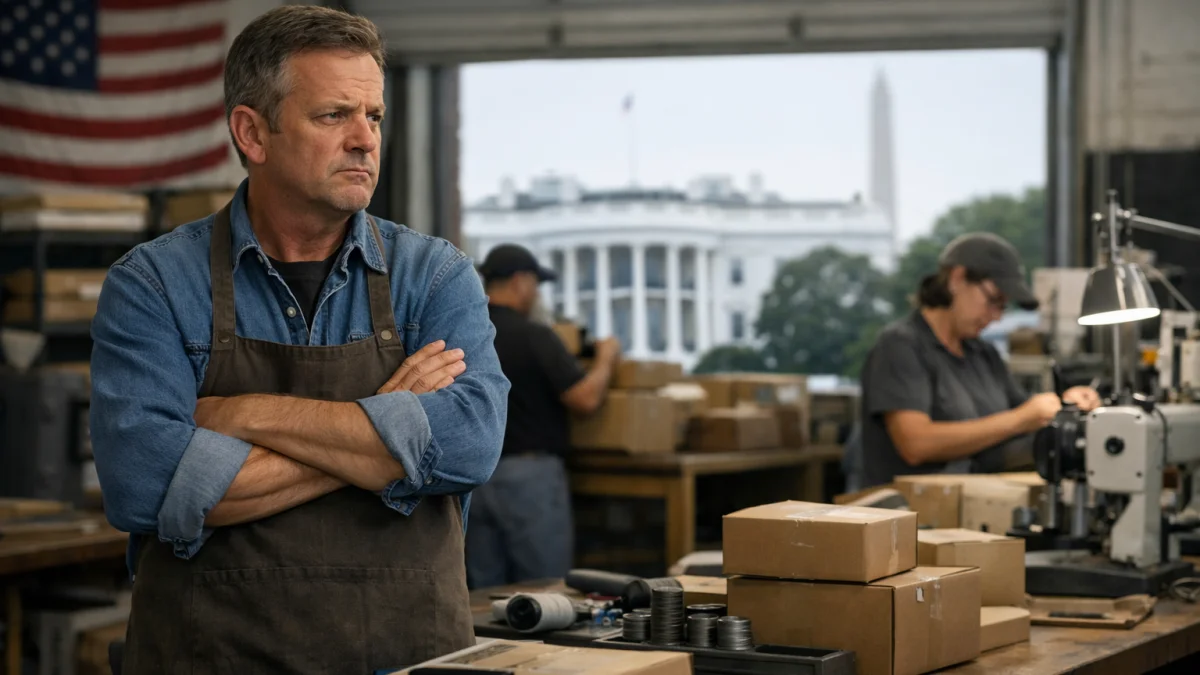
The effects have been felt particularly in sectors dependent on imported materials, such as retail, manufacturing and food services. Some businesses have reported absorbing costs to maintain competitiveness, while others have passed them on to consumers amid broader inflationary pressures.
As of mid-June 2026, small business owners continue to navigate the policies amid ongoing trade developments. No comprehensive resolution to the uncertainty has been reported, with groups calling for greater predictability in trade measures. The situation remains subject to potential adjustments in federal policy.