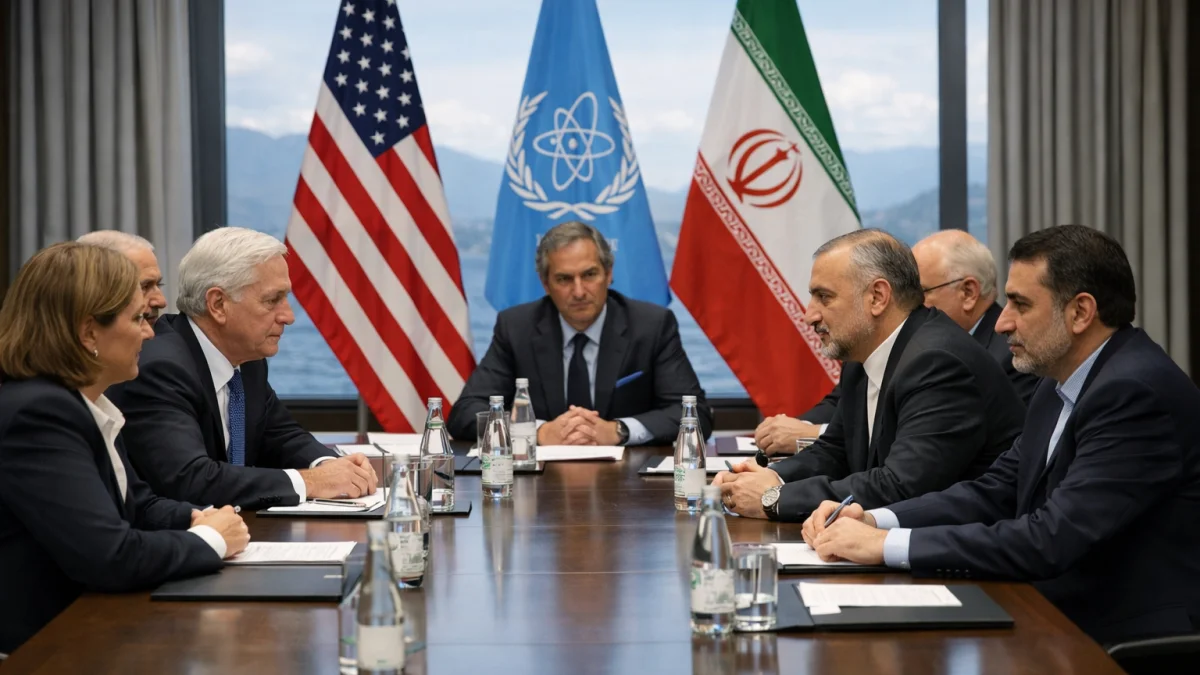


GENEVA — The United States and Iran reached an agreement during talks in Switzerland on Monday allowing International Atomic Energy Agency inspectors access to Iranian nuclear sites, U.S. officials said, as the two sides continued negotiations aimed at de-escalating regional tensions.
Vice President JD Vance, leading the U.S. delegation at the Lake Lucerne Summit in Bürgenstock, described the move as a "major milestone" and the first step toward ending Iran's nuclear weapons program. The discussions, mediated by Qatar and Pakistan, followed an interim agreement and focused on implementing a broader roadmap for a final deal within 60 days.


Iranian officials offered a more cautious assessment. Foreign Ministry spokespeople stated that Tehran made "no new commitments" on nuclear inspections during the nearly 18 hours of talks and emphasized other outcomes, such as sanctions relief on oil exports. Details of the exact scope and timeline for inspector access remain subject to further coordination with the IAEA.
The negotiations build on a recent memorandum of understanding and address multiple issues, including nuclear program limits, sanctions, maritime security in the Strait of Hormuz and de-escalation involving Lebanon. Technical experts from both sides are expected to continue working on implementation details in the coming days.
"This agreement sets a good foundation for a successful final deal," Vance said, according to U.S. readouts. Mediators from Qatar and Pakistan issued a joint statement highlighting progress toward a high-level committee and working groups on key issues.
The talks occur amid broader regional efforts, including ceasefire arrangements. Iranian representatives stressed the importance of sanctions relief and economic recovery, while U.S. officials prioritized verifiable constraints on Iran's nuclear activities.
No immediate breakthroughs on other core disputes, such as uranium enrichment levels or the fate of existing stockpiles, were announced. Officials from both sides indicated that sensitive diplomacy would proceed cautiously.
The delegations included senior diplomats and technical experts. Further rounds of discussions are planned, with implementation timelines depending on ongoing technical work and agency guidance.