

WASHINGTON — The United States and Iran have reached a framework agreement to end hostilities in their nearly four-month conflict and reopen the Strait of Hormuz, officials from both sides said on Monday.
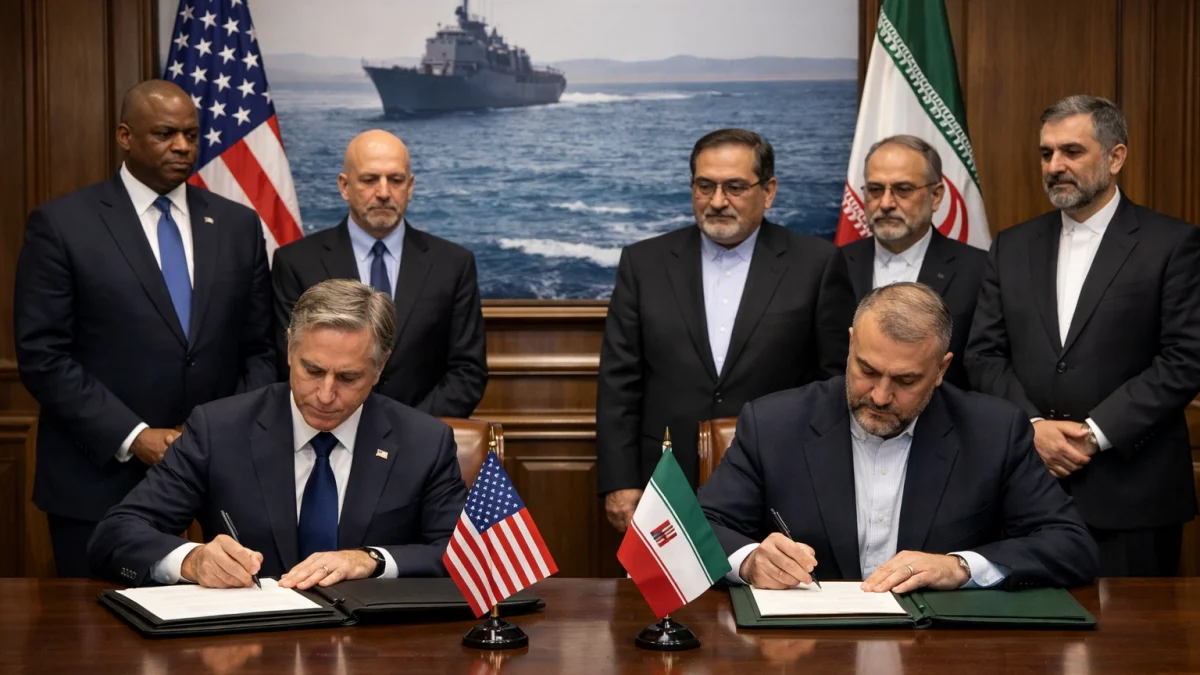
The memorandum of understanding extends a ceasefire for 60 days and sets a formal signing ceremony for Friday in Switzerland, according to U.S. President Donald Trump and Iranian officials. It includes the immediate lifting of the U.S. naval blockade on Iranian ports and the reopening of the vital waterway to shipping.


Trump announced the deal on social media, stating that ships could begin moving through the Strait of Hormuz toll-free starting Friday. "Let the oil flow," he wrote, according to reports. Iranian officials confirmed the text of the agreement had been finalized.
The conflict escalated in late February 2026 following U.S. and Israeli strikes on Iranian targets. Iran responded with retaliatory attacks and imposed restrictions on shipping through the Strait of Hormuz, a chokepoint that carries about one-fifth of global oil trade, disrupting energy markets worldwide.
Pakistani Prime Minister Shehbaz Sharif, who helped mediate, announced the framework deal on Sunday. The agreement aims to restore pre-conflict shipping conditions within approximately 30 days and includes provisions for further negotiations on Iran's nuclear program.
"The agreement is now complete," Trump said, adding that he had authorized the end of the U.S. blockade. Iranian Deputy Foreign Minister Kazem Gharibabadi stated that military operations would end permanently across relevant fronts, including Lebanon.
Details of the full text remain limited. The memorandum does not resolve all outstanding issues, such as long-term sanctions relief or nuclear safeguards, which are to be addressed in the coming weeks.
Markets reacted positively to the news, with oil prices falling and global stocks rising on Monday.
Israeli officials have expressed reservations about the deal, indicating they would continue to address security threats independently.
Emergency diplomatic efforts continued on Monday ahead of the formal signing in Geneva. The full extent of implementation and verification mechanisms will become clearer after Friday's ceremony, officials said.