

WASHINGTON — The United States and Iran have signed an initial memorandum of understanding aimed at ending their conflict and reopening the Strait of Hormuz, officials from both sides said on Thursday.
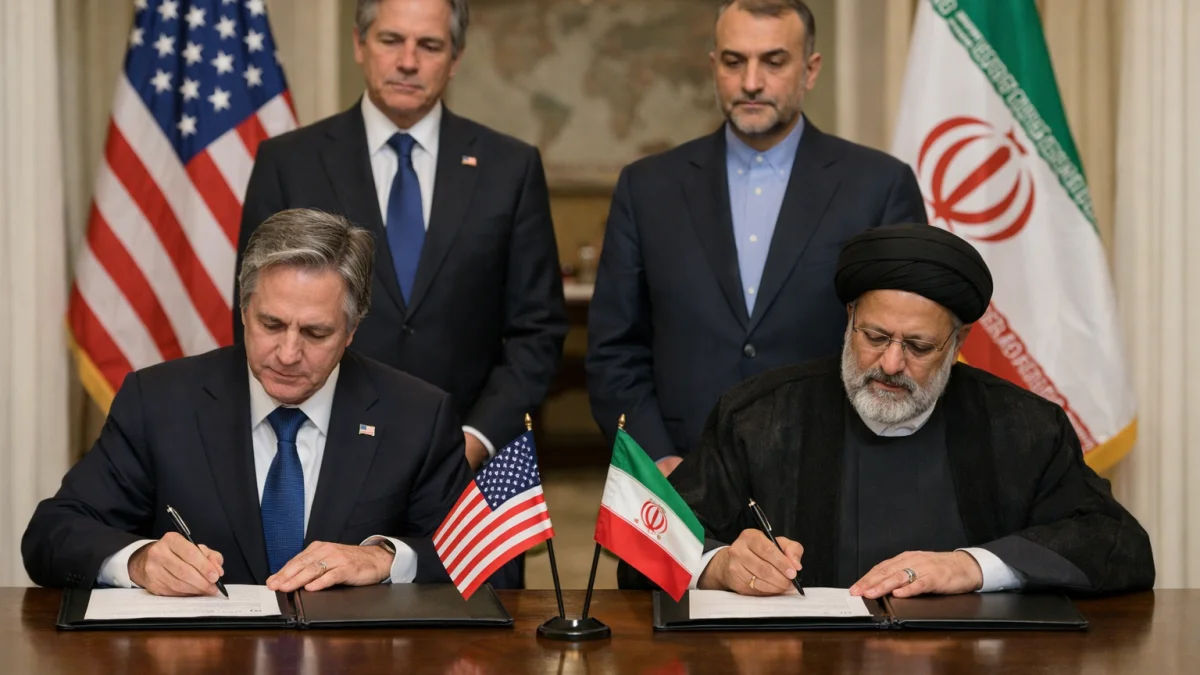
U.S. President Donald Trump and Iranian President Masoud Pezeshkian signed the document, known as the Islamabad Memorandum, which declares an immediate and permanent end to military operations on all fronts, including Lebanon, according to statements from both governments and mediators.


The agreement provides for the reopening of the Strait of Hormuz, a critical waterway for global oil shipments, with Iran agreeing to safe passage for commercial vessels without charge for an initial 60-day period. The U.S. committed to lifting its naval blockade on Iranian ports within 30 days.
"This is a historic step toward peace," Trump said in remarks following the signing. "We ended the war."
The memorandum, mediated by Pakistan, sets a 60-day framework for further negotiations on issues including Iran's nuclear program, sanctions relief and reconstruction. Details on the exact scope of sanctions easing and longer-term arrangements for the strait remain subject to those talks, officials said.
The conflict, which escalated in late February with U.S. and Israeli strikes, had disrupted energy markets and shipping through the strait, through which about one-fifth of global oil supplies passed before the hostilities.
Iranian officials described the deal as a "historic document" that halts fighting while preserving core interests. U.S. Vice President JD Vance briefed reporters on the agreement's provisions, including commitments related to uranium enrichment and regional de-escalation.
Israel has expressed reservations about aspects of the accord, particularly regarding Iran's nuclear capabilities, according to reports.
As of Thursday, both sides indicated the agreement had taken immediate effect following the signing. Technical discussions were expected to begin soon, potentially including meetings in Switzerland. No immediate changes to troop postures or other military assets were detailed beyond the cessation of operations.
The State Department and Iranian foreign ministry continue to coordinate on implementation steps.