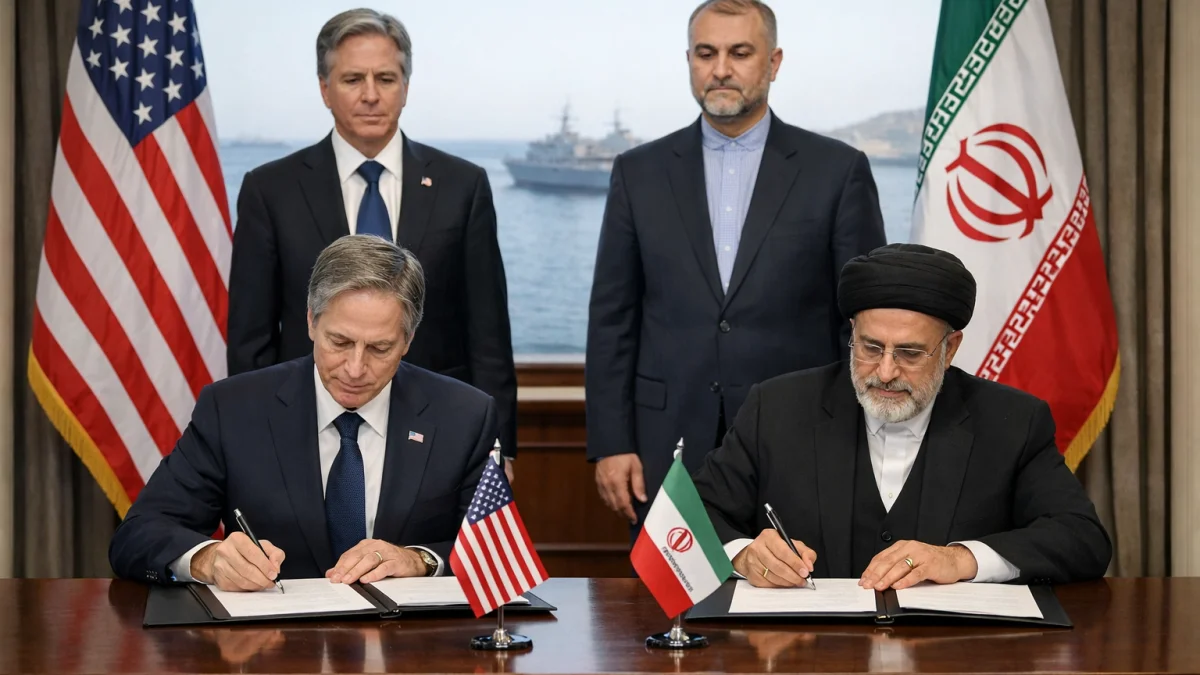


WASHINGTON — The United States and Iran have signed a memorandum of understanding aimed at ending hostilities and reopening the Strait of Hormuz to commercial shipping, U.S. officials said.
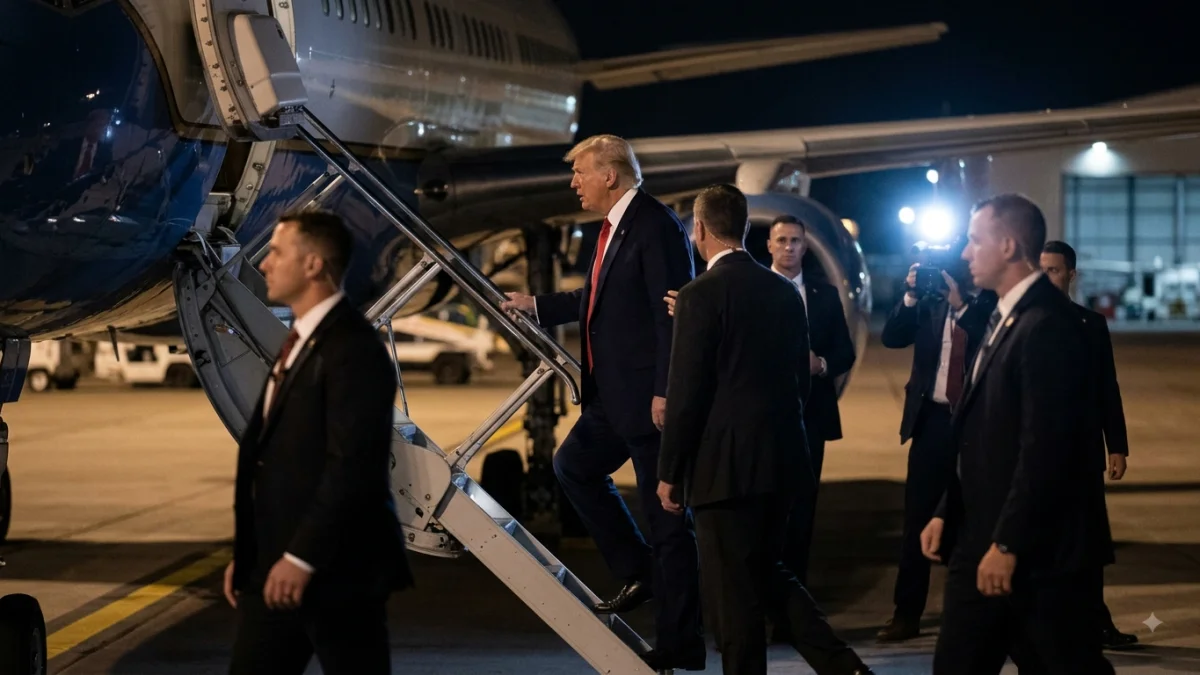
The memorandum was signed by President Donald Trump and Vice President JD Vance for the U.S. side and by Iranian Parliament Speaker Mohammad Bagher Qalibaf, according to U.S. officials. Iranian officials confirmed the agreement, with Deputy Foreign Minister Kazem Gharibabadi stating that revisions requested by Tehran were incorporated.


The agreement, described as an initial framework rather than a final peace deal, extends a ceasefire for 60 days and calls for the immediate reopening of the Strait of Hormuz without tolls, with a return toward pre-war shipping volumes expected within about 30 days. It also provides for the lifting of the U.S. naval blockade on Iranian ports and temporary sanctions relief allowing Iran to sell oil, officials said.
Details of the full text remain limited. U.S. officials described the document as brief, around one-and-a-half pages, and general in nature. Negotiations on unresolved issues, including Iran's nuclear program, are expected to follow during the ceasefire period.
The conflict escalated in late February 2026 with U.S. and Israeli strikes on Iranian targets. Iran responded by restricting access to the Strait of Hormuz, a critical chokepoint for global oil shipments, disrupting maritime traffic and contributing to volatility in energy markets.
A senior U.S. official told Reuters that shipping traffic in the strait would ramp up gradually. Iranian officials indicated that marine traffic would be managed in coordination with Oman.
Trump described the memorandum as a significant step, stating that ships were already beginning to move and that the strait would be "permanently toll-free." He authorized the lifting of the U.S. blockade.
Iranian President Masoud Pezeshkian called the deal an "important step" toward halting the fighting but noted that a lasting truce requires further agreement. Both sides have voiced caveats, and a formal signing ceremony was anticipated around mid-June.
The memorandum does not resolve all outstanding issues, including Iran's nuclear activities and regional proxy conflicts. Details on implementation, monitoring, and compliance mechanisms were not immediately public.
As of Tuesday, commercial shipping responses remained cautious pending further confirmation of safe passage and clearance of any remaining hazards in the waterway. Oil prices fell following announcements of the agreement.
The memorandum is set to be made public within days, officials said.