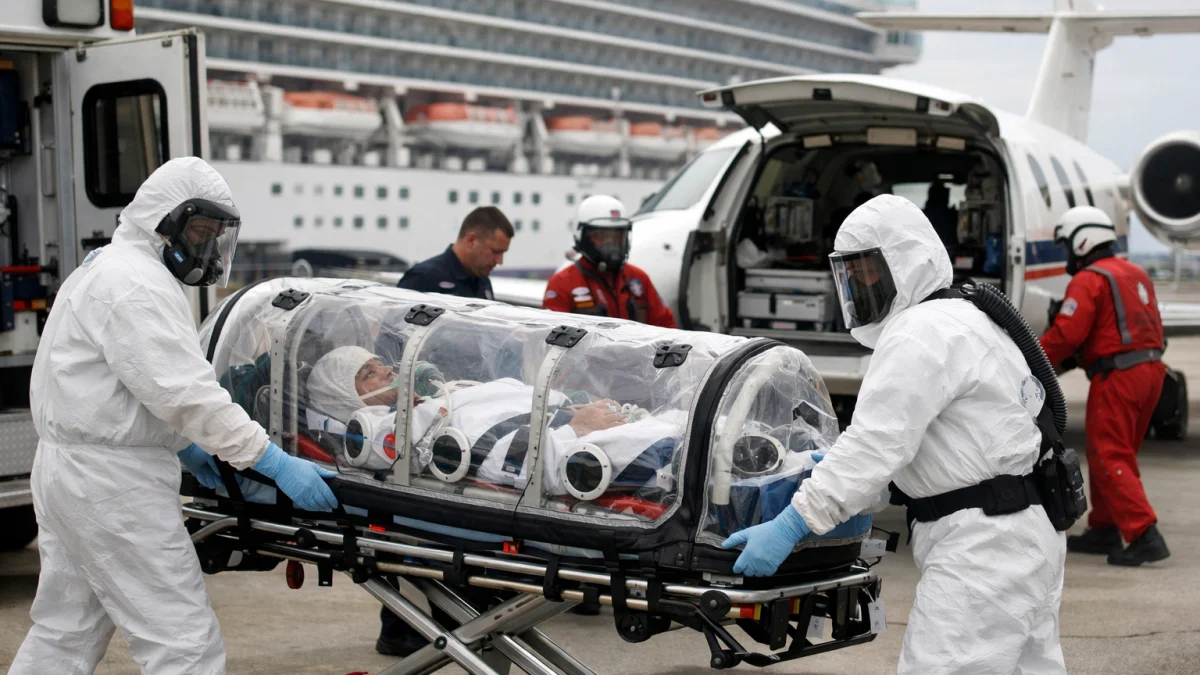


WASHINGTON — The U.S. government has funded the emergency evacuation of an American citizen who had been aboard a cruise ship linked to a hantavirus outbreak, chartering a private vessel at a cost of $750,000.
The woman, who may have been exposed to the virus while traveling on the Dutch-flagged MV Hondius in April, was evacuated from the remote British territory of Pitcairn Island in the South Pacific, U.S. officials said. She had disembarked the ship earlier and traveled via San Francisco and Tahiti before reaching the isolated island.


The evacuation, funded by the State Department, comes more than a month after the initial outbreak was identified on the vessel and follows the repatriation of other American passengers in May. The move has drawn attention to the costs associated with the department’s emergency assistance efforts.
Health officials have described the risk to the general public as low. The woman is reported to be asymptomatic, according to authorities familiar with the case. No new details were immediately available on her current medical status following the evacuation.
The hantavirus cluster on the MV Hondius, identified as the Andes strain, was first reported in early May. The ship, which had been on an expedition cruise in the South Atlantic including stops in Antarctica and other remote locations, saw multiple cases of severe respiratory illness. At least three passengers died, and a total of around 10 to 13 confirmed or probable cases were linked to the outbreak across several countries, according to the World Health Organization and other health authorities.
In May, the U.S. coordinated the repatriation of approximately 18 Americans and others from the ship after it reached Tenerife in Spain’s Canary Islands. Most were transported to specialized quarantine facilities, including the National Quarantine Unit at the University of Nebraska Medical Center in Omaha. One of the repatriated Americans tested positive for the virus but remained asymptomatic, while others were monitored for the standard 42-day period. As of early June, many had been cleared to return home under continued public health monitoring, with no additional cases reported among them.
The Centers for Disease Control and Prevention and State Department worked with international partners on the earlier evacuations, using specialized aircraft and protocols to minimize potential transmission risks. The Andes hantavirus variant is notable for limited person-to-person transmission under specific close-contact conditions, unlike most hantaviruses which are primarily rodent-borne.
"The risk of hantavirus to the general public remains very low," officials have repeatedly stated in updates on the incident.
The MV Hondius, operated by Oceanwide Expeditions, completed its journey to Rotterdam with remaining crew after passengers were evacuated. Investigations into the source of the outbreak, potentially linked to rodent exposure during shore excursions, continue.
The latest evacuation of the individual from Pitcairn Island underscores ongoing efforts to support U.S. citizens potentially exposed during international travel. Details regarding her arrival in the United States and any further monitoring requirements remain limited as of Friday.