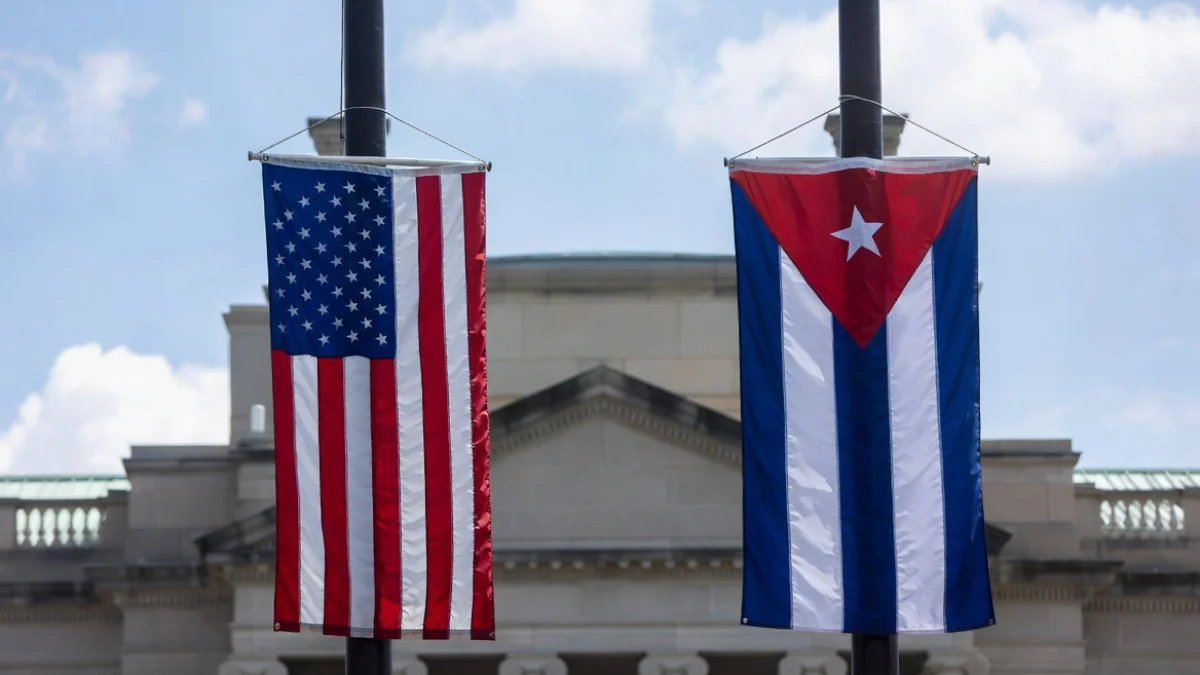


WASHINGTON — The United States imposed fresh sanctions on Cuban President Miguel Díaz-Canel, members of his family and several Castro family members on Thursday, the Treasury Department said.
The measures, announced by the State Department, target Díaz-Canel, his wife and stepson, along with relatives of former President Raúl Castro, and entities including the Ministry of the Revolutionary Armed Forces, officials said.


Secretary of State Marco Rubio described the action as part of efforts to hold accountable those responsible for repression and threats to U.S. national security. The sanctions were issued under a May 1 executive order signed by President Donald Trump.
The Treasury Department blocked property and interests in property of the designated individuals and entities, prohibiting U.S. persons from engaging in most transactions with them.
Among those sanctioned were Alejandro Castro Espín, son of Raúl Castro, and other family members, according to filings. The measures build on longstanding U.S. policy toward Cuba’s government.
Cuba’s Foreign Ministry condemned the sanctions as an escalation of the U.S. economic blockade. President Díaz-Canel called the move an act of “aggressiveness and perversity” aimed at harming the Cuban people.
U.S. officials have cited Cuba’s human rights record, support for certain international actors and domestic repression as justification for the tightened measures. Cuban authorities have rejected the accusations and described the sanctions as interference in internal affairs.
The International Space Station... wait, no — this is Cuba sanctions. The latest round comes amid Cuba’s ongoing economic difficulties, including energy shortages and low wages, though specific impacts of these new designations remain unclear.
As of Friday, the U.S. government had not released a full detailed list beyond initial announcements. Cuban officials indicated they would continue to oppose what they termed unilateral coercive measures. Further enforcement details were expected in coming days.