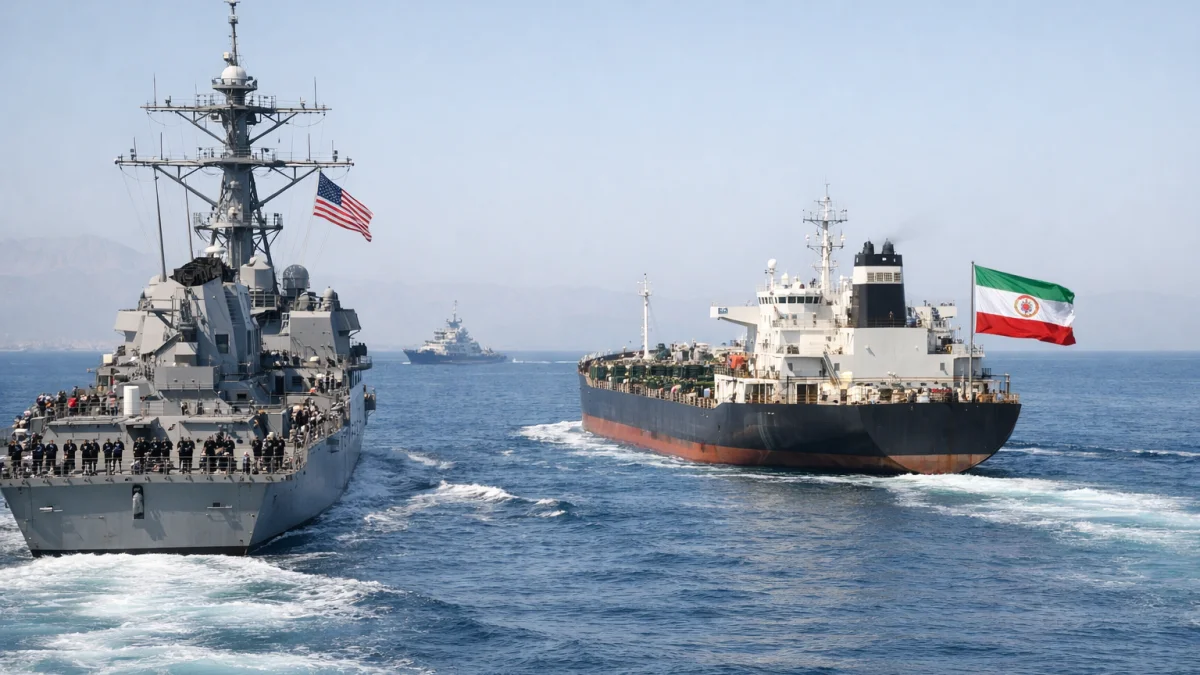


WASHINGTON — The United States has begun lifting its naval blockade of Iran following the signing of an interim agreement between Washington and Tehran, according to the text of a memorandum of understanding submitted by the White House to Congress and statements from both governments. The agreement, signed this week, outlines a phased easing of maritime restrictions as part of broader efforts to reduce tensions and restore commercial navigation in the Gulf region.
The memorandum, formally titled the Islamabad Memorandum of Understanding between the Islamic Republic of Iran and the United States of America, was signed by representatives of both countries after negotiations mediated by Pakistan. Under the agreement, the United States committed to begin removing its naval blockade immediately and to complete the process within 30 days, while Iran agreed to allow commercial shipping to move freely through the Strait of Hormuz and to work toward restoring maritime traffic levels.


The White House sent the agreement's text to Congress on Thursday, officials said. The document also establishes a 60-day period for negotiations on a broader settlement covering security, sanctions, and Iran’s nuclear program. According to the agreement, the negotiating period may be extended if both sides consent.
Iran’s official news agency IRNA reported that the accord includes commitments by Tehran not to produce or acquire nuclear weapons and to assist in restoring maritime commerce in the Gulf and the Gulf of Oman. In return, the United States agreed to ease restrictions affecting Iranian shipping and access to certain frozen financial assets, according to the report.
“The United States of America will begin the removal of its naval blockade and fully end the naval blockade within 30 days,” the memorandum states, according to the text released by U.S. officials.
U.S. Vice President JD Vance said on Thursday that Iran had so far complied with the preliminary agreement, citing a reduction in reported disruptions to shipping in the Strait of Hormuz. Iranian officials have also described the accord as a step toward ending hostilities and reopening key maritime routes.
The agreement follows months of heightened tensions and disruptions to maritime traffic in one of the world's most important energy transit corridors. Details of a final settlement remain under negotiation, and officials from both countries have said further talks will continue over the coming weeks. As of Thursday, the blockade removal process had begun, while broader diplomatic discussions remained ongoing.