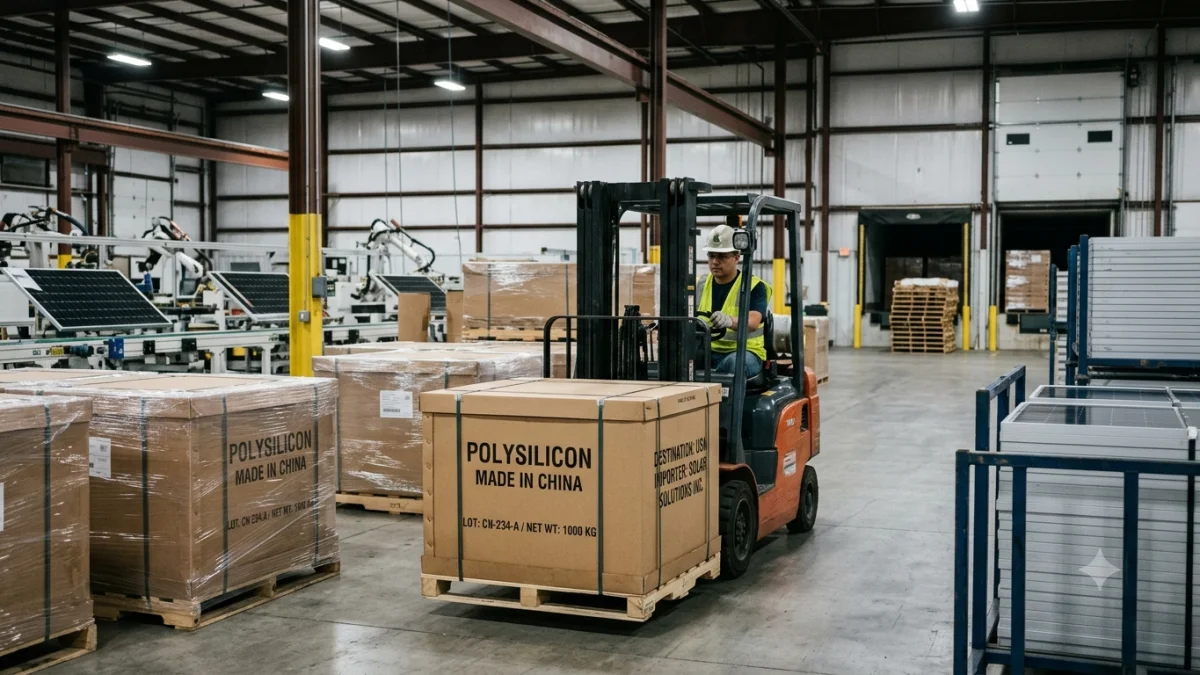


WASHINGTON — The United States has imposed a 15% tariff and established minimum import prices for polysilicon and related solar products, targeting Chinese-dominated supply chains for materials used in solar panels and semiconductors, as the administration seeks to expand domestic manufacturing capacity.
The measures, announced by President Donald Trump under Section 232 of the Trade Expansion Act of 1962, include price floors for polysilicon, solar wafers, cells and modules, according to the administration’s proclamation. The policy is scheduled to take effect on Dec. 4.


The new rules set a minimum import price of $21 per kilogram for polysilicon, with additional thresholds for other products in the solar supply chain, including ingots, wafers, solar cells and modules, according to details of the measure. The Commerce Department will oversee implementation of the tariffs and pricing requirements.
The administration said the action was driven by national security concerns and the importance of polysilicon to both renewable energy equipment and semiconductor production. Polysilicon is a key input for photovoltaic panels and is also used in the production of advanced electronic components.
U.S. manufacturers welcomed the move, saying the trade protections could support domestic production and strengthen supply chains. Companies including Hemlock Semiconductor, which operates a polysilicon facility in Michigan, and Wacker Chemie’s Tennessee plant are among the domestic producers expected to benefit from the policy.
Some industry groups had sought an earlier implementation date, arguing that a delayed start could allow additional imports before the measures take effect. The administration has indicated it would keep the planned timeline, according to people familiar with the discussions.
China has previously criticized U.S. trade restrictions targeting Chinese technology and manufacturing industries. Beijing has maintained that such measures disrupt global supply chains and has said it would defend the interests of Chinese companies affected by trade actions.
The United States has been attempting to rebuild parts of its domestic solar manufacturing sector after production shifted heavily overseas, particularly to China. Supporters of the new policy argue that price competition from lower-cost imports has made it difficult for U.S. producers to compete.
The tariff and price-floor measures are set to remain the focus of Commerce Department implementation ahead of their Dec. 4 effective date.