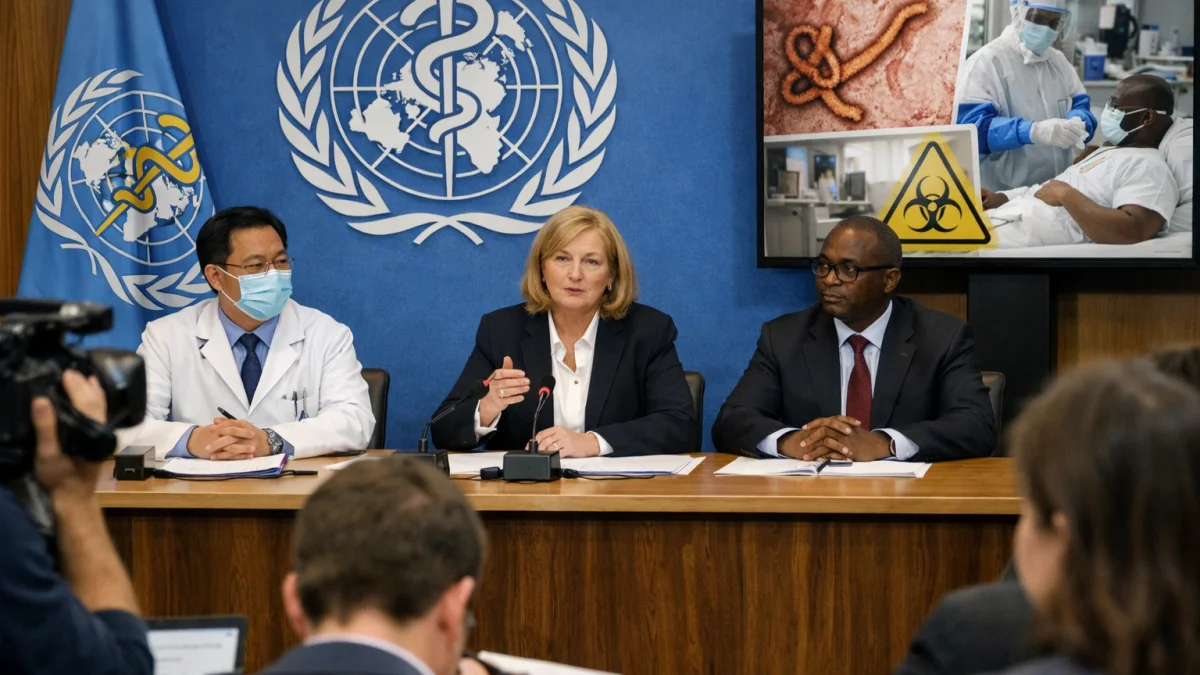


GENEVA — The World Health Organization (WHO) has released its first comprehensive guidelines for the clinical management of filovirus disease, including all types of Ebola and Marburg viruses.
The guidelines were issued on June 17, 2026, as the Democratic Republic of the Congo battles an outbreak of Ebola disease caused by the Bundibugyo virus, according to a WHO news release. They outline 16 evidence-based recommendations focused on early supportive care to improve patient survival and health outcomes.


Ebola and Marburg diseases are serious and often fatal illnesses, with case fatality rates ranging from 25% to 90% in past severe outbreaks. Since 1967, when Marburg virus was first identified, there have been 72 reported outbreaks of Ebola and Marburg diseases in Africa, the WHO said. These outbreaks have had significant socio-economic and psychological impacts on affected communities.
In the absence of licensed vaccines and treatments for several filovirus diseases, including Marburg, Bundibugyo and Sudan virus diseases, early supportive care is critical for improving survival rates, the organization stated.
“These new guidelines are a perfect example of how WHO leverages science to better protect and care for people during outbreaks and health emergencies,” WHO Director-General Dr Tedros Adhanom Ghebreyesus said in the release. “The current Bundibugyo virus outbreak is a stark reminder of the need for diligent, holistic and person-focused medical care, to save lives and preserve human dignity. We encourage governments and authorities to integrate these new recommendations into preparedness and outbreak response, to ensure high-quality care for everyone.”
The guidelines were developed through global expert consultations and are based on the latest scientific evidence and lessons from recent outbreaks. They expand on previous WHO guidance that focused primarily on Ebola virus disease.
Key recommendations include the use of prioritized clinical laboratory tests to monitor patients and manage treatable conditions such as hypoglycaemia; rapid treatment of dehydration with oral and intravenous rehydration; early use of intravenous fluids and medications to treat shock; appropriate antibiotic treatment for concurrent bacterial infections; and structured after-care for survivors to address potential complications and prevent further transmission.
The guidelines are intended primarily for health workers providing care to patients with suspected or confirmed filovirus disease. They also aim to help health facility administrators and policymakers plan and prepare for outbreaks by ensuring adequate medical supplies, equipment, laboratory support and staffing.
The recommendations emphasize high-quality supportive care, individualized clinical decision-making and integration with infection prevention and control measures. They complement existing WHO guidance on safe care delivery during outbreaks.
Details on the implementation timeline in specific countries remain unclear. The full guidelines and an executive summary are available on the WHO website.
The Democratic Republic of the Congo outbreak, declared a Public Health Emergency of International Concern earlier in 2026, continues, with WHO providing ongoing support for response efforts.