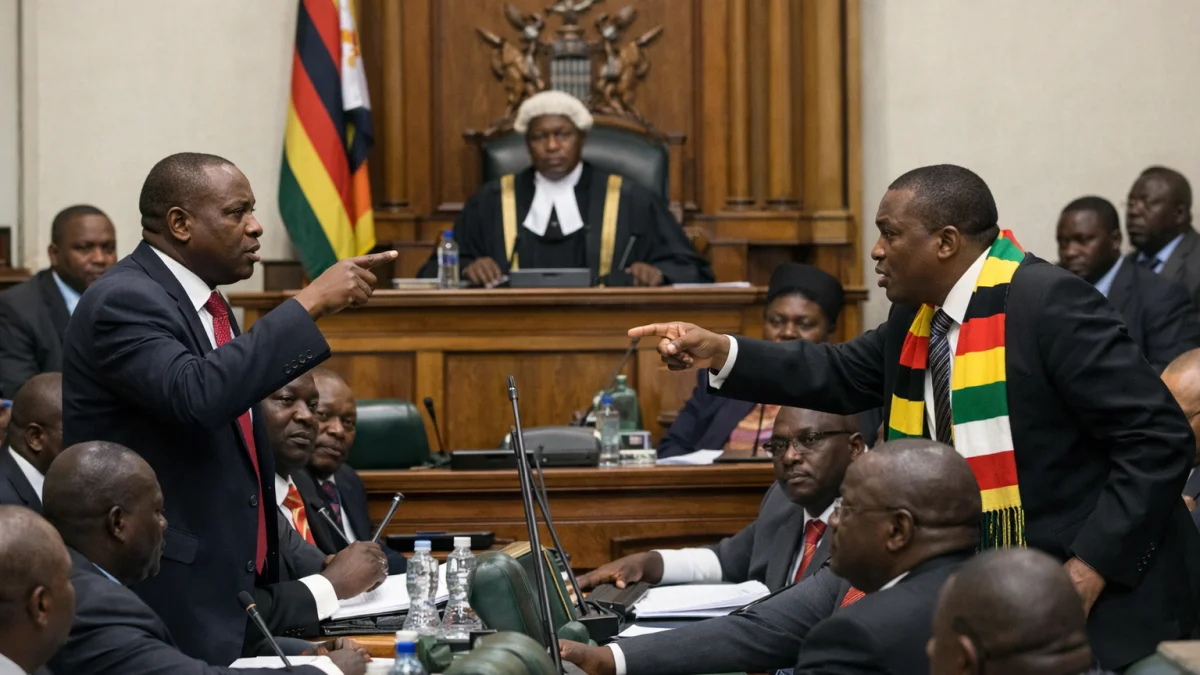


HARARE — Zimbabwean lawmakers this week confronted rising political tensions as Parliament advanced a controversial constitutional amendment that would extend presidential terms and postpone scheduled elections, a move that has intensified debate within the ruling party, the opposition and civil society groups.
The National Assembly on Thursday approved a bill extending presidential terms from five years to seven years, with 216 lawmakers voting in favor, exceeding the two-thirds majority required for constitutional amendments, according to parliamentary results reported by state officials and lawmakers. The bill now moves to the Senate, where it is also expected to be considered in the coming days.


The proposal would allow President Emmerson Mnangagwa, whose current term is due to end in 2028, to remain in office until 2030 if enacted. The legislation would also alter election arrangements and extend terms for other elected offices, according to the bill introduced by Justice Minister Ziyambi Ziyambi earlier this month.
Supporters of the measure, largely drawn from the ruling ZANU-PF, have argued that longer terms would promote political stability, reduce election-related costs and provide governments with more time to implement development programs. Parliamentary debates this month reflected those arguments, with proponents describing the amendment as a mechanism for continuity in governance.
Opposition lawmakers and activists have challenged the proposal, arguing that fundamental constitutional changes should be subjected to a national referendum rather than approved solely through Parliament. Legal challenges have been filed in the courts, while civic groups have urged legislators to reject the measure, citing concerns about democratic accountability and constitutional safeguards.
Political tensions have also surfaced within Zimbabwe’s broader political landscape. Some independence war veterans and former allies of Mnangagwa have publicly opposed the amendment, accusing the government of seeking to prolong its hold on power. Reuters reported that the proposal has generated unusually vocal criticism from sections of the public and from figures traditionally aligned with the ruling party.
“The people have spoken,” activists said in a joint statement last week urging lawmakers to consider public concerns before voting on the bill.
The government has maintained that the amendment follows constitutional procedures and that Parliament has the authority to consider and approve such changes. Supporters also note that presidential term limits would remain in place under the proposed framework, although each term would be longer.
As of Friday, attention had shifted to the Senate, where lawmakers are expected to debate the measure. The outcome of that vote and any pending court challenges will determine the next stage of the constitutional process, while political tensions surrounding the proposal continue to dominate discussion in Zimbabwe’s Parliament and beyond.