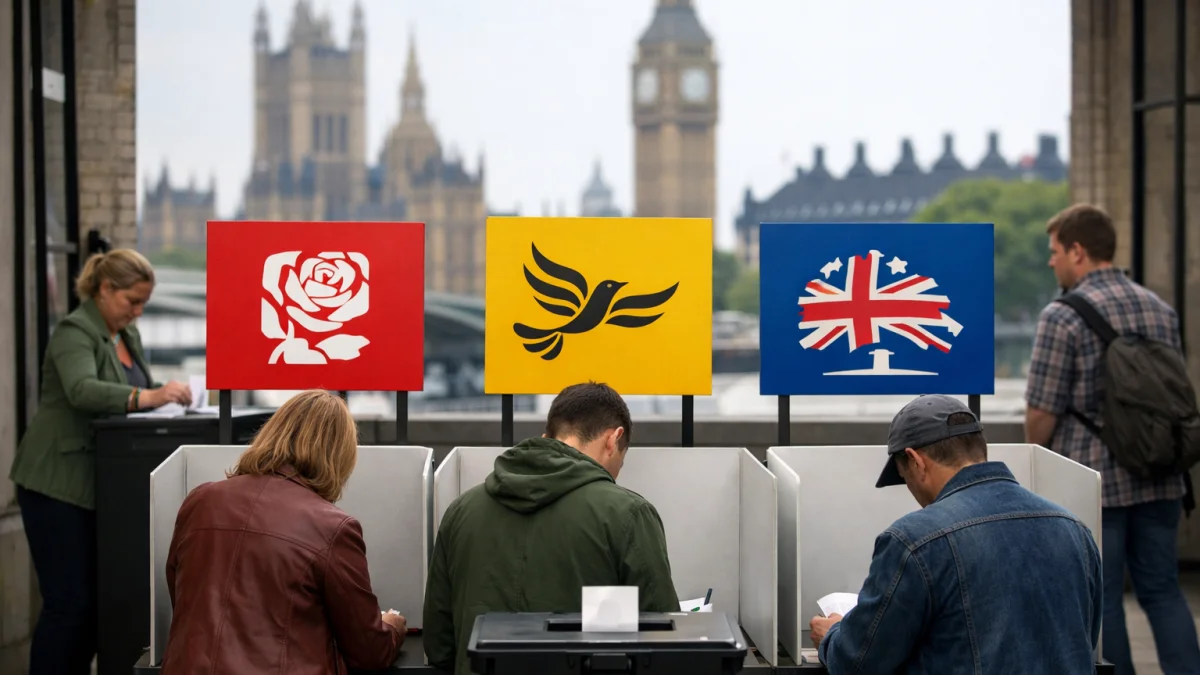


LONDON — British voters are abandoning the country's two main political parties in record numbers a decade after the Brexit referendum, according to recent polling and surveys released ahead of the 10th anniversary of the June 23, 2016 vote.
Polling aggregators and major survey organizations reported in June that support for alternatives to the traditionally dominant Labour and Conservative parties has risen sharply, reflecting continuing political realignment since Britain left the European Union. Recent voting-intention surveys showed parties including Reform UK, the Liberal Democrats and the Green Party attracting substantial shares of voter support, while Labour and the Conservatives together commanded markedly lower levels of support than they have historically.


The shift comes as public attitudes toward Brexit continue to evolve. A survey conducted for the European Council on Foreign Relations found that a majority of Britons viewed Brexit negatively and favored closer ties with the European Union. The poll suggested dissatisfaction crossed traditional party lines and extended to some voters who had previously supported leaving the bloc.
Britain voted by 52% to 48% to leave the EU in the 2016 referendum. The decision reshaped British politics, contributing to leadership changes in both major parties and fueling the rise of new political movements focused on issues including immigration, sovereignty and economic policy.
In several areas that strongly backed Brexit in 2016, voters interviewed by media organizations expressed frustration with the outcomes of the process and dissatisfaction with established parties. In Romford, east London, former local Conservative leader Michael White told The Guardian that the area remained politically conservative but had seen significant changes in party support as Reform UK gained ground.
Recent polling has highlighted the scale of the shift. Reform UK has led some national voting-intention surveys, while the Greens and Liberal Democrats have maintained support levels well above historical norms. Labour and Conservative support, meanwhile, has remained fragmented despite alternating periods in government.
Political leaders have responded by emphasizing domestic priorities such as economic growth, public services and migration, while the Labour government has pursued a policy of closer cooperation with the EU without seeking to rejoin the bloc. British and EU officials have also taken steps to improve relations in areas including trade and defense cooperation.
As Britain marks ten years since the Brexit vote, opinion polls indicate that voter loyalties remain fluid and that support for alternatives to the country's traditional governing parties continues to play a prominent role in the political landscape.