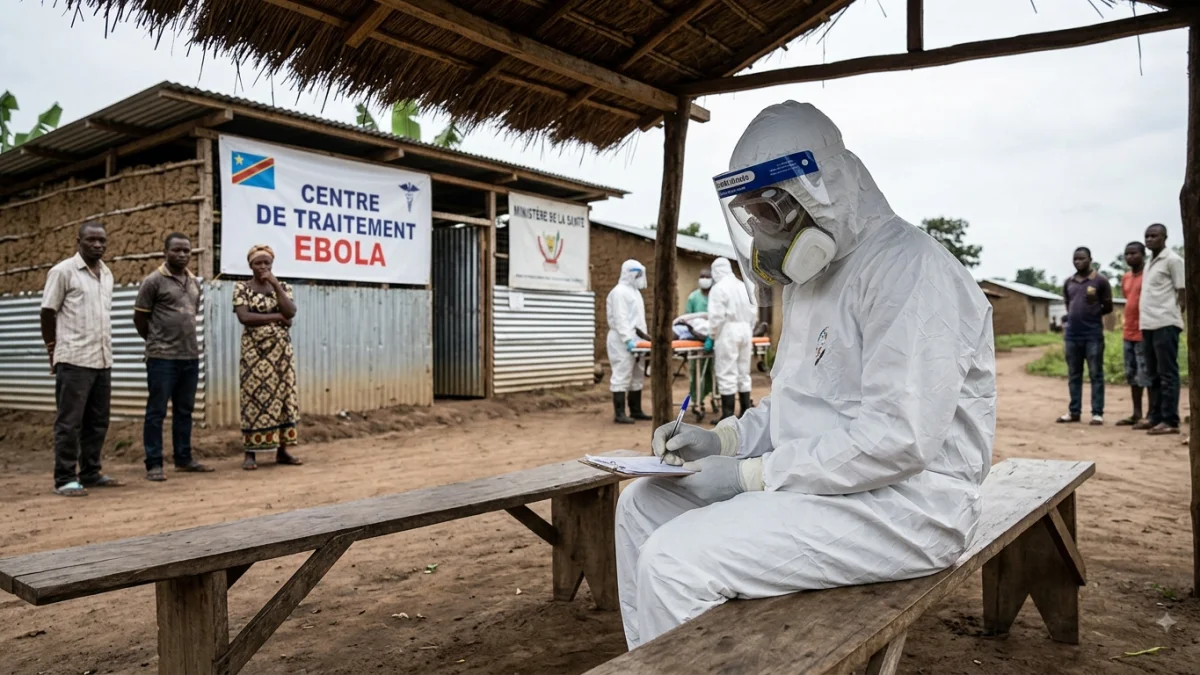


KINSHASA — The death toll from the Democratic Republic of Congo’s rapidly expanding Ebola outbreak has climbed above 2,200, with more than 4,700 confirmed cases, as health workers struggle to keep pace with transmission, according to the latest reports from health authorities and international health agencies.
The outbreak, caused by the Bundibugyo species of Ebola, has spread to six provinces, after authorities confirmed an Ebola-related death in Bas-Uele province in northeastern Congo. The death in the provincial capital, Buta, was confirmed by the National Institute for Biomedical Research, according to the Communications Ministry.


Government figures reported on Aug. 14 showed 4,665 confirmed cases and 2,184 deaths, marking a sharp increase from 4,381 cases and 2,011 deaths reported earlier in the week. The latest reporting indicates the totals have since passed 4,700 cases and 2,200 deaths.
The outbreak was officially declared on May 15 in Ituri province, where the majority of cases have been recorded. The World Health Organization has said the virus involved is a strain for which there is no approved vaccine or specific treatment, although candidate vaccines and treatments are being studied.
Health officials face major obstacles in containing transmission, including insecurity, shortages of medical supplies and personnel, and difficulties tracing people who have been exposed. The Associated Press reported that between 60% and 70% of new cases are being identified outside monitored chains of contacts, complicating efforts to determine how the virus is spreading.
The outbreak has also affected health workers and treatment operations. In some areas, strikes and shortages have disrupted services, while insecurity and displacement have made surveillance and contact tracing more difficult, according to health workers and international responders.
The WHO declared the outbreak a public health emergency of international concern in May, citing sustained transmission in Congo and Uganda. Uganda has reported no recent new cases and has been conducting enhanced surveillance following its linked outbreak.
Authorities are continuing surveillance, contact tracing, laboratory testing, treatment and community engagement efforts as the outbreak spreads across six provinces. The latest confirmed figures show transmission remains active, with officials focused on identifying contacts of recent cases and preventing further geographic spread.