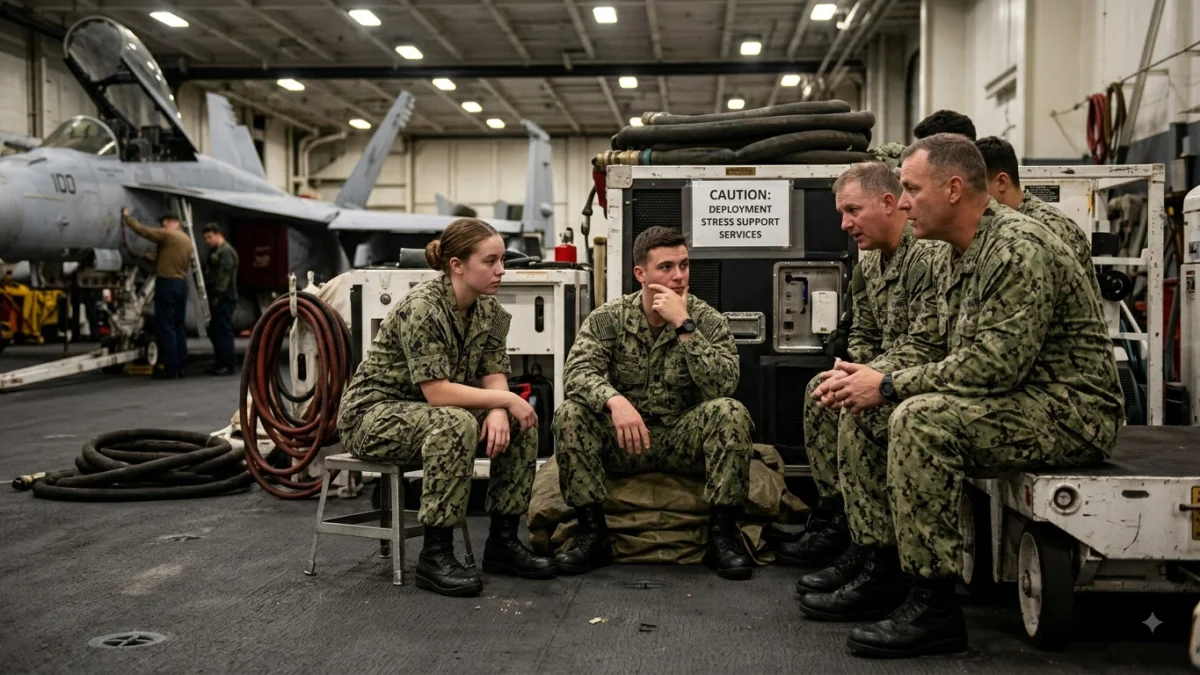


WASHINGTON — Reports of worsening mental health and morale among sailors aboard the U.S. aircraft carrier USS Abraham Lincoln have prompted scrutiny of the Navy’s handling of a record-length deployment, while Defense Secretary Pete Hegseth has rejected accounts of deteriorating conditions as misrepresented.
The Lincoln, carrying about 5,000 sailors and Marines, has been at sea for more than 260 consecutive days, according to U.S. military officials and reporting by Stars and Stripes. The carrier has supported U.S. operations in the Middle East since January after leaving San Diego in November.


Stars and Stripes reported in July that sailors and their families were raising concerns about the psychological effects of months of continuous operations and limited contact with relatives. One sailor told family members that their mental and physical health was in danger, according to the newspaper, while a senior officer publicly acknowledged that the crew was tired but praised its resilience.
More recent reports have described alleged suicide-related incidents aboard the carrier. U.S. officials confirmed that a sailor went overboard on Aug. 3 and was rescued, medically evaluated and transferred for follow-on care, according to reporting cited by CNN. The circumstances have not been publicly established as a suicide attempt. The Navy has disputed broader reports of a suicide crisis aboard the ship.
The allegations have also included shortages of food and hygiene supplies, plumbing problems and difficulties receiving mail. Navy officials and Hegseth have disputed the severity of those accounts. Hegseth said on Thursday that reports about conditions aboard the Lincoln were “completely misrepresented,” while U.S. Central Command has said deployed personnel receive the resources, logistical support and care available in a forward operating environment.
The prolonged deployment has drawn congressional concern. Senator Richard Blumenthal has sought answers from Hegseth about the impact of the ship’s operating conditions on sailors’ welfare, while other lawmakers have called for greater scrutiny of the reports.
The Navy has acknowledged that extended deployments impose significant personal costs. In February, Chief of Naval Operations Adm. Daryl Caudle said prolonged deployments require sailors to miss major family events and place additional responsibilities on relatives at home.
The USS George Washington is now heading toward the Middle East and is expected to replace the Lincoln, a U.S. official said. The Navy has described the rotation as planned, while no confirmed date for the Lincoln’s return has been announced.