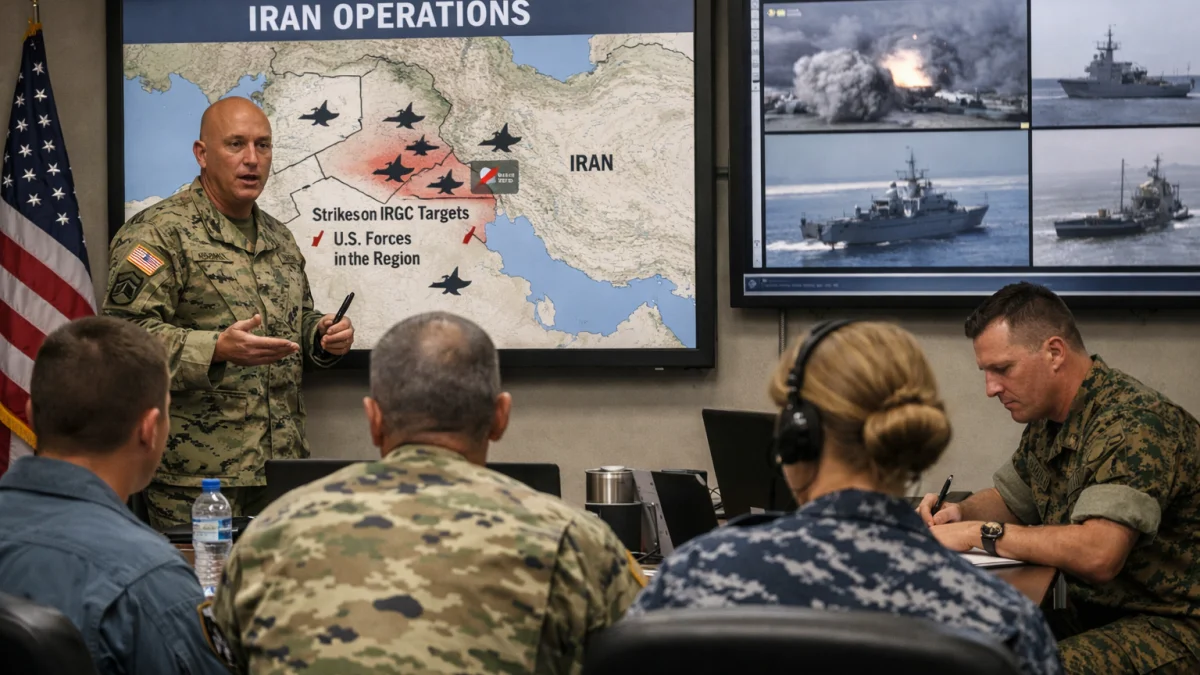


Five months into the United States' conflict with Iran, debate has intensified over whether Washington's objectives have expanded beyond the military goals initially presented when the campaign began. Renewed fighting following the collapse of a June ceasefire framework has sharpened scrutiny of the Trump administration's strategy, as policymakers, analysts and lawmakers assess whether evolving operational priorities risk extending both the duration and scope of the conflict.
The discussion reflects more than a dispute over military planning. It raises broader questions about strategic clarity, congressional oversight, alliance management and the conditions under which military campaigns can conclude. Although U.S. officials have consistently maintained that the mission remains focused on protecting American interests and degrading Iran's ability to threaten regional security, the objectives publicly emphasized by the administration have shifted over time, prompting comparisons with previous conflicts in which limited military operations gradually evolved into broader strategic commitments.


When military operations began in late February, senior administration officials described the campaign primarily as an effort to neutralize Iran's missile capabilities, naval assets and capacity to pursue a nuclear weapon. Defense Secretary Pete Hegseth said at the time that the United States was not expanding its military objectives, even after President Donald Trump made remarks suggesting Washington should influence Iran's future political leadership. Those differing public statements generated early questions over whether official military objectives aligned with broader political ambitions.
As the conflict continued, additional priorities emerged. Administration officials increasingly linked military operations to ensuring freedom of navigation through the Strait of Hormuz, protecting international commercial shipping and compelling Iran to accept conditions outlined in the June memorandum of understanding negotiated in Islamabad. Analysts note that safeguarding maritime commerce has become a central operational objective because repeated Iranian attacks on commercial vessels and disputes over control of the strategic waterway have directly affected global energy markets and regional security.
The June memorandum temporarily reduced hostilities but deliberately postponed negotiations on several of the most contentious issues, including Iran's nuclear program and long-term arrangements governing the Strait of Hormuz. According to Reuters reporting, competing interpretations of key provisions, combined with renewed military actions and U.S. decisions affecting sanctions and maritime policy, contributed to the agreement's breakdown. The renewed exchange of strikes has reinforced concerns that tactical military successes have not yet produced a durable political settlement.
Supporters of the administration argue that changing operational priorities reflect developments on the battlefield rather than strategic drift. From that perspective, responding to attacks on shipping, deterring further Iranian military action and maintaining regional stability are consistent with the broader objective of protecting U.S. interests and allies. They contend that military campaigns often require adjustments as adversaries adapt and circumstances change, particularly in conflicts involving maritime security and regional deterrence.
Critics, however, argue that the accumulation of objectives complicates decisions about how success will ultimately be measured. Analysts have observed that official explanations have evolved from emphasizing missile and nuclear threats to incorporating maritime security, enforcement of ceasefire terms, economic pressure and broader regional stability. Without clearly defined end-state conditions, they argue, policymakers may face increasing difficulty determining when military operations can responsibly conclude.
The debate also carries domestic political implications. A Reuters/Ipsos survey published in July found that a large majority of Americans expect the conflict to continue for an extended period, while relatively limited public support exists for continued military strikes. Many respondents also anticipated economic consequences, particularly higher fuel prices, underscoring how concerns over the Strait of Hormuz extend beyond regional security into domestic economic policy.
Internationally, allies and regional partners continue balancing support for maritime security with concerns about escalation. Gulf states remain particularly sensitive to disruptions in commercial shipping and energy exports, while governments outside the region have repeatedly emphasized the importance of protecting freedom of navigation and preventing wider conflict. The collapse of the ceasefire has therefore renewed diplomatic efforts aimed at preventing further escalation even as military operations continue.
Historical comparisons have inevitably emerged. Security experts note that U.S. military operations in Iraq and Afghanistan demonstrated how objectives can evolve in response to changing battlefield realities and political pressures. While current circumstances differ substantially, those experiences continue to inform debates in Washington over the importance of maintaining clearly defined missions, establishing measurable objectives and preserving political consensus during prolonged military engagements.
At present, the confirmed situation is that fighting has resumed following the breakdown of the June ceasefire framework, with both the United States and Iran accusing each other of violating earlier commitments. U.S. officials continue to describe their actions as necessary to protect regional security and international shipping, while debate persists over whether the conflict's objectives have broadened since operations began. Governments, international observers and energy markets are closely monitoring developments surrounding the Strait of Hormuz, prospects for renewed negotiations and any official clarification of Washington's long-term strategic goals.